Showing posts sorted by relevance for query Apple. Sort by date Show all posts

Apple Working On TV With Integrated Voice/Motion Controller & Gaming Console

Apple Working On TV With Integrated Voice/Motion Controller & Gaming Console

Apple is planning an assault on the living room with a TV that will come equipped with an Apple-branded, Kinect-like video game console. According to sources Apple is working on a television set with an iTunes-integrated touch screen remote and Siri-like voice command technology. The TV set will be coming before the end of 2012. Rumors and patents have said as much for the past year, so that’s nothing new. But that’s not all we’ve heard. Also it has come to light that Apple’s television set will come with an Apple-branded, Kinect-like video game console. The interface will rely heavily on motion and touch controls. The rumor gained more traction following claim made by Walter Isaccson in Steve Jobs’ biography that the late Apple CEO would ‘like to create an integrated television set that is completely easy to use’ that would ‘ seamlessly synced with all of your devices and with iCloud. ‘Jobs also claimed to have ‘finally cracked’ the user interface problem to make the whole package easy to use.
Here comes few Doubts:-
  • Outside of the iOS platform (iPhone and iPad), Apple isn’t known as a gaming company.
  • A TV with a built-in voice and motion controller and a games console? How much is this thing going to retail for exactly?
  • The games console market is tightly stitched up by Microsoft, Sony and Nintendo. Breaking into this new market would be extremely difficult.
  • Valve does have a portfolio of Mac games, but not enough to create a new ecosystem for a games console.
  • Apart from branding, what differentiates an Apple games experience from PC/Mac/Xbox 360/PS3?
  • Wouldn’t it make more sense for Apple to bring iOS games into the living room through an updated Apple TV set top box? There’s a massive ecosystem of games here ready to exploit, along with a healthy developer base.
  • That said, folks who own an iPhone/iPad and an Apple TV device can use AirPlay to put games on any HDMI-enabled TV without the need for an Apple-branded TV or an Apple-branded games console. Where does a console fit into the picture?

-Source (Cut of Mac, Forbes, Rumor) 


SHARE OUR NEWS DIRECTLY ON SOCIAL NETWORKS:-

Apple Hacked By The Same Group Who Attacked Facebook

Apple Hacked, Macintosh Computers Infected  By The Same Group Who Attacked Facebook 

The month of February is not going good for cyber space, specially for giant organization. Last week the social networking giant Facebook fallen victim of a devastating cyber attack which did effected a number of  systems. Facebook admitted that it faced a "sophisticated attack" on computers where it has been found the attackers used a zero-day Java exploit to initiate the attack, but that no user data was compromised. The same thing happened to micro blogging site Twitter and New York Times. And now it was the turn for Apple. The California based multinational company acknowledged that recently their systems has been attacked by hackers who infected Macintosh computers of some employees. Like Facebook here also no data has been effected, "there was no evidence that any data left Apple." -said Apple. 
According to an exclusive report of Reuters -some unknown hackers infected the computers of some Apple workers when they visited a website for software developers that had been infected with malicious software. The malware had been designed to attack Mac computers. The same software, which infected Macs by exploiting a flaw in a version of Oracle Corp's Java software used as a plug-in on Web browsers, was used to launch attacks against Facebook, which the social network disclosed on Friday. The malware was also employed in attacks against Mac computers used by "other companies," Apple said, without elaborating on the scale of the assault. Experts are presuming that all these cyber attacks of February, that is Twitter, New York Times, Facebook & Lastly Apple Inc was originated from China, and executed by the same hacker group. On the other side few experts are also saying that the group responsible for the hack, has been identified as "Unit 61398" of the People's Liberation Army. But so far there is no proof. 
Apple also revealed that it plans to release a software tool later Tuesday that will protect customers against the same type of software that was used against its employees. 

Apple also provided a statement as follows:-
"Apple has identified malware which infected a limited number of Mac systems through a vulnerability in the Java plug-in for browsers. The malware was employed in an attack against Apple and other companies, and was spread through a website for software developers. We identified a small number of systems within Apple that were infected and isolated them from our network. There is no evidence that any data left Apple. We are working closely with law enforcement to find the source of the malware.
Since OS X Lion, Macs have shipped without Java installed, and as an added security measure OS X automatically disables Java if it has been unused for 35 days. To protect Mac users that have installed Java, today we are releasing an updated Java malware removal tool that will check Mac systems and remove this malware if found..."


SHARE OUR NEWS DIRECTLY ON SOCIAL NETWORKS:-

Steve Jobs Died


An episode ends. Apple on Wednesday confirmed that its former CEO, Steve Jobs, has died. He was 56.
"Apple has lost a visionary and creative genius, and the world has lost an amazing human being," Apple said in a note on its Web site. "Those of us who have been fortunate enough to know and work with Steve have lost a dear friend and an inspiring mentor. Steve leaves behind a company that only he could have built, and his spirit will forever be the foundation of Apple."
The Apple.com Web site currently bears a photo of Jobs (left). Apple asked fans to share their memories, thoughts, and condolences via rememberingsteve@apple.com.
Jobs stepped down as Apple CEO in August after nearly 14 years at the helm of the company he co-founded in 1976. "I have always said if there ever came a day when I could no longer meet my duties and expectations as Apple's CEO, I would be the first to let you know. Unfortunately, that day has come," he said at the time.
Apple did not disclose any additional details about his passing, but Jobs had battled health problems for several years. Three years after having successful surgery for pancreatic cancer, Jobs announced in January 2009 that he had a "hormone imbalance" that was robbing his body of necessary proteins. He took a leave of absence, and it was later revealed that he underwent a liver transplant. By June 2009, he was back at work.
Though highly successful, Jobs's busy 2010 again took a toll on his health and he took another leave of absence in January 2011. He surprised and delighted fans, however, by showing up for the debut of the iPad 2 in March, telling those in attendance that he had worked too hard on the product to miss its launch. He was also there to show off iOS 5 and Mac OS X Lion a few months later.
Tim Cook, who is now Apple's CEO, took the stage in Jobs' place to launch the new iPhone 4S, the start of a new era at Apple.

-News Source (PC Mag & Apple)


SHARE OUR NEWS DIRECTLY ON SOCIAL NETWORKS:-

Apple’s Based Networks are More Vulnerable to Attack than Windows (BH 2011)


For many years, Apple enjoyed security through obscurity. The market share for Mac computers was so small that malware creators bypassed it to go after the much bigger target, Microsoft Windows. Not anymore.
Apple’s market share has been slowly rising and the popularity of the iPhone has put Apple’s products into the spotlight. Hackers are taking notice and they’re figuring out that Apple’s computers have security vulnerabilities, some of them more severe than Windows machines, according to a talk by the iSEC Partners security consulting team at the Black Hat security conference today.
Alex Stamos (pictured), Paul Youn, and B.J. Orvis of iSEC Partners said in their talk that it is possible for hackers to penetrate a network of Apple Mac computers and lurk undetected while gathering data. They concluded that there were so many vulnerabilities on the networking level that Mac machines could be considered more vulnerable than Windows machines.
Apple has not yet responded to a request for comment. At Black Hat, there will also be talks about the vulnerabilities of other operating systems, including Windows. In years past, security researchers have blamed Microsoft for producing vulnerable Windows code. And immediately following the Apple talk, security researchers had another talk about hacking Google’s Chrome operating system.
“This is all changing,” Stamos said. “If [recent hacking events] tell us anything, it’s that any computer is vulnerable to attack.”
The iSEC team said they looked at attacks on the Mac and its latest operating system, code-named Lion, or OS X version 10.7, from the perspective of Advanced Persistent Threats, or long-term security break-ins on networks of computers. They showed examples of the vulnerabilities and detailed proof that they had hacked into the operating system.
The category of Advanced Persistent Threats is a hot one because Google discovered that, under Operation Aurora, dozens of companies were compromised over a long period of time. And McAfee reported today that a similar attacked, dubbed Operation Shady RAT, compromised a total of 72 governments and corporations over a five-year period.
A network of Mac computers can be compromised in the usual way, iSEC’s Stamos said. A single user can be tricked out of giving up a username and password through social engineering or targeted “phishing attacks,” or attacks that use a believable ruse to get you to enter your username and password, which is then captured and compromised by the hackers.
Once inside the network, Stamos said that it is easy for the attacker to escalate the privileges he or she has on the network. That is where Apple’s operating system falls down in comparison to Windows. ”Once you have access, you can compromise the networking,” Orvis said. “Network privilege escalation is where it really gets bad on the Mac.”
The security researchers said that Apple has made improvements to security in version 10.7 of OS X, such as putting applications in a “sandbox,” or isolating them so that they can run (or crash) without taking down the rest of the operating system. Still, the researchers said they had figured out a couple of different ways to compromise the security of Macs through a test program dubbed Bonjoof. They said that it’s possible to lurk on a network and cover your tracks so that intelligence can be gathered on a network over time.
“All of Apple’s major authentication protocols suffer” from some kind of weakness, Orvis said.
There are ways to deal with the vulnerabilities, but company security professionals have to know how to use security forensics technology, which can take a long time. In the meantime, attackers can detect the forensics tools and react to their usage in an attempt to hide. The security researchers said they did talk with Apple about the vulnerabilities they found and communicated a number of ideas about how to improve the security of Apple’s computers.

SHARE OUR NEWS DIRECTLY ON SOCIAL NETWORKS:-

Apple releases anti-virus update for infected 120,000 Mac users


Apple has finally come clean and admitted that its software can be turned over by a virus.
The malware has been confusing Mac users for more than a week because it is a central belief in the dogma of Apple that only Windows users suffer from malware and get recruited into botnets.  We guess some of them must believe that they accidently downloaded Windows and became instantly infected as Steve said they would.
Matters have been made worse because Apple instructed its customer care teams to fudge the problem if customers rang them up.  The Tame Apple Press has also been in full swing trying to downplay the matter.  Apple fanboys have been targeting hacks who write about it, claiming that it was software that people were tricked into downloading, it was not malware, which shows how ignorant Apple followers are when it comes to security matters,
The Malware, MacProtector and MacSecurity, warns a victim that his or her computer is infected and goes through a complex installation process. It spends most of its life trying to snuffle for credit card information.
Zdnet  believes that more than 120,000 of Apple's US followers have been infected by a credit card stealing virus and dubbed Apple's approach to the problem as Orwellian.
Now Apple has said that it will deal with the malware using a Mac OS X software update that will automatically find and remove Mac Defender malware and its known variants.
The update will also help protect users by providing an explicit warning if they download this malware.
Jobs' Mob have posted instructions on how to avoid installing the Mac Defender malware as well as how to remove it from an affected computer.
Given the success of the malware it would appear that Apple followers are a soft touch. The malware plague was caused by enough of them downloading the bogus software and not being aware that there was something wrong.
For years security experts have been worried that the lack of security on Apple machines would eventually result in hackers trying to turn it over. While Windows 7 has had years of security proofing, under stress, Apple has not focused on this problem and its much needed onboard security scanner only finds one bit of malware,

SHARE OUR NEWS DIRECTLY ON SOCIAL NETWORKS:-

Search Guru Bill Stasior CEO of Amazon’s A9 Unit, Hired By Apple To Oversee Siri

Search Guru Bill Stasior CEO of Amazon’s A9 Unit, Hired By Apple To Oversee Siri

To be the very best, you need to deliver your hundred percent even some times more than hundred percent, and this race continues. As a result Apple has hired 'search guru' Bill Stasior, CEO of Amazon.com’s A9 search and advertising search unit, to oversee Apple's Siri voice-activated personal assistantStasior, who joined Amazon in 2003 as director of search and navigation, founded A9.com in May 2004 and then became CEO of the wholly owned subsidiary in February 2006, according to his LinkedIn profile. Stasior, who holds undergraduate and graduate degrees from the Massachusetts Institute of Technology, describes A9.com as a “company with a mission to create groundbreaking technologies in search, advertising, and mobile that power customer centric, Internet businesses.” Apple confirmed his hire but didn't provide any comment. Stasior has an impressive pedigree (you can read his resume and see a really geeky binary image he posted of himself here). The MIT PhD has taught there, too, and has done stints at Oracle, Netcentives and AltaVista. 
 Siri, Apple's famous voice-activated personal assistant program, was acquired in April 2010 to launch a big stake in voice-activated search. Since Apple kicked Google Maps to the curb in iOS 6, the only remaining tie with Google is search. Will Apple eventually do its own search network? Who knows. Stasior’s background in search will certainly be of value if the time ever comes. While Siri has had a high profile in the iPhone range, Apple has lost some of the talent who created it. Adam Cheyer, who co-founded the voice recognition software, recently left the company. CEO Dag Kittlaus departed in October 2011. 
Here we want to remind you that last month Twitter hired famous whitehat hacker Charlie Miller, to boost up its security. Here its Apple who hired Stasior presumably, strengthening Apple’s search and search advertising technology in the wake of its increasing competition with Google. While talking about the news of hiring geniuses then the name of Nicholas Allegra, the world-famous hacker known as "Comex", creater of JailbreakMe.com comes. He was also hired by Apple in 2011. 


-Source (AllThingsD) 


SHARE OUR NEWS DIRECTLY ON SOCIAL NETWORKS:-

Apple Hired Kristen Paget, Renowned Hacker & Former Security Expert of Microsoft

Apple Hired Kristen PagetRenowned Hacker & Former Security Expert of Microsoft 

To become  the very best along with that to maintain and hold your position, you need to deliver your hundred percent even some times more than hundred percent, and this race continues. For that we have to gather the very best guy with as. The above fact took place again, when Apple hired a renowned computer security researcher who helped Microsoft to rid Windows Vista from glaring exploits. I think, you already started guessing, let me tell you that yes you are absolutely right. Kristen Paget formerly known as Chris Paget who was part of an elite team of security experts of Microsoft has now been hired by Apple to lend her expertise to securing the company's operating systems. Apple, slowly, has been trying to make inroads into the security community. This summer, an Apple engineer spoke at the Black Hat security conference for the first time. So it is a bit predictable that why Apple is looking for security experts. Paget's exact charge at Apple is still somewhat of a mystery, with company representatives declining to comment on the specifics of what she'll be working on. After leaving Microsoft and prior to her move to 1 Infinite Loop, Paget was employed by security firm Recursion Ventures. According to sources, this past July, she'd departed stating that she wished to focus on developing security-related hardware.  
According to a report by Wired - Paget’s work at Microsoft had been similarly secretive. She’d been forbidden from speaking about it for five years after her work there ended.
But in 2011, the NDA expired, and she spilled the beans on her Vista hacking at the Black Hat Las Vegas conference. In short: Microsoft’s security team had expected Vista to be pretty clean when Paget got her hands on it, but they were wrong.
“We prevented a lot of bugs from shipping on Vista,” Paget said, according to a recording of her talk. “I’m proud of the number of bugs we found and helped get fixed.” Paget and company’s bug-hunt was so successful, in fact, that it forced Microsoft to push back Vista’s ship date. When the work was done, the hackers received special T-shirts, signed by Microsoft Vice President of Windows Development Brian Valentine. They read: “I delayed Windows Vista.” 
Until this past summer, Paget had been chief hacker at Recursion Ventures, a company that specializes in hardware security. When she left in July, she said she was looking for a break from bug-finding, hoping to find a job that involved building “security-focused hardware.”
“I’ve done too much breaking of things, it’s time to create for a change,” she said on Twitter. She was hired in September as a core operating system security researcher at Apple, according to her Linkedin Profile. 
Paget made headlines in 2010 when she built her own cellphone-intercepting base station at the Defcon hacker conference. Back then, Paget was known as Chris. She switched genders last year.

While talking about hiring geniuses by giant firms, we would like to remind you that very recently Apple has hired search guru Bill Stasior to oversee Apple's Siri voice-activated personal assistant. Along with this, few months ago social networking giant Twitter had appointed famous whitehat hacker Charlie Miller, to boost up its security.  Also in late 2011 Nicholas Allegra, the world-famous hacker known as "Comex", creator of JailbreakMe.com comes was also hired by Apple.


SHARE OUR NEWS DIRECTLY ON SOCIAL NETWORKS:-

Apple Will Release new MacBook Airs & Mac OS X 10.7 Lion on Wednesday

Apple as early as Wednesday will launch two highly anticipated products: Mac OS X 10.7 Lion and new Thunderbolt-equipped MacBook Airs, AppleInsider has learned.
According to people with proven track records who would be in a position to know, the new product launches are set to occur later this week. Specifically, one person said the products would be released on Wednesday at 8:30 a.m. Eastern.
The latest details align with what AppleInsider was told earlier this month, when it reported that new MacBook Air models with backlit keyboards and Thunderbolt ports would launch the week of July 21.
Those details were reaffirmed late last week in a separate report that corroborated other details, including the fact that Apple is expected to do away with the entry-level 64GB solid-state flash hard drive option. Instead, the new MacBook Airs are expected to have a minimum of 128GB in capacity.
he new notebooks, according to Concord Securities analyst Ming-Chi Kuo, are also expected to come with 4GB of RAM as the standard. That extra memory will allow the systems to better run Mac OS X 10.7 Lion, Apple's next-generation operating system, also said to become available this week.
Apple has been holding off on the introduction of new Mac hardware until it finally releases Lion. Apple has not offered a specific launch date for the operating system, only promising that it will become available on the Mac App Store for $29.99 at some point in July.
A few weeks ago, Apple began undertaking preparatory measures to unveil Lion. While it was initially believed that the operating system could have gone on sale as soon as last week, there have been rumors of last-minute holdups associated with the logistics and infrastructure related to Apple's switch to a digital distribution method through the Mac App Store.
The Golden Master of Lion was seeded to developers on July 1. The term "Golden Master" means that the software is viewed as a final build that will be identical to the software released to the general public.
While Lion and the new MacBook Air models are said to be set to launch this week, there has been no specific indication given regarding any other hardware. However, Apple provided its own evidence of a forthcoming refresh to its LED Cinema Display last week, when it posted images on its site showing a Thunderbolt-equipped display with the new part number "MC914."
Supply of Apple's white MacBook has also been severely constrained since late June, suggesting a change to the product could be forthcoming. However, AppleInsider has received no indication of an imminent hardware refresh.
That would leave just the Mac mini and Mac Pro as the only Mac hardware not updated in 2011. In June, CNet reported that Apple planned to update both the Mac Pro and Mac mini either at the end of July or the first week of August. The Mac mini was last refreshed in June 2010, while the Mac Pro was last updated a month later, in July.

-News Source (AppleInsider)

SHARE OUR NEWS DIRECTLY ON SOCIAL NETWORKS:-

Apple Releases iOS 6.0.1, Serious Flaws in Kernel, Passcode Lock & WebKit Patched

Apple Releases iOS 6.0.1, Serious Flaws in Kernel, Passcode Lock & WebKit Patched

Couple of moths ago we got iOS6, where Apple added over 200 new features, including Apple's own Maps app, Facebook integration, Siri improvements, Apple's new Passbook digital wallet app, and more. iOS 6 is compatible with the third-generation iPad, iPad 2, iPhone 4S, iPhone 4, iPhone 3GS, and fourth-generation iPod touch. With such tremendous features there also several security bugs have been spotted in the wild, which is affecting millions of iOS users across the globe. Among those bugs the most serious seems to be a kernel flaw discovered by researcher Mark Dowd of Azimuth Security and Eric Monti of Square that affects iPhone 3GS and later, as well iPod Touch and iPad2 and later. An attacker exploiting the vulnerability could essentially bypass address space randomization layout (ASLR) protections using a malicious application, and could determine addresses in the kernel, Apple’s advisory said. The researchers said the vulnerability, which could expose data to an attacker, occurs in the way iOS handles application programming interfaces in relation to kernel extensions. 

Apple has released updates for iOS 6 which include security fixes. The iOS 6.0.1 update includes security fixes for the kernel, passcode locking and WebKit. The WebKit issues were also fixed in an update of the Safari web browser for Mac OS X. “Responses containing an OSBundleMachOHeaders key may have included kernel addresses, which may aid in bypassing address space layout randomization protection,” Apple said. “This issue was addressed by unsliding the addresses before returning them.” 
A vulnerability in iOS’ Passcode Lock was also addressed in the latest update that could allow someone with access to the iOS device to access Passbook passes without entering a passcode. “A state management issue existed in the handling of Passbook passes at the lock screen. This issue was addressed through improved handling of Passbook passes,” Apple said. Finally, a pair of WebKit vulnerabilities were patched.
The first involved how iOS handled JavaScript arrays, and could allow an attacker to remotely execute code if a user visited a malicious site and was infected. Apple said it addressed the matter through additional validation of JavaScript arrays. The other WebKit flaw is a use-after-free issue in the handling of SVG images. Scalable vector graphics (SVG) are file formats for static or animated graphics. A user visiting a website hosting a malicious graphic could experience application crashes or worse, an attacker could remotely execute code.  
The iOS 6.0.1 software update also includes fixes for the iPhone 5 to allow it to install over the air updates and to make it work better with WPA2 Wi-Fi networks. There are also corrections for bugs which flashed horizontal lines over the keyboard and stopped the camera flash going off. The two WebKit issues were also the only issues apparently fixed in the Safari 6.0.2 update. Safari 6.0.2 is available through Software Update for Mac OS X 10.7 Lion and the Mac App Store for Mac OS X 10.8 Mountain Lion.

-Source (Apple, threat post & The-H)


SHARE OUR NEWS DIRECTLY ON SOCIAL NETWORKS:-

Steve Jobs Resigns as Apple's CEO


A historical chapter ends.The Big Boss of Apple Sir & Mr. Steve Jobs resigns as the CEO (Chief Executive Officer) of Apple. This iconic figure has struggled with various medical conditions through his tenure in Cupertino, battling pancreatic cancer in 2004 and undergoing a liver transplant in April 2009. Jobs has been on medical leave since January 2011, a year plus after returning from the transplant, so his resignation isn't entirely unforeseen.


To the Apple Board of Directors and the Apple Community:-

"I have always said if there ever came a day when I could no longer meet my duties and expectations as Apple’s CEO, I would be the first to let you know. Unfortunately, that day has come.
I hereby resign as CEO of Apple. I would like to serve, if the Board sees fit, as Chairman of the Board, director and Apple employee.
As far as my successor goes, I strongly recommend that we execute our succession plan and name Tim Cook as CEO of Apple.
I believe Apple’s brightest and most innovative days are ahead of it. And I look forward to watching and contributing to its success in a new role.
I have made some of the best friends of my life at Apple, and I thank you all for the many years of being able to work alongside you.
"

Steve

SHARE OUR NEWS DIRECTLY ON SOCIAL NETWORKS:-

Mac App Store Upgrade: Will OS X Lion be Apple's Vista


The first thing that came to mind when I heard that Apple may seed OS X 10.7 Lion via the Mac App Store to all users running Snow Leopard: Windows Vista.
The new Apple OS is due out this summer, but the idea of upgrading purely through a digital download does not appeal to me and I think it spells trouble for Apple. Just as Windows users found going from XP to Vista, an upgrade to Lion may be more of a hassle than it's worth.
Sure, developers have been grabbing Lion on the Mac App Store for months now. But there's a big difference between allowing a small group of technically proficient people to do this and opening the process up to the larger public.
Regardless of how solid Apple's download process might be, sometimes you want to use a physical disc to install software. In my opinion, a major operating system upgrade qualifies as one of those times. Here's why.

Smells Like Vista

Some people prefer to wipe their hard drives and do a fresh install instead of dealing with potential software conflicts and other pitfalls during an OS upgrade. But if you have to reinstall Snow Leopard first and then download Lion, the fresh install process becomes a real pain.
Just like Windows users who wanted to wipe their hard drives before upgrading to Vista from XP, it sounds like OS X Lion users will end up tied to a double OS installation.

Installs Fail

Now, I admit, I have upgraded many computers running versions of Windows, OS X, and Linux, and I have never run into a problem. Perhaps your experience is the same, but I bet you know someone who has had an OS installation nightmare.
For that reason alone, the idea of upgrading to OS X without a physical disc makes me queasy. If your Internet connection fails or the power goes out in the middle of your installation, it's best to have the new OS on a DVD or USB stick so that you can reboot and try to install again. If not, I guess it's back to the Snow Leopard disc for you and then another run at Lion.

Refresh Yourself

Believe it or not, even on a Mac you may find you want to wipe your hard drive and do a fresh install of OS X as your machine ages. You may find simply find that a fresh install would do it some good.
Or what if you decide to run Windows in a Boot Camp partition after you've had Lion going for a year or two? Chances are to make room for Windows you'll have to either defrag your hard drive (good luck with that on a Mac), or tinker with Disk Utility, or take the easy way out and just reinstall OS X. Without a Lion disc that probably means a double OS installation for you.

Boot Camp

If you want to run Windows using Boot Camp you need specific drivers from Apple before Microsoft's OS will work properly on a Mac. Most of the time you get those drivers through your OS X installation disc, although you can also get them from Apple as a download via Boot Camp Assistant.
But if you have problems downloading Apple's Windows drivers -- as I did when I tested the system this morning -- I guess you're out of luck, unless you have an OS X installation disc.

Look to Linux

If Apple really does seed OS X Lion as a download in the Mac App Store, I hope the company will offer the capability to burn a disc image the way Linux distributions do such as Ubuntu and openSUSE. That way you get the best of both worlds: an OS X Lion download and a physical copy of the OS as a safeguard.
The downside to that approach is you'll have to use Disk Utility to burn your disc, which might scare off the average user. Then again, Apple could create a simple wizard that burns the disc for you and all you have to do is insert the blank storage media when prompted. Maybe that's not as painless as a simple download, but a major OS X upgrade via the Mac App Store could give Apple the lion's share of tech headaches this summer.

SHARE OUR NEWS DIRECTLY ON SOCIAL NETWORKS:-

Apple Launching New iPad (3rd Generation) in 12 Countries This Week

Apple Launching New iPad (3rd Generation) in 12 Countries This Week
In a press release Apple confirmed the launch on new i-pad, the third generation of its category defining mobile device, will arrive in South Korea and 11 additional countries on Friday, April 20. The new iPad features a stunning new Retina™ display, Apple’s new A5X chip with quad-core graphics and a 5 megapixel iSight® camera with advanced optics for capturing amazing photos and 1080p HD video. The new iPad still delivers the same all-day 10 hour battery life while remaining amazingly thin and light. In addition to South Korea, the new iPad also will be available beginning on Friday, April 20 in Brunei, Croatia, Cyprus, Dominican Republic, El Salvador, Guatemala, Malaysia, Panama, St Maarten, Uruguay and Venezuela. Beginning on Friday, April 27, the new iPad will be available in Colombia, Estonia, India, Israel, Latvia, Lithuania, Montenegro, South Africa and Thailand.
The new iPad Wi-Fi models will be available in black or white for a suggested retail price of $499 (US) for the 16GB model, $599 (US) for the 32GB model and $699 (US) for the 64GB model. The iPad Wi-Fi + 4G models will be available for a suggested retail price of $629 (US) for the 16GB model, $729 (US) for the 32GB model and $829 (US) for the 64GB model. The new iPad will be sold through the Apple Online Store (www.apple.com) and select Apple Authorized Resellers. Additionally, iPad 2 is available at a more affordable price starting at just $399.
Battery life depends on device settings, usage and other factors. Actual results vary. 4G LTE is supported only on AT&T and Verizon networks in the U.S. and on Bell, Rogers and Telus networks in Canada. Data plans sold separately. Apple designs Macs, the best personal computers in the world, along with OS X, iLife, iWork and professional software. Apple leads the digital music revolution with its iPods and iTunes online store. Apple has reinvented the mobile phone with its revolutionary iPhone and App Store, and is defining the future of mobile media and computing devices with iPad.


SHARE OUR NEWS DIRECTLY ON SOCIAL NETWORKS:-

Apple Brings iOS 7.0.4 [Includes New Features, FaceTime Bug & App Store Purchase Flaw Fixed]

Apple Brings iOS 7.0.4 & iOS 6.1.5 Includes New FeaturesFaceTime Bug  & App Store Purchase Flaw Fixed


California based tech giant Apple Inc has released a new update on their popular iOS software running on iPhone, iPad, and iPod touch devices. This release of of iOS 7.0.4  includes bug fixes and improvements, including a fix for an issue that causes FaceTime calls to fail for some users. iPods that are not able to upgrade to iOS 7 have their own version to upgrade to, iOS 6.1.5. The release of iOS 7.04 marks the third update of the iPhone operating system in the short time since Apple pushed out iOS 7 in September. The new OS represented a major change from the older operating systems, both in the look and feel of the software and in its functionality.  There’s much zooming in and out and all about in iOS 7, as well as a blurry background that has drawn quite a bit of criticism. iOS 7 also was a major security release, fixing issues with the iPhone’s certificate trust policy as well as remote code-execution vulnerabilities in the CoreGraphics and CoreMedia components. 

The new update improves iCloud Keychain, which was introduced in iOS 7.0.3, and the latest version of the desktop software, OS X Mavericks. The cloud-based technology keeps the Safari browser's passwords and credit card data in sync across all your Apple devices. Secondly, in Spotlight, the device's internal search engine, Apple has brought back the ability to search Google and Wikipedia from the results. The two services were removed when iOS 7 was first released in mid-September. 
Also on Thursday, Apple released a corresponding update to its Apple TV, updating the set-top box to version 6.0.2.  Users can update to the latest version by accessing the device's Settings, selecting General, then Software Update. In spite of the relatively small size of the update, it's recommended that users use Wi-Fi when updating. To avoid security vulnerabilities every Apple users are highly recommended to update their software. 


-Source (Apple, ZDNet & Threat Post


SHARE OUR NEWS DIRECTLY ON SOCIAL NETWORKS:-

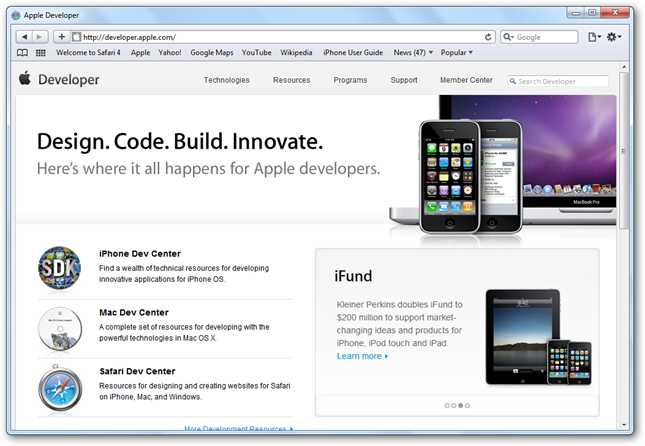
Vulnerabilities Fixed in the Apple Developer Website


A vulnerability that could have led to phishing attacks against Mac OS X, iPad and iPad developers has finally been closed, according to the hacker group that flagged up the hole on an Apple development website few days ago. YGN told Apple about the Arbitrary URL Redirect vulnerability and cross-site scripting issue on April 25, warning it could lead to phishing attacks on developers using the website. Apple acknowledged YGN's information on April 27, but didn't fix the hole. That frustrated YGN, which let news reporters know it would go public with the information in a short period of time even if Apple didn't correct the problem. One day after news reports on the situation, Apple fixed the problem.
It was the Vulnerability on Developer  of Apple's Website

Vulnerabilities in developer.apple.com

Vulnerabilities via URL Redirector in developer.apple.com
1. VULNERABILITY DESCRIPTION
Arbitrary URL Redirect
======================


SHARE OUR NEWS DIRECTLY ON SOCIAL NETWORKS:-

Apple's Developer Site is Under Phishing Attacks


With all the news about Anonymous, LulzSec, Anti-Sec, and so on, you'd almost forget there are more ethical hacking groups out there as well. One such group, YGN Ethical Hacker Group, informed Apple of several weaknesses in its developers website on April 25. Apple acknowledged the flaws, but so far, hasn't done anything about them. YGN Ethical Hacker Group has now stated they will fully disclose the vulnerabilities if Apple doesn't fix them in the coming few days.
The hacker group claims to have found three separate security flaws in Apple's developer website - arbitrary URL redirects, cross-site scripting, and HTTP response splitting. Especially the arbritry URL redirects are problematic, since it would make it quite easy to lead a phishing attack to obtain login credentials from Apple's third party developers. Developers use Apple IDs to login, so this would give malicious folk access to developers' iTunes accounts.
YGN Ethical Hacker Group isn't a new group - they've already identified similar security issues at other websites. Java.com, for instance, suffered from similar URL redirect issues, but Oracle fixed it within a week, and thanked the hacker group. They also found issues with McAfee's website, but McAfee refused to fix anything until the hacker group went for full disclosure.
Apple has been given the same two months to fix their issues, but Apple has so far refused to do so. The issues were reported to Cupertino April 25, and Apple confirmed they had received the information two days later. We're two months down the line now, and nothing has been fixed, according to the hacker group. As such, they will now take the same steps they took with McAfee

SHARE OUR NEWS DIRECTLY ON SOCIAL NETWORKS:-

iOS 5 beta hacked within 24 hours after release


The next major version of Apple's iOS has been exploited less than a day after its beta release to developers. A member of the iPhone Dev Team--a group of hackers that targets Apple devices and is not to be confused with Apple's group that designs the iOS software--announced through a tweet last night that the developer beta release of iOS 5 was susceptible to limera1n, an exploit that targets a vulnerability in the iOS boot software.
As a result, iPhone Dev Team member "MuscleNerd" said that it was possible to install third-party application installer Cydia, which lets users download applications not offered through Apple's App Store. The device used was a fourth-generation iPod Touch running the beta of iOS 5, software Apple offered up to developers following yesterday's WWDC keynote address and iOS 5 unveiling. For proof, MuscleNerd has posted two photos of the jailbreak, one of which includes the iPod's home screen, which prominently feature the Cydia logo. Another is a screenshot from the third-party SSH iOS application, iSSH, which shows that root level access to the iPod's file system has been obtained. As ReadWriteWeb notes, the jailbreak technique that was used results in a tethered solution, meaning users are required to go through the process each time their phone reboots. The more advanced solution--and what has been offered for previous versions of iOS--is untethered, which sticks around until the next software update from Apple is manually applied. That Apple's brand new iOS build would be jailbroken so soon should not be too surprising. The gold master version of iOS 4, which was the same version of the software to ship on the iPhone 4, as well as to be delivered to customers as an update, was jailbroken a day after its release to developers.
Apple has said it intends to release a final version of iOS 5 to customers this fall. In the meantime, it's offering registered iOS developers a crack at testing out the software and working on making sure apps are compatible with its new features and APIs. When readying iOS 4 for customers, it took Apple four separate beta builds for developers before reaching golden master status and a final release. During that time, numerous changes are made, including bug and security fixes, giving Apple time to fix vulnerabilities ahead of a public release.

SHARE OUR NEWS DIRECTLY ON SOCIAL NETWORKS:-

Apple Releases iOS 6 With 200+ New Features & Mountain Lion 10.8.2 With Facebook Integration & Game Center

Apple Releases iOS 6 With 200+ New Features & Mountain Lion 10.8.2 With Facebook Integration & Game Center

As expected, here comes double bang from Apple. Apple has also released  iOS 6 along with OS X Mountain Lion 10.8.2 and made available for public. In case of users of recent iPad, iPhone, and iPod touch models can obtain the update either by connecting their devices to iTunes and clicking the "Check for Update" button or checking for over-the-air updates on their devices. iOS 6 adds over 200 new features, including Apple's own Maps app, Facebook integration, Siri improvements, Apple's new Passbook digital wallet app, and more. iOS 6 is compatible with the third-generation iPad, iPad 2, iPhone 4S, iPhone 4, iPhone 3GS, and fourth-generation iPod touch. It will also ship on the iPhone 5, which launches on Friday, and on the fifth-generation iPod touch launching next month. The operating system arrives as the golden master build 10A403 for existing devices, and Apple has also posted a special 10A405 build for the iPhone 5 and a 10A406 build for the upcoming fifth-generation iPod touch.

With iOS Apple quietly pushed out 10.8.2, the second minor update to Mountain Lion since it was released in July. The update is currently available via the Software Update functionality in the Mac App Store. The update includes a number of enhancements, most notably Facebook integration and Game Center. It also includes support for several features integrating with iOS 6, such as Passbook passes and  iMessage/FaceTime access via phone number. 

This update is recommended for all OS X Mountain Lion users, and includes new features and fixes:


Facebook 
• Single sign on for Facebook
• Adds Facebook as an option when sharing links and photos
• See Facebook friends' contact information and profile pictures in Contacts
• Facebook notifications now appear in Notification Center


Game Center
• Share scores to Facebook, Twitter, Mail, or Messages
• Facebook friends are included in Game Center friend recommendations
• Added Facebook "Like" button for games
• Challenge friends to beat your score or achievement


Other new features
• Adds Power Nap support for MacBook Air (Late 2010)
• iMessages sent to your phone number now appear in Messages on your Mac
• You can now add passes to Passbook (on your iPhone or iPod touch) from Safari and Mail on your Mac
• FaceTime can now receive calls sent to your phone number
• New shared Reminders lists
• New sort options allow you to sort notes by title, the date you edited them, and when you created them
• Dictation now supports additional languages: Mandarin, Cantonese, Spanish, Korean, Canadian English, Canadian French, and Italian
• Dictionary app now includes a French definition dictionary
Sina Weibo profile photos can now be added to Contacts

* Requires iOS 6


General fixes
The OS X Mountain Lion v10.8.2 update also includes general operating system fixes that improve the stability, compatibility and security of your Mac, including the following fixes:


• Adds an option to discard the changes in the original document when choosing Save As 
• Unsent drafts are now opened automatically when launching Mail
• Receive Twitter notifications for mentions and replies from anyone
• URLs are shortened when sending tweets from Notification Center
• Notifications are disabled when AirPlay Mirroring is being used
• Adds SSL support for Google searches from the Smart Search Field in Safari
• Adds a new preference to have Safari launch with previously open webpages
• Resolves an issue that may cause the "Enable Autodiscover" checkbox to always remain checked
• Enables access to the Mac App Store when Parental Controls are enabled Support for @icloud.com email addresses
• Resolves a video issue with some VGA projectors when connected to certain Mac notebooks
• Addresses an issue that may prevent Active Directory accounts from being locked out
• Resolves an issue that may cause the policy banner to re-appear prior to logging in
• Improvements to SMB
• Addresses an issue with NIS users when auto-login is enabled
• Addresses an issue in which the Keychain may not be accessible
• Ability to pre-authenticate a FileVault protected system
• Addresses an issue that may cause Xsan to not automatically start after migrating from Mac OS X Snow Leopard 


Direct downloads of OS X 10.8.2 is also available through Apple's site form the following links-


-Source (Apple & MacRumors)                             


SHARE OUR NEWS DIRECTLY ON SOCIAL NETWORKS:-

Vulnerability in Apple MacBooks Which Could ruin Batteries


One prominent security researcher has discovered a vulnerability in the batteries of Apple's MacBook line of portable computers that could allow hackers to ruin the batteries or install malware on them that could corrupt a Mac.
Charlie Miller, a renowned white-hat hacker who works for security firm Accuvant, plans to reveal and offer a fix next month for a MacBook battery vulnerability he has discovered, Forbes reports. Miller uncovered default passwords, which are used to access the microcontroller in Apple's batteries, within a firmware update from 2009 and used them to gain access to the firmware.

Apple and other laptop makers use embedded chips in their lithium ion laptop batteries to monitor its power level, stop and start charging and regulate heat.
During the course of his tests, the researcher "bricked" seven batteries, rendering them unusable by rewriting the firmware. Of more concern is the possibility that hackers could use the vulnerability to install difficult to remove malware, or, in a worst case scenario, cause the batteries to explode.

“These batteries just aren’t designed with the idea that people will mess with them,” he said. “What I’m showing is that it’s possible to use them to do something really bad.” According to him, IT few administrators would think to check the battery, providing hackers with an opportunity to hide malicious software on a battery that could repeatedly implant itself on a computer.

Miller admitted that he hasn't tried to blow up any batteries, but he did say it might be possible. "You read stories about batteries in electronic devices that blow up without any interference,” he noted. “If you have all this control, you can probably do it.”
another researcher, Barnaby Jack, who works for antivirus software maker McAfee, also looked into the battery issue a couple years ago, but said he didn't get as far as Miller did.

Miller, who is a regular winner of security contests demonstrating Mac, Safari and iPhone exploits, has notified Apple and Texas Instruments of the issue. Despite requests from several other researchers not to proceed, he plans to unveil the vulnerability, along with a fix he calls "Caulkgun," at the Black Hat security conference next month.
"Caulk Gun" will change a battery's default passwords to a random string of characters. While the fix will prevent hackers from breaking into the battery, it would also block any future firmware updates from Apple.

In spite of the battery vulnerability that he uncovered, Miller believes Mac OS X security is better than ever before. According to him, Apple engineers made few security-related changes in the jump from Leopard to Snow Leopard, but they made substantial improvements in Mac OS X 10.7 Lion, which was released on Wednesday.
"Now, they've made significant changes and it's going to be harder to exploit,” he said, as noted by The Register.
“It's a significant improvement, and the best way that I've described the level of security in Lion is that it's Windows 7, plus, plus,” said noted security consultant Dino Dai Zovi.
Apple offered security researchers, including Miller and Dai Zovi, an unprecedented early look at Lion in order to get their feedback.
According to researchers, Lion's biggest security improvement is Lion's support for Address Space Layout Randomization. ASLR randomizes the location of critical system components to reduce the risk of attack. Apple also added sandboxing security measures in Safari that will isolate potential bugs or malware. Finally, the newly revamped File Vault now allows an entire drive to be encrypted.


-News Source (Appleinsider)

SHARE OUR NEWS DIRECTLY ON SOCIAL NETWORKS:-

Related Posts Plugin for WordPress, Blogger...