Showing posts sorted by relevance for query Friday. Sort by date Show all posts

Anonymous Promised To Engage Cyber Attack On Every Friday (#FFF)

Anonymous Promised To Engage Cyber Attack On Every Friday (#FFF)
Hacker collective group Anonymous promises that they will continue their F**k Friday rampage. "Each and every Friday Anonymous will be launching attacks… with the specific purpose of wiping as many corrupt corporate and government systems off our Internet," - said on the AnonOps blog post. In the last Friday they have breached the Federal Trade Commission (FTC) Server and hacked the official website of U.S. Federal Trade Commission, consumer rights, & National Consumer Protection Week. Also one week before for Friday rampage Anonymous released sensitive conference call between FBI & Scotland Yard. If you dig the history you will find many more attacks by Anonymous on this very Friday. So it can be said that now its became a tradition of Anonymous to engage attack specially on Friday.


SHARE OUR NEWS DIRECTLY ON SOCIAL NETWORKS:-

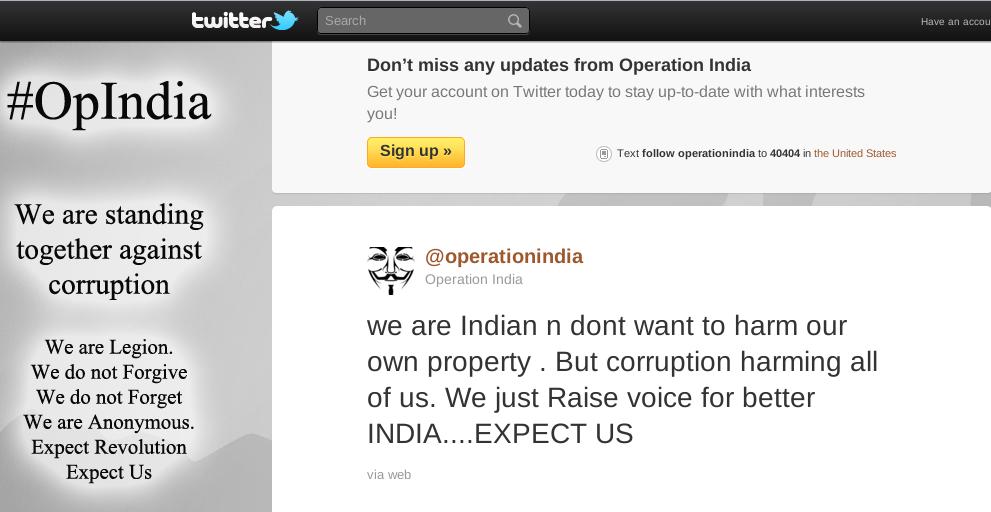
Anonymous withdrawn #op-India & the untold story of this operation.


The fledgling Indian operation of hacker group Anonymous attacked the website of the Indian army on Friday, but reversed its decision after it ran into criticism from Indian supporters who were annoyed that the Indian army was targeted.
Later on Friday, the hacker group said in a Twitter message that the Indian army site was now working fine. The new consensus appears to be not to target government websites, but only those of corrupt politicians. Anonymous has made common cause in India with an anti-corruption movement in the country. It hacked earlier this week the website of the National Informatics Center (NIC), an IT planning and services organization of the Indian government. On Anonymous' Operation India page on Facebook, it was criticized on Friday by a number of users after it announced that it had hacked the Indian army's site. "I won't support hacking the page of Indian Army. SAD," said one Facebook user. "Why indian army? what do they have to do with this? this is not Pakistan," said another user. Later on Friday, the Indian operation of Anonymous said on Facebook and Twitter that from now on it would target only corrupt politicians. "Operation India Anonymous Feel that we should not Target any site without getting your opinions," it said on Facebook. On Twitter, the group said that they were Indians, and "dont want to harm our own property." Anonymous said earlier in the day that the attack on the Indian army site had not led to any loss of data for the army, but was just meant to send a message to the Indian government about corruption. It also posted videos of its demands on YouTube. The hacker group also claimed to have attacked the NIC site again on Friday. The part of the website that was hacked earlier in the week is still "under maintenance." The NIC hosts a number of Indian government sites. Late Thursday, Anonymous said it had launched a DDoS (distributed denial of service) attack on Turkish government websites in protest against a new Internet filter system that is to be introduced in August. The website of a Turkish telecommunications authority was not accessible. 
Some Untold Facts and the reality of #op-India:- 
In reality Anonymous never start #op-India, because Anonymous don't hit democratic countries, media and so on.It was a few Indian guy (for some reason I am not publishing their names, but I believe that you all know them) who started this mission by using the name of Anonymous. They did this for their personal profit, not for the noble cause which they ware pretending to say. In short time that guys just fool some innocent Indians, they played with the soft corner and miss use the sympathy of common peoples. In short the #op-india was totally fake, and was created for personal profit. Now due to huge pressure they were forced to close that fake mission. I am proud to say that VOGH was among them who protest those crooks who did this thing. They just violated the media, GOV and more importantly they tricks with the emotion of common Indians. We strongly earge to Indian GOV that those rascals should be fucked up.

SHARE OUR NEWS DIRECTLY ON SOCIAL NETWORKS:-

Sony Hackers LulzSec Strike FBI Affiliate InfraGard


LulzSec, the hacking group that has been identified as being behind the latest attack on Sony, has struck again—this time targeting a private-sector FBI affiliate called InfraGard.
InfraGard is a non-profit organization that connects the business community with law enforcement. It has about 42,000 members, including FBI agents, according to its website, and has an FBI special agent coordinator at each the bureau's field offices who recruits interested civilians nearby to form local InfraGard chapters. The InfraGard hack was part of a LulzSec action it called "Fuck FBI Friday" and culminated in the anonymous hacking group's publication of InfraGard e-mails, passwords and personal contact information for about 180 members on Friday. One LulzSec tweet late Friday promised "700MB in emails" via a link to a torrent file. LulzSec also defaced the InfraGard Atlanta website with a YouTube video challenging its target to "LET IT FLOW YOU STUPID FBI BATTLESHIPS," according to reports.
The hack of InfraGard that netted all the data published Friday seems to have occurred about a week or more ago. One InfraGard member told CNET Friday that he was contacted by a hacker group via email on May 26.
Karim Hijazi, CEO of botnet-tracking company Unveillance, said the hackers threatened to publish information about him found on InfraGard if he didn't give them sensitive security information about botnets. Botnets are networks of personal computers used by hackers and spammers who have slaved those PCs to the botnet either from volunteers, as is the case with the Anonymous hacking group's botnet, or from unsuspected PC users through a computer virus. Hijazi said that about a week before the first email came from "unveillance.owned@husmail.com," his company had detected attempts to crack the Unveillance corporate network with iPredator, a VPN tunneling tool. He also told CNET that he believed an unknown person had listened in on a company conference call. In a later IRC chat with his tormenters, the LulzSec hackers threatened to post a recording of a company call they said they had listened in on. "They had me under the gun for a little over a week with threats and extortion," Hijazi told CNET. "The very nature of having to contend with someone who is holding something ransom is not pleasant."


SHARE OUR NEWS DIRECTLY ON SOCIAL NETWORKS:-

Anonymous Targets Australian Security Intelligence Organisation (ASIO) & Defence Signals Directorate (DSD)

Anonymous Targets Australian Security Intelligence Organisation (ASIO) & Defence Signals Directorate (DSD)

Australian rampage of Anonymous continues, after took down of several Australian Government website & a massive data breach from Australian ISP named AAPT now the nuisance hacker collective group today attempted to hack into both the Australian Security Intelligence Organisation (ASIO) and Defence Signals Directorate (DSD) websites. The attack was took place in early Friday, and here also Anon enlisted this cyber attack among their F**k Friday rampage also known as #FFF. The hacker group claimed to have shut down a computer server belonging to Australia's domestic spy agency ASIO, reportedly briefly closing down access to its public webpage. On its Twitter feed Anonymous Australia (@AuAnon) wrote: "The anonymous Operation Australia hackers have today again been busy with further attacks on the ASIO and DSD website."
According to sources - ASIO server faced massive traffic generated from a DDoS botnet, which immediately effected the normal service and later when loads get increased then as expected ASIO became passive and gone offline. The Australian Security Intelligence Organisation (ASIO) acknowledged some disruption to its website. "ASIO's public website does not host any classified information and any disruption would not represent a risk to ASIO's business."- said ASIO spokesman. The Sydney Morning Herald reported that ASIO's website was down for at least 30 minutes Friday morning, but it appeared to be loading normally Friday afternoon. Operation Australia, which has its own @Op_Australia Twitter stream said it would "stop the attacks at 10pm Aus. BUT we will never stop watching!". 


SHARE OUR NEWS DIRECTLY ON SOCIAL NETWORKS:-

Hackers From #Anonymous #Antisec Broke Into US Prison Contractor Site (#FFF)

Hackers From #Anonymous #Antisec Broke Into US Prison Contractor Site (#FFF)
Earlier we covered that Anonymous has promised to engage Cyber Attack on every Friday, and yet again they kept the promise. In this week #FuckFBIFriday rampage Hactivist Anonymous blown the official website of The Geo Group, a major US prison contractor. One of the official twitter a/c of Anonymous tweeted this news and took responsibility of this cyber attack. Anonymous subgroup #Antisec took credit for defacing The Geo Group website home page. After the site the site was immediately sent offline and later it was kept under construction, today morning the site came back to its original format. The hacker also created a deface mirror on Zone-H
Earlier for #FFF in the last Friday they have breached the Federal Trade Commission (FTC) Server and hacked the official website of U.S. Federal Trade Commission, consumer rights, & National Consumer Protection Week. Also one week before for Friday rampage Anonymous released sensitive conference call between FBI & Scotland Yard.


SHARE OUR NEWS DIRECTLY ON SOCIAL NETWORKS:-

Apple Launching New iPad (3rd Generation) in 12 Countries This Week

Apple Launching New iPad (3rd Generation) in 12 Countries This Week
In a press release Apple confirmed the launch on new i-pad, the third generation of its category defining mobile device, will arrive in South Korea and 11 additional countries on Friday, April 20. The new iPad features a stunning new Retina™ display, Apple’s new A5X chip with quad-core graphics and a 5 megapixel iSight® camera with advanced optics for capturing amazing photos and 1080p HD video. The new iPad still delivers the same all-day 10 hour battery life while remaining amazingly thin and light. In addition to South Korea, the new iPad also will be available beginning on Friday, April 20 in Brunei, Croatia, Cyprus, Dominican Republic, El Salvador, Guatemala, Malaysia, Panama, St Maarten, Uruguay and Venezuela. Beginning on Friday, April 27, the new iPad will be available in Colombia, Estonia, India, Israel, Latvia, Lithuania, Montenegro, South Africa and Thailand.
The new iPad Wi-Fi models will be available in black or white for a suggested retail price of $499 (US) for the 16GB model, $599 (US) for the 32GB model and $699 (US) for the 64GB model. The iPad Wi-Fi + 4G models will be available for a suggested retail price of $629 (US) for the 16GB model, $729 (US) for the 32GB model and $829 (US) for the 64GB model. The new iPad will be sold through the Apple Online Store (www.apple.com) and select Apple Authorized Resellers. Additionally, iPad 2 is available at a more affordable price starting at just $399.
Battery life depends on device settings, usage and other factors. Actual results vary. 4G LTE is supported only on AT&T and Verizon networks in the U.S. and on Bell, Rogers and Telus networks in Canada. Data plans sold separately. Apple designs Macs, the best personal computers in the world, along with OS X, iLife, iWork and professional software. Apple leads the digital music revolution with its iPods and iTunes online store. Apple has reinvented the mobile phone with its revolutionary iPhone and App Store, and is defining the future of mobile media and computing devices with iPad.


SHARE OUR NEWS DIRECTLY ON SOCIAL NETWORKS:-

Anonymous Released Sensitive Conference Call Between FBI & Scotland Yard

Anonymous Released Sensitive Conference Call Between FBI & Scotland Yard

Hacktivist Anonymous continuing their F**k Friday rampage. In the last Friday they have recorded & released a sensitive conference call between the FBI and Scotland Yard. The group released a roughly 15-minute-long recording of what appears to be a Jan. 17 conference call devoted to tracking and prosecuting members of the loose-knit hacking group and its spinoff group LulzSec. FBI source said that "The information was intended for law enforcement," the source also told that those responsible will be held accountable. 
The authenticity of the recording could not be immediately verified and it's unclear how the hacking group obtained it. Names of some of the suspects being discussed were apparently edited from the recording. "The information was illegally obtained and a criminal investigation is underway," FBI spokesman Tim Flannelly told FoxNews.com. He did not provide any additional details.
If authentic, the discussion itself appears quite sensitive. Those on the call talk about what legal strategy to pursue in the cases of Ryan Cleary and Jake Davis -- two British suspects linked to Anonymous -- and discuss details of the evidence gathered against other suspects "We've set back arrests of Kayla and T-flow until we know what's happening," 
In a pastebin Anon also released a email titled "Anon-Lulz International Coordination Call" with with all the email-ids of FBI & Scotland Yard officers, time, Access Code and detailed time. In their twitter AnoymousIRC said "The FBI might be curious how we're able to continuously read their internal comms for some time now." 
Anon made the conference call available for download in mp3 and also released a YouTube video


SHARE OUR NEWS DIRECTLY ON SOCIAL NETWORKS:-

Thousands of E-Mails, Résumés at Risk After Eidos Hacking


Hackers might have accessed up to 25,000 e-mail addresses and 350 résumés during an attack on game developer Eidos Interactive’s websites, parent company Square Enix said Friday.
The security breach, which Square Enix said occurred Wednesday, could have given hackers access to user data for the Deus Ex: Human Revolution website, as well as résumés submitted by job applicants to Eidos.
“Square Enix can confirm a group of hackers gained access to parts of our Eidosmontreal.com websiteas well as two of our product sites,” the company told Joystiq. “We immediately took the sites offline to assess how this had happened and what had been accessed, then took further measures to increase the security of these and all of our websites, before allowing the sites to go live again.”
Square Enix added that it would be contacting all parties that might have been affected by the breach, emphasizing that no credit card information was compromised.
According to a report by former Washington Post writer Brian Krebs, the official Deus Ex: Human Revolution and Eidos websites were inaccessible Thursday morning. During this period, hackers reportedly put up a banner that read “Owned by Chippy1337.”
The hackers, Krebs wrote, said they plan to distribute the stolen information on file sharing networks. His report pegs the volume of information stolen, according to the hackers, to be the personal information of more than 80,000 users and 9,000 ésumés.
A recent Ars Technica report suggests there might be discord among members of hacking collective Anonymous, centering on a 17-year-old British hacker named Ryan. According to a chat log uncovered by Krebs, the Eidos hackers attempted to frame Ryan for the attack.
It’s unclear whether this is related to the crippling hack on Sony’s PlayStation Network several weeks ago that left millions of users’ personal information at risk. Anonymous has disavowed responsibility for that attack.
Neither Square Enix nor Eidos Interactive responded to Wired.com’s requests for comment Friday.

SHARE OUR NEWS DIRECTLY ON SOCIAL NETWORKS:-

After #opTurky, 32 Anonymous get busted by Turky Police


After hacker group Anonymous' apparently successful Operation Turkey to protest Internet censorship, the country's authorities have detained 32 people in connection with the attack on Turkish government Web sites.
After Friday's attack, Turkey's telecommunications authorities investigated and took the people into custody, according to a report today by Turkey's state news agency. Eight of those detained were under 18 years old, the report said.
The arrests come just days after Spain said Friday it arrested three Anonymous hackers in connection with attacks on Sony's PlayStation Network, governments, banks, and others. Retribution followed quickly, with an Anonymous attack that reportedly took a Spanish police off the Net.
The attacks take the form of a distributed denial of service (DDoS), which involves a coordinated flooding of a Web site with traffic with specially crafted network tools.
Security firm Sophos, though, said the Turkish attackers apparently used an attack tool called LOIC (Low Orbit Ion Cannon) that isn't terribly anonymous.
"LOIC...doesn't do a very good job of covering your tracks--making it potentially easy for computer crime authorities to track those behind the attacks," said Sophos' Graham Cluley.
A loose group of angry hacktivists is only one force spotlighting the Net's vulnerabilities today. The International Monetary Fund suffered what was reported over the weekend to be a major network breach. Google said it disrupted a plan the company said originated from China to break into Gmail accounts. It's open season for hackers.
One person's illicit hacker might be another person's sanctioned military authority, though. The United States and United Kingdom increasingly talk of cyberwar as just a facet of ordinary war.

SHARE OUR NEWS DIRECTLY ON SOCIAL NETWORKS:-

Adobe Says Windows 8 Users are Vulnerable to Active Flash Exploits (Microsoft Will not Patch the Bug Until October)

Adobe Says Windows 8 Users are Vulnerable to Active Flash Exploits (Microsoft Will not Patch the Bug Until October 26)


Adobe confirmed a serious security hole in Windows 8, hackers have been aiming at  Microsoft's Windows 8 PCs for several weeks as it is vulnerable to attack by exploits. Its very unfortunate for those who runs all the four (consumer previewdeveloper preview, release preview & enterprise) pre-release version of Windows 8, because the Redmond based software giant Microsoft said it will not patch the bug in Flash Player until what it called "GA," for "general availability." That would be Oct. 26, when Windows 8 hits retail and PCs powered by the new operating system go on sale. 
"We will update Flash in Windows 8 via Windows Update as needed," a spokeswoman said in a reply to questions. "The current version of Flash in the Windows 8 RTM build does not have the latest fix, but we will have a security update coming through Windows Update in the GA timeframe."
Microsoft, not Adobe, is responsible for patching Flash Player in Windows 8 because the company took a page from Google's playbook and integrated the popular media software with Internet Explorer 10 (IE10), the new operating system's browser. Last month, Adobe issued two updates for Flash Player that patched eight vulnerabilities, some of which were ranked as "1" by the company, its highest threat warning. One of the vulnerabilities, tagged as CVE-2012-1535, was patched Aug. 14, but had been exploited for an indeterminate time before that.
In fact, CVE-2012-1535 was one of four "zero-days," or unpatched vulnerabilities, exploited in a 16-week stretch by an elite hacker gang revealed by Symantec researchers on Friday. Microsoft has not updated the Flash in IE10 within Windows 8 to accommodate those two sets of patches, Adobe confirmed Friday. "Flash Player 11.3.372.94 does not incorporate the fixes released in APSB12-18 and APSB12-19," said Wiebke Lips, a spokeswoman for Adobe, referring to the Aug. 14 and Aug. 21 Flash updates.
Windows 8 RTM's IE10 identifies the integrated Flash Player as version 11.3.372.94, a more recent build than the one in Windows 8 Release Preview, but older than the most-up-to-date version for Windows, 11.4.402.265, which Adobe delivered on Aug. 21.

Adobe actually told some users about Windows 8's Flash situation two weeks ago. On an Adobe support forum, a company representative announced on Aug. 23 that there would be no Flash update for Windows 8 and IE10 until late October. "Since Windows 8 has not yet been released for general availability, the update channel is not active," said Chris Campbell, identified as an Adobe employee. "Once this goes live, you'll start getting updates to Flash Player."

-Source (Computer World)


SHARE OUR NEWS DIRECTLY ON SOCIAL NETWORKS:-

SEGA Hacked


SEGA took the SEGA Pass system offline Thursday. Friday morning, it sent an email to Pass members alerting them that an unauthorized and unidentified third party had gained access to the SEGA Pass database. SEGA Pass, the gaming company’s member database and online network, has been hacked. Members’ email addresses, birth dates and encrypted passwords were obtained in the attack, according to the company. SEGA is also telling members that it has reset their passwords, that all access to SEGA Pass has been temporarily suspended and that Pass users should consider changing their passwords on other sites. No party has stepped up to claim responsibility as of yet, though hacker group LulzSec tweeted at SEGA Friday morning:


 “We want to help you destroy the hackers that attacked you. We love the Dreamcast, these people are going down.” Meanwhile, LulzSec recently claimed responsibility for hacking Sony’s and Nintendo’s servers, taking down the CIA’s website and hacking the U.S. Senate.

SHARE OUR NEWS DIRECTLY ON SOCIAL NETWORKS:-

Stratfor Hacker Jeremy Hammond Sentenced to 120 Months in Prison

LulzSec Hacker Jeremy Hammond Sentenced to 120 Months in Prison For Stratfor Hack

Infamous hacker Jeremy Hammond convicted by the Judge for cyber-attacks on government agencies and businesses, including a global intelligence company. This 28 year old Chicago hacker who is also known as "Anarchaos" was arrested by the federal authorities and been charged for the  breach of the security analysis company Stratfor. In December last year the bail application of Hammond was also been rejected by the the U.S. District Judge Loretta Preska. On June this year Hammond pleaded guilty for his sin. In his statement he said "I have pleaded guilty, it is a relief to be able to say that I did work with Anonymous to hack Stratfor, among other websites." 
That guilty plea indeed worked out for him, as that time it was predicated that Hammond  might have to face 30 years in prison, but on Friday Judge Loretta Preska sentenced Hammond to 120 months in federal prison and three years of supervised release for illegally accessing computers systems of law enforcement agencies and government contractors. In an emotional proceeding that lasted more than 2 hours in a Manhattan federal court room on Friday, victims and relatives of Hammond railed against the FBI and shed tears on his behalf following the sentencing. One overwrought person claiming to be a victim was forcibly escorted from the court by officers. But Hammond likely knew the sentence was coming, his lawyer said. "When Jeremy took this plea with a 10-year maximum, I think he understood this was very likely the outcome," said Sarah Kunstler, Hammond's defense attorney outside of court house.
Chief U.S. District Judge Loretta A. Preska said Hammond's digital handiwork had compromised thousands of people's personal and financial data, including the unpublished phone numbers and addresses of law enforcement, who then received threats. Hammond tried unsuccessfully to argue that his actions were politically motivated, she said. Hammond pleaded guilty to a single charge with a 10-year maximum sentence. Still his lawyers are asking to reduce his punishment for a sentence of 20 months.
Hammond has been held without bail since his arrest in March on charges connected with last year's hacking of Strategic Forecasting, or Stratfor, an Austin, Texas-based international intelligence broker, by AntiSec, an offshoot of LulzSec, which is in turn an offshoot of the hacktivist collective AnonymousProsecutors say the hack of Austin, Texas-based Strategic Forecasting resulted in the theft of 60,000 credit-card numbers and records for 860,000 clients. The government alleges that he published some of that information online, and used some of the stolen credit card data to run up at least $700,000 in unauthorized charges. He is also accused of giving about five million internal emails to WikiLeaks, which were published under the name The Global Intelligence Files.


-Source (Fox News)


SHARE OUR NEWS DIRECTLY ON SOCIAL NETWORKS:-

Again WikiLeaks Donations Has been Blocked By Icelandic Bank


An Icelandic bank that unknowingly provided a way for WikiLeaks supporters to fund the controversial website best known for publishing classified military and diplomatic websites earlier this week has closed the proverbial loophole, according to Reuters reports.

In a story published Friday, Maria Aspan of the wire service revealed that Valitor had agreed earlier this week to accept payments processed by DataCell, a data hosting service provider and a WikiLeaks supporter. However, bank officials later told Aspan that they had not been informed that the transactions would include donations to the Julian Assange owned website.

Credit giants Visa and MasterCard have banned DataCell from processing such donations for months, and on Friday, Valitor spokeswoman Jonina Ingvadottir sent an emailed statement to Reuters stating that the bank "was not informed that DataCell would be conducting these activities when their business agreement was made," and another source told Aspan that Valitor had "blocked the Visa and MasterCard WikiLeaks donations and terminated its contract with DataCell" earlier in the day.

That source told Reuters that less than 100 donations were processed before the agreement was terminated.

"The failed Valitor partnership is the latest blow to Assange, who has struggled to gain funding since the major payments networks
stopped processing payments to WikiLeaks," Aspan wrote.

"The Internet vigilante group Anonymous temporarily shut down the public websites of both Visa and MasterCard in December after the companies began their embargo."
She added that Olaf Sigurvinsson, the founder of DataCell, "confirmed that Valitor had terminated the contract with his company" and that when the contract was signed, he had made it "absolutely clear" to the Icelandic financial institution that the company would "continue… to collect donations" for various organizations, including WikiLeaks.
On a special page dedicated solely to donations, Sigurvinsson's company posted a statement in which they said, "DataCell advocates free speech and jurisdiction independence. We plead the public support for the independence of media and jurisdiction; and to bring truth, integrity, dignity and justice to the world… You can help by donating financially to the following organizations."

Further down on the page is a form which individuals can donate by credit card to WikiLeaks.

In addition, the web page claims that, "DataCell is taking on legal case against Visa and MasterCard for suspending its account, for which DataCell was processing credit card donation for WikiLeaks. Please contribute to DataCell legal fund to support in its legal battle against credit card giants for their unjustified and prejudicial action."

SHARE OUR NEWS DIRECTLY ON SOCIAL NETWORKS:-

Anonymous Take Down CIA- Central Intelligence Agency Website

Anonymous Take Down CIA- Central Intelligence Agency Website  
The official website of CIA- Central Intelligence Agency faced massive cyber attack on the last Friday. Hacktivist Anonymous took responsibility if the cyber attack. At approximately 3:10 p.m. Eastern time one of twitter accounts related to the hackers' group announced "cia.gov DOWN. #UMAD?#Anonymous."  And also claimed that this is yet another biggest denial of service attack of this year. This attack was the part of Anon's traditional #FuckFriday boom. The last Friday Anonymous released sensitive conference call between FBI & Scotland Yard. Earlier for #OpMegaupload they have bring down Federal Authorities, US Govt, Brazil Govt, Ireland's Dept of Finance & Justice, CBS TV Network, UFC.com and many more.


SHARE OUR NEWS DIRECTLY ON SOCIAL NETWORKS:-

FBI Agent's Laptop Hacked, 12 Million Apple UDID Stolen By Anonymous (#FFF)

FBI Agent's Laptop Hacked, 12 Million Apple UDID Stolen By Anonymous (#FFF)

#Antisec an Offshoot part of infamous hacker collective Anonymous claims to have stolen a file from an FBI laptop which contained more than 12 million unique Apple device indentity numbers. The hackers declares this hack as part of their Friday rampage (#FFF) though the breach did not took place on Friday
The data which hackers stole came from a laptop belonging to Supervisor Special Agent at the FBI, Christopher K. StanglStangl, who joined the FBI in 2003 after graduating from Monmouth University, has been with the agency for nine and a half years and won an award in 2010 for helping bust a cyber crime ring. He was also sucked into another Anonymous stunt earlier this year when at least one of their supporters breached an FBI conference call that had been discussing Anonymous and LulzSec. Stangl was listed among those invited into the call, in an e-mail that was posted on PastebinIn a video posted to Facebook in 2009 (and which will likely be getting a lot more views in the coming days), Stangl is shown wearing a dark suit and tie, speaking to the camera, and calling for “cyber security experts” to join the FBI.

According to the hacker :-

"During the second week of March 2012, a Dell Vostro notebook, used by Supervisor Special Agent Christopher K. Stangl from FBI Regional Cyber Action Team and New York FBI Office Evidence Response Team was breached using the AtomicReferenceArray vulnerability on Java, during the shell session some files were downloaded from his Desktop folder one of them with the name of “NCFTA_iOS_devices_intel.csv” turned to be a list of 12,367,232 Apple iOS devices including Unique Device Identifiers (UDID), user names, name of device, type of device, Apple Push Notification Service tokens, zipcodes, cellphone numbers, addresses, etc. the personal details fields referring to people appears many times empty leaving the whole list incompleted on many parts. no other file on the same folder makes mention about this list or its purpose."

The data is just part of a larger database of 12,367,232 UDIDs, and personal information such as full names, cellphone numbers, addresses and zipcodes belonging to Apple customers. The data was allegedly stolen via exploiting a Java vulnerability. In a pastebin note, the hacker posted several download links of the hacked database. Several security experts have already stated that the stolen data is correct. For those you are not familiar with the term UDID -Each iOS device (iPhone, iPad, iPod touch) is assigned a unique alphanumeric number known as a UDID. This was previously used by app developers to track data usage for their apps, until Apple decided to reject any apps which sought to gain access to this number in the most recent official iOS update. As well as believing that the FBI was using these identifiers to track people, though AnticSec, in its missive on Pastebin, said it didn't agree with the idea of hardware coded identifiers anyway: "We always thought it (UDIDs) was a really bad idea. That hardware coded IDs for devices concept should be eradicated from any device on the market in the future." To read the full press release of #Antisec click Here


SHARE OUR NEWS DIRECTLY ON SOCIAL NETWORKS:-

Again WikiLeaks Shuts Down Visa Card Payments

The brief, accidental lull in the fighting between WikiLeaks and the card companies that refuse to allow the group donations has ended. After WikiLeaks announced Thursday that a “workaround” had appeared for those hoping to contribute to the group via credit card, Visa has moved to shut down that channel and reinstitute the card companies’ financial blockade of the secret-spilling group. Payments to WikiLeaks from all card companies have been blocked again since early Friday, according to Sveinn Andri Sveinnson, an Icelandic lawyer for WikiLeaks and its payment gateway DataCell. More than six months after the Danish payment processor Teller shut down Visa and MasterCard payments to WikiLeaks at the card companies’ request, DataCell had made a new contract with the Icelandic processor Valitor,which unbeknownst to Visa allowed payments to WikiLeaks.

“When we signed this contract, it was clear to Valitor that this was for WikiLeaks donations, and they assented,” says Sveinnson. “Visa was saying that they hadn’t ended their financial blockade but people could see they could make payments. So it was very embarrassing for Visa and very hilarious.”

But Visa, which has claimed that WikiLeaks may violate its terms of service for encouraging illegal activity, didn’t find the situation so funny. It quickly shut down that new line of payment, pressuring Valitor to end its relationship with DataCell and WikiLeaks Friday morning. A spokesperson for Visa confirms in a somewhat convoluted statement that “An acquirer briefly accepted payments on a merchant site linked to WikiLeaks. As soon as this came to our attention, action was taken with the suspension of Visa payment acceptance to the site remaining in place.”

That means all card payments to DataCell and WikiLeaks–including MasterCard and American Express–are blocked again, says Sveinnson.
DataCell chief executive Andreas Fink told Bloomberg News that in the brief window in which WikiLeaks could receive credit card donations, it amassed “five-to-six digit figures” in contributions.
WikiLeaks and DataCell had been planning to file a complaint Thursdaywith the European Union Commission against Visa, MasterCard, and the Danish payment processor Teller. Sveinnson said they held off on filing that complaint after it seemed the card companies might have reopened payments. Now Sveinsson says they will go ahead with their complaint against the card companies early next week, and will file an additional protest against Valitor with the Icelandic Financial Authority.

“Now we’re back to the same position,” says Sveinnson. “It’s a strange world we live in.”

SHARE OUR NEWS DIRECTLY ON SOCIAL NETWORKS:-

Cyber-Attack on US Natural Gas Pipeline Companies Network, Said DHS

Cyber-Attack on US Natural Gas Pipeline Companies Network, Said DHS

In a report Department of Homeland Security (DHS) said a major cyber attack is currently under way aimed squarely at computer networks belonging to US natural gas pipeline companies. DHS has issued at least three confidential warnings at the second highest alert level (Amber) to natural gas suppliers, giving a detailed warning of a wave of attacks. But the wave of cyber attacks, which apparently began four months ago – and may also affect Canadian natural gas pipeline companies – is continuing. That fact was reaffirmed late Friday in a public, albeit less detailed, "incident response" report from the Industrial Control Systems Cyber Emergency Response Team (ICS-CERT), an arm of DHS based in Idaho Falls, Idaho. It reiterated warnings in the earlier confidential alerts made directly to pipeline companies and some power companies. The attacks are said to have been carried out using spear-phishing techniques, in which criminals use specially crafted virus-infected emails to target specific company employees. 
Approximately 200,000 miles of these interstate natural gas transmission pipelines in the US supply 25 percent of the nation's energy. Pipeline safety has been a major issue in recent years, highlighted by the San Bruno, Calif. In Friday's public warning, ICS-CERT reaffirms that its "analysis of the malware and artifacts associated with these cyber attacks has positively identified this activity as related to a single campaign from a single source." It goes on to broadly describe a sophisticated "spear-phishing" campaign – an approach in which cyber attackers attempt to establish digital beachheads within corporate networks.


SHARE OUR NEWS DIRECTLY ON SOCIAL NETWORKS:-

Chrome Has Been Detected as Malware By Microsoft Anti Virus


Google has released a new version of Chrome after Microsoft's antivirus software flagged the browser as malware and removed it from about 3,000 people's computers on Friday.
Microsoft apologized for the problem and updated its virus definition file to correct the false-positive problem.
But not before the damage was done. Even though the problem directly affected only a relatively tiny fraction of Chrome users, Google decided to spin up and distribute updated beta and stable versions of Chrome.
"Earlier today, we learned that the Microsoft Security Essentials tool began falsely identifying Google Chrome as a piece of malware ("PWS:Win32/Zbot") and removing it from people's computers," said Mark Larson, Chrome engineering manager, in a blog post Friday. "We are releasing an update that will automatically repair Chrome for affected users over the course of the next 24 hours."
Win32/Zbot is a trojan horse that lets attacker steal passwords and gain access to a victim's computer--not the sort of product anyone would want associated with their Web browser.

Microsoft had this statement about the mistake:-
Information about incorrect detection of Google Chrome as PWS:Win32/Zbot
On September 30th, 2011, an incorrect detection for PWS:Win32/Zbot was identified and as a result, Google Chrome was inadvertently blocked and in some cases removed. Within a few hours, Microsoft released an update that addresses the issue. Signature versions 1.113.672.0 and higher include this update. Affected customers should manually update Microsoft Security Essentials with the latest signatures. After updating the definitions, reinstall Google Chrome. We apologize for the inconvenience this may have caused our customers.
To get the latest definitions, simply launch Microsoft Security Essentials, go to the update tab and click the Update button. The definitions can be updated manually by visiting the following Microsoft Knowledge Base article:
http://support.microsoft.com/kb/971606
PWS:Win32/Zbot is a password-stealing trojan that monitors for visits to certain websites. It allows limited backdoor access and control and may terminate certain security-related processes."

Google also provided detailed instructions on how to update the Microsoft Security Essential virus definition file and to reinstall Chrome. It's good that both companies worked to tidy this problem up swiftly, but perhaps Microsoft should have included Google, not just its customers, in its apology.

-News Source (Cnet)


SHARE OUR NEWS DIRECTLY ON SOCIAL NETWORKS:-

Reuters Blogging Platform Hacked, A Fake Interview of Syrian Rebel Leader Posted

Reuters Blogging Platform Hacked, A Fake Interview of Syrian Rebel Leader Posted 

Thomson Reuters has confirmed the Reuters News blogging platform was compromised and a false interview with a Syrian rebel leader was posted on a Reuters' journalist's blog. "Reuters.com was a target of a hack on Friday," the company said in a statement. "Our blogging platform was compromised and fabricated blog posts were falsely attributed to several Reuters journalists." The phony interview was with Riad al-Assad, the head of the Free Syrian Army, who apparently said his forces were pulling back from the northern province of Aleppo after repeated battles with the Syrian Army. As far as we know, this is completely false, Reuters did not carry out such an interview and the posting has been deleted." -the Reuters statement said. So far Thomson Reuters had no immediate information on who was behind the hacking. While Reuters confirmed the hack, the firm said it does not yet have any information on the party responsible for the fake news. The publication took down its blogging platform on Friday to fix the problem. 
According to a report of Zdnet -The ongoing massive uprising in Syria began in January 2011, as part of the wider Arab Spring. The opposition is dominated by Sunni Muslims, whereas the leading government figures are Alawite Muslims. Protesters are demanding the resignation of President Bashar al-Assad, want to overthrow his government, and are looking to end nearly five decades of Ba'ath Party rule. In response, the Syrian government has deployed the Syrian Army, resulting in the death of more than 10,000 civilians and soldiers. Many more have been injured, and tens of thousands of protesters have been imprisoned.


-Source (Reuters)


SHARE OUR NEWS DIRECTLY ON SOCIAL NETWORKS:-

SAP Will Patch Their Vulnerability Which Was Exposed By (Blackhat 2011 US)


A reportedly serious security bug affecting the J2EE (Java 2 Platform Enterprise Edition) engine in SAP's NetWeaver middleware will be patched soon, SAP said Friday.
NetWeaver underpins SAP's range of enterprise software, including its flagship Business Suite ERP (enterprise resource planning) product. The bug was discussed by security researcher and ERPScan CTO Alexander Polyakov during a presentation at the Black Hat security conference in Las Vegas on Thursday.
The vulnerability makes it possible to crack SAP systems over the Internet by circumventing authorization checks, Polyakov wrote in a blog post before the conference. "For example, it is possible to create a user and assign him to the administrators group using two unauthorized requests to the system."
The attack is also possible on systems that are protected by two-factor authentication systems that use both a secret key and password, he added. ERPscan is making a tool that can detect the problem available at no charge.
"SAP is working closely with Alexander Polyakov on this issue," SAP spokesman Andy Kendzie said in a statement Friday. "SAP will deliver a patch to its customers shortly."
The patch will come as part of a regular security update, and not an out-of-cycle emergency fix, he added.
The news comes shortly after Oracle's release of Java SE 7. The language update shipped with bugs that Oracle engineers knew about prior to the release, a move met with serious consternation from some critics. Oracle plans to fix the bug in an update.

SHARE OUR NEWS DIRECTLY ON SOCIAL NETWORKS:-

Related Posts Plugin for WordPress, Blogger...