Showing posts sorted by relevance for query Chrome. Sort by date Show all posts

Google engineers deny Chrome hack exploited browser's code


Several Google security engineers have countered claims that a French security company found a vulnerability in Chrome that could let attackers hijack Windows PCs running the company's browser.

Several Google security engineers have countered claims that a French security company found a vulnerability in Chrome that could let attackers hijack Windows PCs running the company's browser.
Instead, those engineers said the bug Vupen exploited to hack Chrome was in Adobe's Flash, which Google has bundled with the browser for over a year.
Google's official position, however, has not changed since Monday, when Vupen announced it had successfully hacked Chrome by sidestepping not only the browser's built-in "sandbox" but also by evading Windows 7's integrated anti-exploit technologies.
"The investigation is ongoing because Vupen is not sharing any details with us," a Google spokesman said today via email.
But others who work for Google were certain that at least one of the flaws Vupen exploited was in Flash's code, not Chrome's.
"As usual, security journalists don't bother to fact check," said Tavis Ormandy, a Google security engineer, in atweet earlier today . "Vupen misunderstood how sandboxing worked in Chrome, and only had a Flash bug."
"It's a legit pwn, but if it requires Flash, it's not a Chrome pwn," tweeted Chris Evans, a Google security engineer and Chrome team lead, using the security-speak term for compromising an application or computer.
Justin Schuh, whose LinkedIn account also identifies him as a Google security engineer, chimed in with , "No one is saying it's not a legit exploit. The point is that it's not the exploit [Vupen] claimed."
When asked to confirm the source of the vulnerabilities it exploited, Vupen was blunt in its refusal to share any information.
"We will not help Google in finding the vulnerabilities," said Chaouki Bekrar, Vupen's CEO and head of research, in an email reply to questions. "Nobody knows how we bypassed Google Chrome's sandbox except us and our customers, and any claim is a pure speculation."
Last year, Vupen changed its vulnerability disclosure policies when it announced it would no longer report bugs to vendors -- as do many researchers -- but instead would reveal its work only to paying customers.
Today's Twitter back-and-forth between Google's engineers and Bekrar grew heated at times.
"When it comes to critical vulnerabilities, all software vendors/devs (including Google) always try to downplay the findings," Bekrar said on Twitter .
"I was thinking something similar about researchers who inflate their accomplishments," Schuh replied , also on Twitter, to Bekrar.
The point made by Ormandy, Evans and Schuh was that Vupen didn't exploit a bug in Chrome's own code, but in Flash, which has been partially sandboxed in the stable version of the browser since early March 2011 .
While the Google engineers seemed to acknowledge that a bug in Flash was involved in Vupen's exploit, they also defended the sandbox technology -- meant to isolate Flash from the rest of the computer -- even as it apparently failed to prevent an attack.
"The Flash sandbox blog post went to pains to call it an initial step," said Evans. "It protects some stuff, more to come. Flash sandbox [does not equal] Chrome sandbox."
The blog Evans referred to was published in December 2010 , where Schuh and another Google developer, Carlos Pizano said, "While we've laid a tremendous amount of groundwork in this initial sandbox, there's still more work to be done."
Chrome's Flash sandbox is currently available only in the Windows version of the browser; Google has promised to implement it in the Mac and Linux editions, but has not yet done so.
While Bekrar later hinted that Vupen's exploit did leverage a Flash vulnerability, he said the attack code also took advantage of at least one other bug. "[Chrome's] built-in plug-ins such as Flash are launched inside the sandbox which was created by Google, so finding and exploiting a Flash or a WebKit vulnerability will fall inside the sandboxes and will not circumvent it," he wrote. "A sandbox bypass exploit is still required."
Chrome has a reputation as a secure browser, in large part because of its sandbox technology. Chrome is the only browser to have escaped unscathed at the last three Pwn2Own hacking contests, the annual challenge hosted by the CanSecWest conference in Vancouver, British Columbia, and sponsored by HP TippingPoint's bug bounty program.
In March 2011, no one took on Chrome at Pwn2Own, even though Google had offered a $20,000 prize to the first researcher who hacked the browser and its sandbox.

SHARE OUR NEWS DIRECTLY ON SOCIAL NETWORKS:-

critical Chrome bugs has been patched


Google on Tuesday patched several vulnerabilities in Chrome, including two a French security company said could be used to bypass the browser's anti-exploit technology.
But Chrome 11.0.696.71, which Google rolled out yesterday to users via its automatic update mechanism, does not patch the flaw that Vupen researchers said earlier this month could be exploited on Windows 7. Tuesday's security update was the second for the Chrome "stable" build -- the most polished version of the browser -- this month. Google fixed four vulnerabilities in the update, including two rated "critical," the category typically reserved for bugs that may let an attacker escape Chrome's "sandbox." Google has patched five critical bugs so far this year. One of the remaining pair of flaws was ranked "high" -- and got the researcher who reported it a $1,000 bug bounty -- while the other was labeled "low" on Google's four-step threat scoring system. The two critical vulnerabilities were credited to Google's own security engineers. Although Google declined to confirm that the two most serious bugs could be used by attackers to break out of the Chrome sandbox, and thus plant malicious code on the computer, French security firm Vupen said that that was likely. "The vulnerabilities fixed today and related to GPU and blob handling are a typical example of critical vulnerabilities that can affect Chrome and can be exploited to execute arbitrary code outside the sandbox," said Chaouki Bekar, Vupen's CEO and head of research, in an email reply to questions. Still unpatched, said Bekar, is the bug or bugs that Vupen said its researchers found, then figured out how to exploit, earlier this month. "The recent flaws we discovered in Chrome, including the sandbox bypass, remain unpatched and our exploit code works with version 11.0.696.71, too," said Bekar. Those vulnerabilities made news earlier this month when Vupen announced it had hacked Chrome by sidestepping not only the browser's built-in sandbox but also by evading Windows 7's integrated anti-exploit technologies. Within days, several Google engineers denied that the bugs Vupen exploited were in Chrome itself, claiming instead that the French firm leveraged a flaw in Adobe's Flash, which Google bundles with Chrome. Chrome has been resistant to attack, primarily because of its sandbox technology, which is designed to isolate the browser from the rest of the machine, making it very difficult for a hacker to execute code on the computer. For example, Chrome has escaped unscathed in each of the last three Pwn2Own hacking contests, an annual challenge hosted by the CanSecWest conference in Vancouver, British Columbia, and sponsored by HP TippingPoint's bug bounty program. No other browser included in Pwn2Own has matched Chrome's record at the contest. On Tuesday, Google spokesman Jay Nancarrow declined to comment further about the Vupen exploit claims, and referred to previous statements that Google was unable to investigate the bugs because Vupen would not share details of the flaws. Last year, Vupen announced a change in its vulnerability disclosure policies, saying it would no longer report bugs to vendors -- as do many researchers -- but would reveal its work only to paying customers. According to Web measurement company Net Applications, Chrome accounted for 11.9% of all browsers used last month, putting Google's program in third place behind Microsoft's Internet Explorer, with 55.1%, and Mozilla's Firefox, with 21.6%. Chrome 11 can be downloaded for Windows, Mac OS X and Linux from Google's Web site. Users already running the browser will be updated automatically.

SHARE OUR NEWS DIRECTLY ON SOCIAL NETWORKS:-

Google Announced 'Pwnium 2' & Increased Prize Money $2m To Exploit Chrome

Google Announced 'Pwnium 2' & Increased Prize Money $2m To Exploit Chrome

Few days ago we got the result of Microsoft hosted Blue Hat Security contest, where Microsoft awarded a bunch of hackers and gave away an amount of  $260,000. Immediately after this event, Internet giant Google   has upped the ante in its industry-leading cash-for-security-bugs program with hefty bonuses and a hacking contest that will award up to $2 million worth of prizes to people who successfully exploit its Chrome browser. In the official Chromium blog, Google has announced the plan for Pwnium 2. According to a blog post by Chris Evans, Software Engineer at Google- Pwnium 2 will be held on Oct 10th, 2012 at the Hack In The Box 10 year anniversary conference in Kuala Lumpur, Malaysia.
This time, Google be sponsoring up to $2 million worth of rewards at the following reward levels:
  • $60,000: “Full Chrome exploit”: Chrome / Win7 local OS user account persistence using only bugs in Chrome itself. 
  • $50,000: “Partial Chrome exploit”: Chrome / Win7 local OS user account persistence using at least one bug in Chrome itself, plus other bugs. For example, a WebKit bug combined with a Windows kernel bug. 
  • $40,000: “Non-Chrome exploit”: Flash / Windows / other. Chrome / Win7 local OS user account persistence that does not use bugs in Chrome. For example, bugs in one or more of Flash, Windows or a driver. 
  • $Panel decision: “Incomplete exploit”: An exploit that is not reliable, or an incomplete exploit chain. For example, code execution inside the sandbox but no sandbox escape; or a working sandbox escape in isolation. For Pwnium 2, we want to reward people who get “part way” as we could definitely learn from this work. Our rewards panel will judge any such works as generously as we can. 
Exploits should be demonstrated against the latest stable version of Chrome. Chrome and the underlying operating system and drivers will be fully patched and running on an Acer Aspire V5-571-6869 laptop (which we’ll be giving away to the best entry.) Exploits should be served from a password-authenticated and HTTPS Google property, such as App Engine. The bugs used must be novel i.e. not known to us or fixed on trunk. Please document the exploit. 
We also like to give you reminder that earlier in this year Google had increased vulnerability bounties in Anniversary of Vulnerability Reward Programbe. Also PayPal, Facebook & many other has already started this paid bug bounty program.


SHARE OUR NEWS DIRECTLY ON SOCIAL NETWORKS:-

Security firm exploits Chrome zero-day to hack browser, escape sandbox


 French security company Vupen said today that it's figured out how to hack Google's Chrome by sidestepping not only the browser's built-in "sandbox" but also by evading Windows 7's integrated anti-exploit technologies.
Google said it was unable to confirm Vupen's claims.
"The exploit ... is one of the most sophisticated codes we have seen and created so far, as it bypasses all security features including ASLR/DEP/Sandbox," said Vupen in a blog post Monday. "It is silent (no crash after executing the payload), it relies on undisclosed ('zero-day') vulnerabilities and it works on all Windows systems."
Vupen posted a video demonstration of its exploit on YouTube.
According to Vupen, its exploit can be served from a malicious Web site. If a Chrome user surfed to such a site, the exploit executes "various payloads to ultimately download the Calculator from a remote location and launch it outside the sandbox at Medium integrity level."
Vupen used the Windows Calculator only as an example: In an actual attack, the "calc.exe" file would be replaced by a hacker-made payload.
Historically, Chrome has been the most difficult browser to hack, primarily because of its sandbox technology, which is designed to isolate Chrome from the rest of the machine to make it very difficult for a hacker to execute attack code on the PC.
For example, Chrome has escaped unscathed in the last three Pwn2Own hacking contests, an annual challenge hosted by the CanSecWest conference in Vancouver, British Columbia, and sponsored by HP TippingPoint's bug bounty program.
Last March, a team from Vupen walked away with a $15,000 cash prize afterhacking Safari, the Apple browser that, like Chrome, is built on the open-source WebKit browser engine.
But no one took on Chrome at 2011's Pwn2Own, even though Google had offered a $20,000 prize to the first researcher who hacked the browser and its sandbox.
The Vupen attack code also bypassed Windows 7's ASLR (address space layout randomization) and DEP (data execution prevention), two other security technologies meant to make hackers' jobs tougher.
Vupen said it would not publicly release details of the exploit, or the unpatched bug(s) in Chrome. "This code and the technical details of the underlying vulnerabilities will not be publicly disclosed," said Vupen. "They are shared exclusively with our Government customers as part of our vulnerability research services."
Last year, Vupen changed its vulnerability disclosure policies when it announced it would no longer report bugs to vendors, but instead would reveal its research only to paying customers.
Other security experts reacted today to the news of one or more Chrome zero-days, and to Vupen's practice of providing details only to its clients.
"I suppose that means we have a known Chrome 0-day floating around. That's fun," said Jeremiah Grossman, CTO of WhiteHat Security, in a Twitter message today.
"That also means for that the [government] is outbidding Google for bug bounties," Grossman added in a follow-up tweet.
"For now, the [government] still has more money than Google," chimed in Charlie Miller, the only researcher who has won cash prizes at four straight Pwn2Own contests.
Google, like rival browser maker Mozilla, runs a bounty program that pays independent researchers for reporting flaws in Chrome. Last month, Google paid out a record $16,500 in bounties for bugs it patched in a single update. In the first four months of 2011, Google spent more than $77,000 on bug bounties.
Google cited Vupen's policy of not reporting flaws as the reason it could not verify the French firm's assertions.

SHARE OUR NEWS DIRECTLY ON SOCIAL NETWORKS:-

Chrome 23 Closes 15 Security Vulnerabilities, Promises Longer Battery Life & Added Do Not Track (DNT)

Chrome 23 Closes 15 Security Vulnerabilities, Promises Longer Battery Life & Added Do Not Track (DNT)

The searching giant Google finally included the Do Not Track (DNT) option into its first stable version of the company's browser which is Google Chrome 23. In February internet giant Google has agreed with the White House's Consumer Privacy Bill and here comes the result. Google has implemented the Do Not Track (DNT) header in its Chrome web browser.  Few months ago Microsoft made Do Not Track (DNT) facility available by default in Internet Explorer 10. Also the Redmond based software giant drew some criticism recently for its decision to enable Do Not Track by default in IE 10First it was Mozilla who proposed the Do Not Track mechanism, in Firefox in June 2011 when it released Firefox 5. The DNT option is disabled by default in Chrome and in order to turn it on, users need to go to the customization menu in the top right corner of the browser window. Then click on the Settings option in the left side and scroll down to open the Advanced Settings menu. Under the Privacy menu, check the box next to the "Send a 'Do Not Track' request with your browsing traffic" option. Once that option is enabled, the user will see a message explaining what the DNT system will do for them.
Not only DNT, with the release of Chrome 23, Google closes several security holes and promises to improve battery life for some users. For systems with dedicated graphics chips that support Chrome's GPU-accelerated video decoding, version 23 of the WebKit-based browser is said to significantly reduce power consumption. According to Google, batteries lasted on average 25% longer in its tests when GPU-accelerated video decoding was enabled compared to only using a system's CPU when streaming online videos. Version 23 of Chrome also addresses a total of 15 security vulnerabilities in the browser, 6 of which are rated as "high severity". These include high-risk use-after-free problems in video layout and in SVG filter handling, a integer bounds check issue in GPU command buffers and a memory corruption flaw in texture handling; a Mac-only problem related to wild writes in buggy graphics drivers has also been fixed. Eight medium-severity flaws including an integer overflow that could lead to an out-of-bounds read in WebP handling, and a low-risk have also been corrected. As part of its Chromium Security Vulnerability Rewards program, Google paid security researchers $9,000 for discovering and reporting these flaws. The update to Chrome also includes a new version of the Adobe Flash Player plugin which eliminates a number of critical vulnerabilities, all of which were discovered by the Google Security Team. Further information about the new features can be found in the release announcement, while a full list of security fixes is provided in a post on the Chrome Releases blog. Chrome 23.0.1271.64 is available to download for Windows, Mac OS X and Linux users. 


-Source (Google Chrome Blog, The-H & threatpost)


SHARE OUR NEWS DIRECTLY ON SOCIAL NETWORKS:-

Chrome OS Has Serious Flaws, Said Researchers


Flaws could undermine Google's focus on security of Chrome-powered devices. Since Google's Chrome operating system is built to be used connected to the web, users' files and work will mostly be saved in the cloud. Using Google Docs applications for example, automatically stores the work on Google's servers so you can access it from anywhere across a variety of devices.

Google believes this is the future of computing, and its Chrome OS is designed specifically for Cloud-based use. It also allows Google to talk up security, as your documents are stored and well protected in the Cloud, whereas if somebody were to steal your Chromebook, they won't find all of your files on your HDD like they will if they steal your notebook PC.
However, researchers at an independent security firm say that Chrome's reliance on web computing also makes it vulnerable in other ways. WhiteHat Security researcher Matt Johansen was paid $1,000 by Google for reporting a flaw in the Chrome OS note-taking application that he successfully exploited to hijack a Google Mail account.
Since then, Johansen has said he found the same basic flaw with many other applications (or extensions). "This is just the tip of the iceberg," he told Reuters. "This is just evolving around us. We can see this becoming a whole new field of malware."

Johansen says the key to for Chrome OS hacking is to somehow capture data that is being sent and received by the Chrome browser, to and from the Cloud. "I can get at your online banking or your FaceBook profile or your email as it is being loaded in the browser," he said.
"If I can exploit some kind of Web application to access that data, then I couldn't care less what is on the hard drive." Such snooping could be done by exploiting a vulnerability found in a Chrome extension, for example. Google has recently revealed plans to improve the screening of Chrome extensions to avoid security problems. "Chrome is trusting these extensions more than it would be trusting just another website," Johansen said, referring to how the operating system gives extensions sweeping rights to access data stored on the cloud.

SHARE OUR NEWS DIRECTLY ON SOCIAL NETWORKS:-

Chrome Has Been Detected as Malware By Microsoft Anti Virus


Google has released a new version of Chrome after Microsoft's antivirus software flagged the browser as malware and removed it from about 3,000 people's computers on Friday.
Microsoft apologized for the problem and updated its virus definition file to correct the false-positive problem.
But not before the damage was done. Even though the problem directly affected only a relatively tiny fraction of Chrome users, Google decided to spin up and distribute updated beta and stable versions of Chrome.
"Earlier today, we learned that the Microsoft Security Essentials tool began falsely identifying Google Chrome as a piece of malware ("PWS:Win32/Zbot") and removing it from people's computers," said Mark Larson, Chrome engineering manager, in a blog post Friday. "We are releasing an update that will automatically repair Chrome for affected users over the course of the next 24 hours."
Win32/Zbot is a trojan horse that lets attacker steal passwords and gain access to a victim's computer--not the sort of product anyone would want associated with their Web browser.

Microsoft had this statement about the mistake:-
Information about incorrect detection of Google Chrome as PWS:Win32/Zbot
On September 30th, 2011, an incorrect detection for PWS:Win32/Zbot was identified and as a result, Google Chrome was inadvertently blocked and in some cases removed. Within a few hours, Microsoft released an update that addresses the issue. Signature versions 1.113.672.0 and higher include this update. Affected customers should manually update Microsoft Security Essentials with the latest signatures. After updating the definitions, reinstall Google Chrome. We apologize for the inconvenience this may have caused our customers.
To get the latest definitions, simply launch Microsoft Security Essentials, go to the update tab and click the Update button. The definitions can be updated manually by visiting the following Microsoft Knowledge Base article:
http://support.microsoft.com/kb/971606
PWS:Win32/Zbot is a password-stealing trojan that monitors for visits to certain websites. It allows limited backdoor access and control and may terminate certain security-related processes."

Google also provided detailed instructions on how to update the Microsoft Security Essential virus definition file and to reinstall Chrome. It's good that both companies worked to tidy this problem up swiftly, but perhaps Microsoft should have included Google, not just its customers, in its apology.

-News Source (Cnet)


SHARE OUR NEWS DIRECTLY ON SOCIAL NETWORKS:-

Google begins war against Windows


Google does battle with Microsoft in most of its business areas, but it's gearing up to tackle the big daddy of them all: Windows.

With Windows -- and Macs and other PC operating systems -- Google sees an inefficient, costly, and decidedly 20th century mode of computing. Data is stored on each PC's hard drive, so if a laptop is lost or damaged, all the data stored on it could be gone forever too. And when PCs break, they're expensive and time-consuming to fix.
 
That's especially true in the corporate world. Gartner estimates that each desktop in a corporation costs between $3,000 and $5,000 per year to manage. Laptops can cost even more.

Ironically, all that spending means offices end up with old, rickety computers that the users would never buy for themselves. The high cost of tech support makes it prohibitively expensive for many companies to keep their hardware and software up to date. Services firm NetApplications says that more than 50% of computers are still using Windows XP -- a 10-year-old operating system.

Google's (GOOG, Fortune 500) solution: Chrome OS, a Web-based operating system that is set for release on June 15.

On computers running Chrome OS, all of a user's information is stored in the cloud, in remote servers controlled by Google or other companies. Instead of a desktop software model, which relies on installed apps like Microsoft (MSFT, Fortune 500) Outlook and Word, customers will use on Gmail or another Web mail program, and Google Docs or Office 365, which exist online only. (Yes, you can run Microsoft's cloud Office software on a Google Chrome device.)

That goes for IT departments too. Intricate administrative software is replaced by a Web page that allows tech staff to manage all Chrome OS PCs. And Chrome OS automatically updates with the newest version, saving businesses from spending a fortune deploying new software versions.

"We're venturing into a really new model of computing," Sergey Brin, Google's co-founder, said at a press conference this week. "This head-to-toe software model eliminates a lot of complexity. Complexity is torturing everyone, and that's a flawed model."
0:00 / 2:51 Google's 'me too!' music cloud

Google believes it can save businesses at least 50% on their desktop support expenses if they switch to Chrome OS.

But Google has a long, long uphill battle to fight against the entrenched corporate behemoth that is Microsoft Windows. More than 90% of the world's computers run Windows.

Not every business is ready to simplify its hardware, since many rely on high-end software that does not yet exist as a Web application. And Google has had a shaky relationship with the enterprise in the past, gaining only tepid support for its cloud-based business applications suite.

Also, this has been tried before with practically zero success.

Nearly 20 years ago, Oracle CEO Larry Ellison predicted that "thin client," hard-drive-less desktops connected to and managed by a server would be the future of business computing. Sun Microsystems -- now owned by Oracle (ORCL, Fortune 500) -- also tried and failed to get businesses to adopt thin clients.

Google acknowledged past failures but says that this time, it's different. The company surveyed 400 businesses of all sizes and found that 75% said they could migrate to Chrome OS.

People are now more accustomed to running applications out of a browser, Google executives say. The company partnered with virtualization giant Citrix to allow Chrome OS computers to run Windows applications hosted in the cloud, letting businesses run Adobe (ADBE) Photoshop, for instance, on Chrome OS.

Also, unlike pervious attempts, Google is providing both the operating system and the computer as one package: For $28 per user per month ($20 for government offices and schools), companies can rent "Chromebook" netbooks from Google and get support included.

"For the first time, hardware and software are being packaged together as a service," said Sundar Pichai, Google's senior vice president of Chrome. "We think this can fundamentally change the way people use computing in companies."

As evidence that companies of any size can deploy Chrome OS, Google itself is in the process of switching over to the new operating system.

"We will be deploying them increasingly internally," Brin said. "I hope to report next year that we have a very small percentage of anything other than Chromebooks at Google."

Google thinks it can change the face of computing. The only obstacles: The world's largest software maker, notoriously stubborn IT departments and decades of history going against it.

SHARE OUR NEWS DIRECTLY ON SOCIAL NETWORKS:-

Stable Version of Chrome 12 released


Google Chrome 12 is now the stable release of Google’s web browser, bringing several improvements in security, privacy and graphics capabilities. Chrome now checks downloaded files for malware, and Google claims it has designed the feature in such a way that it doesn’t have to know which URLs you visited or which files you downloaded to be able to detect malicious files. You can now also fine tune the data that websites store on your computer, including Flash Player’s Local Shared Objects (also known as Flash cookies), directly from Chrome.
On the graphics front, Chrome 12 includes support for hardware-accelerated 3D CSS, which enables some nifty effects such as rotating and scaling videos. Try this Chrome Experiment to see some of the new features in action. Finally, Chrome 12 brings several minor improvements such as an improved interface for setting a homepage and searching for Chrome Apps directly from the address bar.

SHARE OUR NEWS DIRECTLY ON SOCIAL NETWORKS:-

Google Chrome OS Has Security Hole (Black Hat 2011)


Black Hat Google has billed its Chrome operating system as a security breakthrough that's largely immune to the threats that have plagued traditional computers for decades. With almost nothing stored on its hard drive and no native applications, there's no sensitive data that can pilfered and it can't be commandeered when attackers exploit common software vulnerabilities.
But according to two researchers who spent the past few months analyzing the Chrome-powered Cr-48 beta released in December, the browser-based OS is vulnerable to many of the same serious attacks that afflict people surfing websites. As a result, users remain susceptible to exploits that can intercept email, documents, and passwords stored on centralized servers, many of which are maintained by Google.
“Even though they put these awesome security protections in place, we're just moving the security problems to the cloud now,” Matt Johansen, a researcher with WhiteHat Security, told The Register. “We're moving the software security problem that we've been dealing with forever to the cloud. They're doing a lot of things right, but it's not the end all and be all for security.”
Virtually all of the threats identified by Johansen and his WhiteHat colleague Kyle Osborn stem from Chrome's reliance on extensions, which are essentially web-based applications. A fair number of the extensions they analyzed contain XSS, or cross-site scripting, bugs, which have the potential to inject malicious code and content into a visitor's browser and in some cases steal credentials used to authenticate user accounts.
As they went about testing what kind of attacks various XSS vulnerabilities could allow, Johansen and Osborn noticed something curious: a bug in one extension often allowed them to hijack the communications of a second extension, even when the latter one had no identifiable security flaws. At the Black Hat security conference in Las Vegas on Wednesday, they demonstrated this weakness by exploiting an XSS hole in one extension to steal passwords from an otherwise secure account on cloud password storage service LastPass.
“If any of the other vulnerable extensions have an XSS hole, we can utilize JavaScript to hijack that communication,” Johansen said. “LastPass is doing absolutely nothing wrong here. You can have an extension that's perfectly fine, but if you have another that has a cross-site scripting error in it we can still access information in secure applications.”
The discovery has generated a quandary for the researchers.
“Whose problem is this to fix?” Johansen continued. “We don't really have an answer for that. LastPass did everything correctly. It's the other extension developers that developed an extension with a vulnerability in it.”
After being informed of the specific attack, LastPass made changes to its Chrome extension that prevented it from being carried out, so it's reasonable to assume extension makers foot some of the responsibility for preventing their apps from being compromised by others. But Johansen couldn't rule out the possibility that vulnerabilities and other apps could probably make LastPass vulnerable again. He said Google might be able to fix the problem by overhauling the application programming interfaces extension developers use.
The researchers also demonstrated an XSS vulnerability in Scratchpad, a text-editor extension that's bundled with Chrome. By sharing files with names containing JavaScript commands stored on Google Docs they were able to obtain the Google session cookies of anyone who used a Chromebook to view the documents. An attacker could exploit the vulnerability to read a victim's email, or to send instant messages to everyone on the victim's contact list. If any of the contacts are using Chromebooks, they could be similarly vulnerable to booby-trapped filenames stored on Google Docs.
A Google spokeswoman defended the security of Chromebooks and said the vulnerabilities enumerated by the researchers weren't unique to the cloud-based OS. In an email, she issued the following statement:
This conversation is about the web, not Chrome OS. Chromebooks raise security protections on computing hardware to new levels. They are also better equipped to handle the web attacks that can affect browsers on any computing device, thanks in part to a carefully designed extensions model and the advanced security available through Chrome that many users and experts have embraced.
The researchers stressed Google engineers were extremely quick to fix the Scratchpad vulnerability and awarded them a $1,000 bounty for their report. But they remain convinced that the security of Chrome OS in many cases is only as strong as its' weakest extensions. They also pointed out that penetration-testing tools such as the Browser Exploitation Framework could be used to help streamline attacks in much the way Metasploit is used to manage exploits for traditional machines.
And, Johansen said, Chrome hacking through XSS may be only the beginning, since the flaws are among the easiest to find and exploit.
“Who knows what we're going to be looking for months or years from now when Google can figure out a way to thwart the cross-site scripting threat,” he said. “Why would we be trying to write buffer overflows when we can just write a simple JavaScript command.” 
-News Source (The Register)

SHARE OUR NEWS DIRECTLY ON SOCIAL NETWORKS:-

After Google Chrome Hack Sergey Glazunov Earnd $60,000 At Pwnium Contest

Sergey Glazunov, A Security Researcher Earn $60,000 At Pwnium After Google Chrome Hack

Sergey Glazunov, a Russian security researcher has earned $60,000 by demonstrating how he could waltz past the security sandbox in Google's Chrome browser to run unauthorized code on fully-patched Windows 7 computers. Glazunov discovered a remote code execution vulnerability in Chrome, that could be used by malicious hackers and cyber criminals to install and run code on innocent users' computers, just by them visiting a website. Glazunov, who is no stranger to reporting bugs in Chrome, won his substantial reward as part of the Pwnium competition run by Google at the CanSecWest conference in downtown Vancouver.
Senior Vice President of Google Chrome and Apps, Sundar Pichai, confirmed the successful hack on his Google+ page. Now that the hack is known throughout the developer world, Pichai understandably said, “Congrats to long-time Chromium contributor Sergey Glazunov who just submitted our first Pwnium entry. Looks like it qualifies as a “Full Chrome” exploit, qualifying for a $60k reward. We’re working fast on a fix that we’ll push via auto-update. This is exciting; we launched Pwnium this year to encourage the security community to submit exploits for us to help make the web safer. We look forward to any additional submissions to make Chrome even stronger for our users.”


SHARE OUR NEWS DIRECTLY ON SOCIAL NETWORKS:-

Pwnium 2: Teenage Hacker Pinkie Pie Exploited Google Chrome & Earned $60,000

Pwnium 2: Teenage Hacker Pinkie Pie Exploited Google Chrome & Earned $60,000

One of world's most popular web-browser Google Chrome has fallen victim at Pwnium 2 security contest which took place earlier on 10th October, at the Hack In The Box conference in Kuala Lumpur, Malaysia. A teenage hacker who goes by the pseudonym "Pinkie Pie" was successfully able to "fully exploit" Chrome, escaping the sandbox using only bugs within Chrome. The hack was done on a fully patched 64-bit Windows 7 system running the latest stable branch of Chrome. For his work, Pinkie Pie will receive the top prize of $60,000 from Google
This isn't the first time that "Pinkie Pie", also the name of a "My Little Pony - Friendship is Magic" character, has won money for exploiting Chrome. In March of this year, he was rewarded for vulnerabilities he used at Google's Pwnium contest, which took place during the Pwn2Own competition at CanSecWest, to break out of the browser's sandbox and execute code. In order to get his code to execute on the test system at the time, he had to combine a total of six vulnerabilities; the holes were later closed with the release of Chrome 18. Along with security specialist Sergey Glazunov, Pinkie Pie also won this year's Pwnie Award for the Best Client-Side Bug. What ever the full results of the Pwnium 2 competition will be announced during a talk by Google Software Engineer Chris Evans today that means, 11th October.
We also like to give you reminder that earlier in this year Google had increased vulnerability bounties in Anniversary of Vulnerability Reward Programbe. Also PayPalFacebook & many other has already started this paid bug bounty program. These bug bounty programs & such security contest indeed enhancing the security. 


-Source (The-H & SC Magazine)


SHARE OUR NEWS DIRECTLY ON SOCIAL NETWORKS:-

Hackers Subvert Google Chrome Sandbox


On Monday, French vulnerability research firm Vupen said that it has discovered a way to circumvent the sandbox in the Google Chrome browser. The sandbox is designed to prevent attackers from exploiting arbitrary code via the browser.
According to Vupen, the exploit it created "bypasses all security features including ASLR/DEP/Sandbox (and without exploiting a Windows kernel vulnerability), it is silent (no crash after executing the payload), it relies on undisclosed (0 day) vulnerabilities discovered by Vupen, and it works on all Windows systems (32-bit and x64)." ASLR and DEP refer to two attack mitigation technologies: address space layout randomization (ASLR), for preventing attackers from easily locating local files to exploit, and data execution prevention (DEP) for preventing attackers from executing arbitrary code.
Vupen, however, didn't provide specific details of the attack. Rather, the company said that it's only releasing details of the proof-of-concept exploit to its government customers. "For security reasons, the exploit code and technical details of the underlying vulnerabilities will not be publicly disclosed. They are exclusively shared with our government customers as part of our vulnerability research services," it said.
For everyone else, Vupen uploaded a video demonstration of the attack to its website, which shows Chrome v11.0.696.65 being exploited when a user visits a Web page containing the exploit code. For the purposes of the demonstration, the exploit code downloads the Calculator application from a remote location, then launches it on the user's PC, outside the sandbox.
Asked for comment on the flaw itself, or the potential risk it poses to Chrome users, Google demurred. "We're unable to verify Vupen's claims at this time as we have not received any details from them," said a spokesperson for Google, via email. "Should any modifications become necessary, users will be automatically updated to the latest version of Chrome.
Google has a reputation for rapidly patching Chrome, helped in no small part--given the prevalence of Adobe Flash, Reader, and Acrobat bugs--by its having first dibs on Adobe patches.
Exploiting Chrome has evidently been on the Vupen researchers' minds. In March, they won a prize in thePwn2Own hacking contest by compromising Apple Safari in five seconds, which earned them $15,000. But they could have sweetened the pot by $5,000 if they had hacked Google Chrome, which hadn't been cracked during three years' worth of Pwn2Own contests.
At least part of that fact could be due to Google running its own bug bounty program, which now pays anywhere from $500 to $3,133.70 for information on particularly egregious vulnerabilities in or clever exploits of its products. Vupen not submitting the details of the bug it discovered leaves open the possibility that someone else might submit the information in return for the reward.
But Vupen's move also illustrates the market dynamics at work behind vulnerability research. Namely, a company such as Vupen builds its business by attracting subscribers to its software vulnerability information service, meaning that its revenue relates directly to the quality, timeliness, and--sometimes--exclusivity of its bug notices.


SHARE OUR NEWS DIRECTLY ON SOCIAL NETWORKS:-

Pwn2Own 2013 Result: Chrome, Firefox, IE, Adobe Reader, Flash & Java Owned

Pwn2Own 2013 Result: Chrome, Firefox, IE, Adobe Reader, Flash & Java Owned Only Safari Survived 

Couple of months ago we have talked about 'Pwn2Own 2013' hacking contest sponsored by HP TippingPoint, ZDI and Google where the most famous and widely used browsers have to face challenges. Now the result of this long awaited security competition has came which is showing that the entire browser security landscape can change in a single day, as browsers thought to be secure are proven to be otherwise. Of the Big Four browsers, only Apple's Safari has so far survived the onslaught of the browser-breakers where Chrome, Internet Explorer 10 and Firefox all fell to the mercy of the hackers. Not only browsers but also three other popular applications that is Adobe Reader, Flash Player and yet again Java fallen victim to hackers at 'Pwn2Own'. And for Java it was a true disaster as Java fell three times, though under the contest rules, only the first attacker was due to win the $20,000 prize. Vupen, a renowned security research firm based in France, cracked both Firefox and Internet Explorer. It roughly explained the attack in a tweet, “We’ve pwned Firefox using a use-after-free and a brand new technique to bypass ASLR/DEP on Win7 without the need of any ROP.” This bug hint leads them winning $100,000 for finding a huge hole. Again in a tweet, Security firm Vupen explained “We’ve pwned MS Surface Pro with two IE10 zero-days to achieve a full Windows 8 compromise with sandbox bypass.” Lastly, U.K.-based security firm MWR Labs cracked Chrome and also gained full control of the operating system, this time Windows 7. It also “demonstrated a full sandbox bypass exploit.” The company explained in a blog post that it found a zero-day in Chrome “running on a modern Windows-based laptop.” It was able to exploit the vulnerability by performing a very similar attack to what took down Facebook, Microsoft, and a number of other well-known companies: It had the laptop visit a malicious website. 

Now lets take look at the final score board of Pwn2Own 2013:

Wednesday:
1:30 - Java (James Forshaw) PWNED
2:30 - Java (Joshua Drake) PWNED
3:30 - IE 10 (VUPEN Security) PWNED
4:30 - Chrome (Nils & Jon) PWNED
5:30 - Firefox (VUPEN Security) PWNED
5:31 - Java (VUPEN Security) PWNED

Thursday:
12pm - Flash (VUPEN Security) PWNED
1pm - Adobe Reader (George Hotz) PWNED
2pm - Java (Ben Murphy via proxy) PWNED


The total damage to the prize fund comes out at a whopping $480k. With HP's announcement that everyone will get paid for each attack, the prize monies will be divvied up as follows:-

  1. James Forshaw: Java = $20K
  2. Joshua Drake: Java = $20k
  3. VUPEN Security: IE10 + Firefox + Java + Flash = $250k
  4. Nils & Jon: Chrome = $100k
  5. George Hotz: Adobe Reader = $70k
  6. Ben Murphy: Java = $20k
As you all know that the main motive of these contest is to make applications, software more safe and secure while figuring out hidden vulnerabilities  Here also for Pwn2Own the security holes figured out by the above experts have already been submitted and taken carefully by those organization  along with that, the expected patch for the browsers have already been released. Those who are still using the older version of those above applications are requested to update their system. So, stay tuned with VOGH and be safe on the Internet. 


-Source (HP, Naked Security) 


SHARE OUR NEWS DIRECTLY ON SOCIAL NETWORKS:-

Chrome 16 Beta With Sync Capabilities

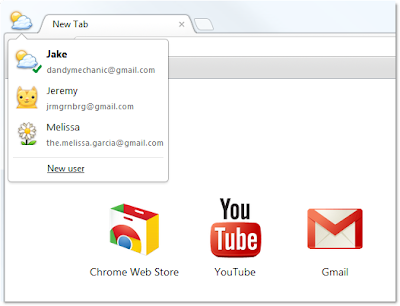
Google chrome beta 16 arrives with adds support for syncing multiple accounts and lots of new features also the web-store get updated. chrome 16 is mainly based on WebKit-based browser's Beta channel. The new beta, version 16.0.912.21, expands Chrome's sync capabilities by adding support for syncing multiple browser profiles.
With Chrome 16, additional users can now sign into a shared computer and access their own data, such as bookmarks, apps and extensions, to personalise their experience. The feature can be found under Options (Preferences on Mac) > Personal Stuff > "Add new user". Once a new user has been added, a "fresh instance" of the browser will open with all of that user's data, and a badge in the upper left corner will show which account is currently in use. Users can switch between accounts by clicking on the badge.
Google Software Engineer Miranda Callahan points out that the new feature "isn't intended to secure your data against other people using your computer, since all it takes is a couple of clicks to switch between users", noting that users are advised to "protect your data from being seen by others, please use the built-in user accounts in your operating system of choice".
Further update and latest can be found on the official google chrome blog.
 
To download Google Chrome for Windows, Linux and Mac Click Here


SHARE OUR NEWS DIRECTLY ON SOCIAL NETWORKS:-

Google Offers $1 Million For Hackers To Exploit Chrome (Pwnium: Rewards For Exploits)

Google Offers $1 Million For Hackers To Exploit Chrome (Pwnium: Rewards For Exploits)

The search giant Google is offering a huge amount (total $1 million) of reward for those who will successfully hack the Google Chrome browser at the Pwn2Own Hacker Contest taking place next week (7 March, 2012). Google will reward those successful contestants at Pwn2Own with prices of $60,000, $40,000 and $20,000 – depending on the severity of the exploits that are demonstrated on a Windows 7 machine running the browser. The Prizes will be awarded on a first-come-first-serve basis, until the entire $1 million has been claimed.
Chrome is currently the only web browser eligible for entry into Pwn2Own that has never been successfully hacked. Contestants often note the difficulty of bypassing Google’s security sandbox as a reason for this. “While we’re proud of Chrome’s leading track record in past competitions, the fact is that not receiving exploits means that it’s harder to learn and improve,” said Chris Evans and Justin Schuh, members of the Google Chrome security team. “To maximize our chances of receiving exploits this year, we’ve upped the ante. We will directly sponsor up to $1 million worth of rewards.”
Additional information can be found on the Chromium official blog.


SHARE OUR NEWS DIRECTLY ON SOCIAL NETWORKS:-

Web Browser Grand Prix 5

 
Three major released have landed since our last impromptu Web Browser Grand Prix (WBGP4): Chrome 12, Firefox 5, and Opera 11.50. Can Chrome or Opera regain the WBGP championship? Will Mozilla Firefox ever overtake Microsoft's IE9 in the rankings?
If it seems like it was only weeks ago when we were compelled to test the then-new Mozilla Firefox 4 against the reigning Web Browser Grand Prix champion Microsoft Internet Explorer 9 in Web Browser Grand Prix 4: Firefox 4 Goes Final, that's because it was only a few weeks ago.
In an attempt to curb the siphoning of its user base to Google, Mozilla decided to keep pace with the frenetic development cycle of Chrome. Firefox 5 is now a reality. But will Mozilla also keep up with innovation like Google? Furthermore, will a higher integer finally allow Mozilla to overtake arch-rival Microsoft in our performance metrics? Can former speed-kings Chrome and Opera reclaim the dual domination of our WBGP crown, as they did in 2010?
We've tightened up our suite of benchmarks for this article, cutting the fat that was Google's V8 JavaScript Benchmark and the redundant two-pixel variant of the GUIMark2 HTML5 Vector Charting test. We also fleshed it out by adding Facebook's JSGameBench, as well as battery life and reliability testing. But before we get to the benchmarks, let's get caught up on the latest developments in the continuing browser wars.
Opinions:-

The release of Firefox 5 was met with harsh criticism for its apparent lack of anything new. It has been said that Firefox 5 should have been called Firefox 4.1 or 4.2. Or even 4.02.
There is also a growing concern over whether the new rapid release schedule jives with IT departments. Firefox became a viable choice for many companies during the version 2 and 3 days. Mozilla also offers the preferred development platform for most Web designers. Basically, Firefox gained the reputation of being the most stable choice. By mimicking Chrome's development cycle, Mozilla may have shot itself in the foot.
Smack Talk:-

Microsoft took a shot right across the bow of Google and Mozilla by announcing that WebGL is “harmful,” and that IE10 would not be utilizing the specification. Several experts came out in support of Microsoft's assertion, though it should be noted that Redmond may have a dog in this fight with DirectX.

Attacking Mozilla even further, the Internet Explorer development team sent the Firefox development team a cupcake to celebrate the release of Firefox 5. Mozilla also received cakes from Microsoft for the release of Firefox 3 and 4. Full cakes. Obviously, this is in response to the criticism that Firefox 5 is nothing more than a minor update to Firefox 4. The included note read: "Congratulations on shipping! Love, The IE Team". "Congratulations on shipping" might have been in reference to the frequent delays that plagued Firefox 4, which was eventually made available more than six months late. Now that's a classy way to rag on somebody. Not missing a single opportunity to slam its competition, Microsoft also capitalized on the other major criticism of Firefox 5 when an IE developer boasted Microsoft's commitment to IT.
Mozilla shot back with a blog post addressing the IT issue, although in a very non-concrete way:

"We are exploring solutions that balance these needs..."

Not to be outdone, an Opera employee also had this to say in regard to rapid release schedule:

“Despite the version number (11.50), we've packed a lot of new features into it. While other browsers rush to release whole new version numbers with small tweaks, I think we've kept traditional versioning, while simply releasing a little faster.”Obviously, this comes at an unfortunate time for Mozilla, but one cannot help but wonder if this comment was meant for Google. Opera and Google have gotten into it pretty heavily in the past, and, for a time (before IE9), Chrome and Opera swapped places on a semi-monthly basis in the performance charts.

SHARE OUR NEWS DIRECTLY ON SOCIAL NETWORKS:-

Related Posts Plugin for WordPress, Blogger...