Showing posts sorted by relevance for query Federal. Sort by date Show all posts

Federal Network Security Breaches Increases 650 Times in Last Five Years Exclusive Report By GAO


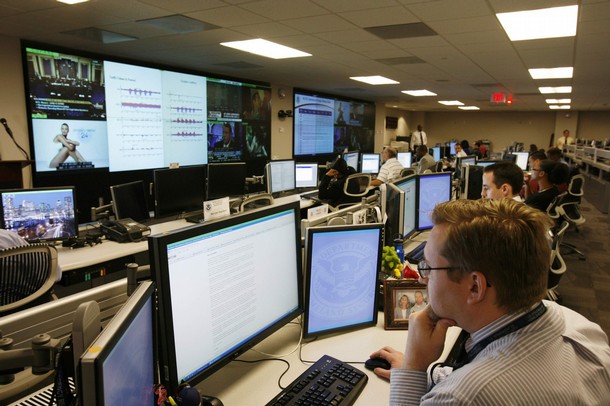
The latest Government Accountability Office report underscored how poorly equipped federal departments and agencies are to prevent network security breaches. Security incidents at federal agencies have soared 650 percent over the past five years, according to a report from the Government Accountability Office.
In the past five years, the number of reported events has grown from 5,503 in 2006 to 41,776 in 2010, federal auditors wrote in a Government Accountability Office report released Oct. 3. The GAO compiled the report based on information security-related reports and data from 24 federal agencies and departments that were collected between September 2010 and October 2011.
Nearly 30 percent of incidents involved malware infections, making it the most prevalent cyber-event, the report found. Other common issues included violations of acceptable use policies and intrusions into networks, applications and other data resources.
"Of the 24 major agencies, none had fully or effectively implemented an agency-wide information security program," Gregory C. Wilshusen, GAO director for information security issues, wrote in the report.
Agencies are vulnerable to cyber-attack and other security issues because they have failed to implement proper security controls, GAO auditors wrote. Agencies do not always adequately train system security personnel, regularly monitor safeguards, fix vulnerabilities or resolve incidents in a timely manner when they do occur, according to the report. These problems leave the departments vulnerable to both external and internal threats, Wilshusen said.
"As long as agencies have not fully and effectively implemented their information security programs, including addressing the hundreds of recommendations that we and inspectors general have made, federal systems will remain at increased risk of attack or compromise," wrote Wilshusen.

The audit found that the Internal Revenue Service did not block employees from accessing databases not required for their jobs. Financial and taxpayer information "remain unnecessarily vulnerable" to insider threats. The fact that any employee had access to the systems meant there was an increased risk of "unauthorized disclosure, modification or destruction," the report said.

Another incident involved a network user who clicked on a malicious link in an email. The employee was told he'd won a new car in a lottery he'd supposedly entered when he answered some questions on a survey about his pets. The employee discovered later that several credit cards had been opened in his name and large amounts of pet supplies ordered without his knowledge, according to the report.
The GAO periodically updates Congress on how well federal departments are complying with the 2002 Federal Information Security Act. FISMA is supposed to help federal departments and agencies define security policies, conduct security awareness training and implement proper surveillance of computer safeguards. Under the law, passed in 2002, every agency in the federal government has to have information security programs and plans for managing risks in place.
This is not the first time in recent months the GAO has called out departments on lax information security. In an August report, the GAO issued an audit report of the Federal Deposit Insurance Corporation (FDIC) which showed the FDIC did not use strong passwords, review user access and failed to encrypt sensitive financial information. The August GAO report found weaknesses in FDIC controls that are supposed to manage system configurations, deploy patches, and segregate certain network activities.

To download the Government Accountability Office (GAO) report click Here
For more about GAO report Click Here
  
-News Source (Eweek & GOA)


SHARE OUR NEWS DIRECTLY ON SOCIAL NETWORKS:-

German National Cyber Security Centre is under Cyber Attacks


Just a few weeks after German authorities opened a national Cyber Defense Centre in Bonn, it was attacked by hackers and now officials are struggling to arrest all of those involved.
While security authorities reported they had arrested two members of the hacking group linked to the attacks, the group released a statement saying that only its leader was under arrest. A 23-year-old calling himself Darkhammer, leader of the so-called "n0n4m3 cr3w", was arrested on Sunday, the Office of Criminal Investigation in the state of Nordrhein-Westfalen reported.

The Federal Criminal Police office issued a press release saying that it had searched the apartment of a second suspect. Responding to that arrest and media reports regarding those taken into custody, the hacking group said: "Apparently none of the suspects is a member of the No Name Crew."
Members of the No Name Crew had claimed responsibility for infiltrating computers of the federal police and the customs service. They were able to steal information from servers running the spy program Patras, and put it on their website. Patras is used by customs authorities, the federal police and police in the German states for tracking serious criminals. After the attacks were uncovered several federal and state authorities temporarily shut down their servers.
The attacks first became known already on July 8, but attracted bigger attention just after German newspaper Bild am Sonntag cited a confidential report by the federal information security agency, BSI, saying that computers of the federal police had been infected by Trojans for months without detection.
The hacking group now offers an encrypted file for downloading on its website stating that it had collected emails and confidential data from the police and customs authorities. The group said it would release the password for the encrypted file should police arrest more of the group's members.

"The terrifying fact about these attacks is that the delinquents are quite young. If these 17 year old schoolboys are able to do that, what would happen if a much more experienced hacker would attack?" said Lars Sobiraj, editor-in-chief at the German magazine gulli who interviewed members of the group.
In the interview, members of the group said they regarded their hacking as a wake-up call for the German public to see that the state kept the population under permanent surveillance. The group announced on its website that it will initiate more attacks. "New targets have been chosen," it said.

The attacks came just four weeks after German Federal Secretary of the Interior Hans-Peter Friedrich opened the Cyber Defense Centre. The centre is run by the BSI, the federal office for the protection of the constitution and the disaster control agency. The authorities whose systems were attacked also contribute to the operation of the centre.
A spokesman of the BSI, said that the agency would not comment about the events due to the ongoing investigations.

The centre against cyberattacks has been criticised for not having the ability to fight electronic attacks. After its opening in June, Memet Kilic, a member of the Green party that is part of the opposition, said the centre did not have enough financial and human resources. According to the BSI, the centre has 10 full time employees.
In an interview with the news magazine "Der Spiegel" this week, Klaus Jansen, leader of the German union of police detectives, said that security authorities do not have enough experts working with them to effectively fighting cybercrime.

SHARE OUR NEWS DIRECTLY ON SOCIAL NETWORKS:-

Federal Trade Commission Server Breached By Anonymous #Antisec (#ACTA Protest)

Federal Trade Commission Server Breached By Anonymous #Antisec (#ACTA Protest)
Hacker collective group Anonymous along with Antisec continues their protest against ACTA. This time the blown the  Web server of the Federal Trade Commission's Bureau and hacked the official website of U.S. Federal Trade Commission, consumer rights, & National Consumer Protection Week. Hacker released a note in pastebin where the have breached all the security of the FTC server, rooted the server & hacked into the database to expose user name, email-id, passwords and many other very sensitive data of the Govt. They have also written a note while addressing FTC - 
"Dear Fuctarded Troglodyte Clusterfuck (FTC):
Congratuations! You got rooted and rm'd (AGAIN). U MAD!? Don't like it? Oh wait,
you want some lube? Ohhhh, you want MORE lube. (Well ok then, you silly bitch!)
So, how’s it feel when your entire site is jack-hammered off the internet? Do
tell!
Guess what? We’re back for round 2. Well, with the doomsday clock ticking down
on Internet freedom, Antisec has leapt into action. Again. Holy déjà vu hack
Batman! Expect us yet?
Hey FTC! Y u no ask Google to delay the privacy-violating changes to its terms
of service? Y u let Google combine user data without user consent? Y u collect 8
million Do Not Call List complaints online from bothered citizens, but u only
took action 83 times? Y u suck?
Even more bothersome than your complete lack of competence in maintaining your
own fucking websites and serving the citizens you are supposed to be protecting,
is the US federal government’s support of ACTA. You really want to empower
copyright holders to demand that users who violate IP rights (with no legal
process) have their Internet connections terminated? You really want to allow a
country with an oppressive Internet censorship regime to demand under the treaty
that an ISP in another country remove site content? Well, we have a critical
warning for you, and we suggest you read the next few paragraphs very, very
closely.
If ACTA is signed by all participating negotiating countries, you can rest
assured that Antisec will bring a fucking mega-uber-awesome war that rain
torrential hellfire down on all enemies of free speech, privacy and internet
freedom. We will systematically knock all evil corporations and governments off
of our internet.
And just think, as you’re reading this statement, we are already sailing into
new waters with our allied shiny epic lulzfleet. Don’t fret, we’ve already
prepared treasure chests of stolen booty, diamonds and pizzas for our next raid.
We are s(h)itting on hundreds of rooted servers getting ready to drop all your
mysql dumps, child pr0n and mail spools (to be honest, fucking too much for us
to read on our own, so we swap with all criminal underground allies for sex and
0days). Oh wait, what’s that? Your passwords? Addresses? Your precious bank
accounts? Even your online dating details?! (yep, We know you're cheating on
your…well, we won’t get into that here. Yet.)
Yep, we know all about you. All of your little secrets will be laid bare for the
world to see. So, how does it feel to be the one spied on?
Oh, eat cock now. Kthxbai. :D"


Later in an official statement FTC spokesperson Cecelia Prewett said "The Bureau of Consumer Protection’s Business Center website and the partnership site NCPW run by the Federal Trade Commission were hacked earlier today, The FTC takes these malicious acts seriously. The sites have been taken down and will be brought back up when we’re satisfied that any vulnerability has been addressed."
Earlier for #OpMegaupload hackers from Antisec has hacked the official site of OnGuardOnline Of Federal Trade Commission(FTC) and breached the database. That attack was a part of protest against censorship (SOPA/PIPA/ACTA)


SHARE OUR NEWS DIRECTLY ON SOCIAL NETWORKS:-

OnGuardOnline Of Federal Trade Commission(FTC) Hacked by #Antisec (#OpMegaupload)

OnGuardOnline Of Federal Trade Commission(FTC) Hacked by #Antisec (#OpMegaupload)
#OpMegaupload continues OnGuardOnline partner of fourteen federal agencies managed by the Federal Trade Commission(FTC) hacked by #Antisec. Not only defacement but also #Antisec hackers have breached the entire database and exposed credentials of the users including username, email-id, password hash and so on. Hackers also rooted the OnGuardOnline web-server and still the server is down. More information & to see the release of #Antisec click here.
Now it really seems that the decision of closing Megaupload.com is causing a lost for Federal Authorities. Few days ago Hacktivist Anonymous started #OpMegaupload and bring down US Dept. Of Justice, FBI and some other federal authorities website. Then the attacked was moved to Brazil Govt. and there Anon shut down websites of Brazil's federal district, Tangara da Serra city & the website of popular Brazilian singer Paula Fernandes.Not only Anonymous its about the mass. The whole world contributed in this operation. Statistic is saying that more than 66,500 people from different part of the world have downloaded LOIC and taken part in #OpMegaupload.  And this attack was considered as the "Largest Attack Ever". Not only these but also Anonymous hit CBS broadcasting in that attack they have gained full access on the CBS server and deleted everything. Also another hacker group named Underground Nazi also contributed in #OpMegaupload while hacking into the official website of UFC


SHARE OUR NEWS DIRECTLY ON SOCIAL NETWORKS:-

White House sends Congress a long-awaited cybersecurity proposal


The White House on Thursday sent Congress a formal proposal for cybersecurity legislation to help Senate lawmakers craft a passable bill from 50-some measures currently pending in both chambers.
The long-awaited framework would formally grant the Homeland Security Department oversight of cybersecurity operations within civilian federal agencies -- a role it has played in practice since last summer. Given the dearth of cyber experts in civilian agencies, the proposal would give DHS the same flexibility the Pentagon currently has to rapidly hire skilled professionals at competitive salary levels, Obama administration officials told reporters during a Thursday conference call.
The guidelines, which were expected to be released later on Thursday, largely rely on industry's know-how and willing compliance to certify their systems are safe and ask for federal assistance when attacked.
The proposal is silent on several sticking points, including cyberwarfare, classified information and the criteria for so-called critical infrastructure -- or systems that, if disrupted, could wreak havoc on national security. Such networks would be subject to greater regulation under a key Senate bill sponsored by the leaders of the Homeland Security and Governmental Affairs Committee. The White House framework also stays clear of a dispute over whether the president should have the power to hit a "kill switch," shutting down the Internet during emergencies.
The guidelines were prompted by a request from Senate Majority Leader Harry Reid, D-Nev., and chairmen of the committees with jurisdiction over computer security for input from President Obama on the various congressional proposals, White House officials said. The HSGAC and commerce panels passed comprehensive cybersecurity legislation about a year ago, while numerous other congressional panels and individual members have introduced their own piecemeal measures. The executive branch took about a year to reach consensus on which provisions agencies would support and what new ones they would propose.
The proposal would make so-called intrusion prevention systems a permanent fixture in the federal government, according to a fact sheet. As opposed to intrusion detection systems, which flag attacks and alert the appropriate responders, prevention software can actively respond by blocking intrusions. The guidelines say DHS should have the authority to supervise all such programs, including the existing "Einstein" tool. Internet service providers also would have to use the applications for any government traffic they manage.
The White House plan touches on one security element of a growth area in government IT: cloud computing. The practice allows organizations to access computer power, storage and software stored on the Internet by a third-party provider, rather than build on-site server farms. Administration officials are concerned that state protectionist measures are hampering the cloud industry, so the proposal would block state governments from requiring that companies in their states build data centers there, unless authorized by federal law, the fact sheet stated.
The guidelines would enable industry to obtain immediate assistance from Homeland Security in responding to an intrusion, if they wish, officials said. Currently, when organizations ask DHS to review logs to determine when a hacker attacked, the department's ability to intervene is slowed by legal uncertainty. To protect individuals, if a firm or local government wants to share such information with DHS, the organization must first strip out identifying information that is irrelevant to the infraction, according to the fact sheet.
Companies and local governments would be granted immunity for sharing information with the federal government about new computer viruses and cyber events that have compromised their systems. Should entities choose to provide such information, their customers' privacy would not be violated, according to the proposal.
White House officials said their proposal focuses on transparency and incentives to ensure companies managing networks for critical infrastructure in industries like energy and banking are accountable for service continuity. The draft bill directs Homeland Security and the private sector to jointly figure out which operations are the most critical and prioritize the most important threats to those services. An outside commercial auditor would assess the company's plans for mitigating such vulnerabilities.
On the consumer side, the proposal would require that businesses notify customers of certain data breaches to reduce the risk of identity theft. Sony recently took heat for not immediately telling customers that perpetrators had infiltrated the company's online gaming and music networks. The administration's plan would loop together a patchwork of 47 state laws on data breach reporting.
Many in the legislative branch and business community applauded the White House plan on Wednesday.
"The Senate and the White House are on the same track to make sure our cyber networks are protected against an attack that could throw the nation into chaos," HSGAC Chairman Joe Lieberman, I-Conn., ranking Republican Susan Collins, R-Maine, and Federal Financial Management Subcommittee Chairman Tom Carper, D-Del., said in a joint statement. The Senate and the administration "both recognize that the government and the private sector must work together to secure our nation's most critical infrastructure, for example, our energy, water, financial, telecommunications and transportation systems. We both call for risk-based assessments of the systems and assets that run that infrastructure."
The trio agreed with the administration that Homeland Security should take the lead in safeguarding civilian cybersecurity. Other lawmakers, particularly in the House, say the Defense Department, with its established expertise and deep pockets, should play a larger role in guarding U.S. networks. Currently, the Pentagon can monitor only the .mil domain and many civil liberties advocates would like to keep it that way.
Commerce Committee leaders also largely praised the proposed measure. "The White House has presented a strong plan to better protect our nation from the growing cyber threat," Chairman John D. "Jay" Rockefeller, D-W.Va., said in a statement. "I look forward to continuing to work with the White House, and my colleagues in the House and Senate, to pass a comprehensive cybersecurity bill this year."
Ranking member Sen. Olympia Snowe, R-Maine, said, "While the administration's delay in providing critical input to the legislative process is regrettable, it is my understanding that the administration proposal parallels many of the objectives, particularly pertaining to modernizing the public-private partnership, that Sen. Rockefeller and I have advocated."
Officials with trade group TechAmerica generally supported Obama's framework but said they had lingering questions about the flexibility the proposal grants firms to tailor their security strategies.
"The administration's proposal is a clear step forward in the process and we hope that it strikes the right balance between accountability and innovation in this shared responsibility between the public and private sectors," TechAmerica President Phil Bond said in a statement.
"We encourage Congress and the administration to draw a bright line between critical and noncritical infrastructure," Bond said. "Industry and government need to work together to make the right determinations for what is critical, and what the implications are for that designation."
Should the government require firms to take certain actions, the law must provide liability protections to shelter companies from any unanticipated consequences, he said.
Given that the Senate has been pursuing cybersecurity legislation in a bipartisan fashion, and both parties in the House last year actually passed elements of the White House proposal, the expectation is that a law could be enacted this year.
Disagreements over engagement in cyberwar or the job of the Pentagon's National Security Agency and the new U.S. Cyber Command likely will be worked out in separate legislation. Pending House defense and intelligence authorization bills, for instance, address cyberwarfare and require the development of systems for detecting unauthorized activities on classified networks.
But talks on the civilian-oriented bill may take months, especially since all sides appear to want industry involved in the vetting process. One item overlooked in the White House proposal that Congress wants -- the creation of a Senate-confirmed cyber czar -- may take some time to negotiate. And Congress has never considered some of the information-sharing measures the White House introduced on Thursday.

SHARE OUR NEWS DIRECTLY ON SOCIAL NETWORKS:-

Facebook Law-Enforcement Tool


U.S. law-enforcement agencies are increasingly obtaining warrants to search Facebook, often gaining detailed access to users' accounts without their knowledge. A Reuters review of the Westlaw legal database shows that since 2008, federal judges have authorized at least two dozen warrants to search individuals' Facebook accounts. Many of the warrants requested a laundry list of personal data such as messages, status updates, links to videos and photographs, calendars of future and past events, "Wall postings" and "rejected Friend requests."
Federal agencies seeking the warrants include the FBI, DEA and ICE, and the investigations range from arson to rape to terrorism. The Facebook search warrants typically demand a user''s "Neoprint" and "Photoprint" -- terms that Facebook has used to describe a detailed package of profile and photo information that is not even available to users themselves. These terms appear in manuals for law enforcement agencies on how to request data from Facebook. The manuals, posted on various public-advocacy websites, appear to have been prepared by Facebook, although a spokesman for the company declined to confirm their authenticity.
The review of Westlaw data indicates that federal agencies were granted at least 11 warrants to search Facebook since the beginning of 2011, nearly double the number for all of 2010. The precise number of warrants served on Facebook is hard to determine, in part because some records are sealed, and warrant applications often involve unusual case names. (One example: "USA v. Facebook USER ID Associated with email address jimmie_white_trash@yahoo.com," a sealed case involving a drug sale.) In a telephone interview, Facebook's Chief Security Officer, Joe Sullivan, declined to say how many warrants had been served on the company. He said Facebook is sensitive to user privacy and that it regularly pushes back against law-enforcement "fishing expeditions."

NOT CHALLENGED:-

None of the warrants discovered in the review have been challenged on the grounds that it violated a person's Fourth Amendment protection against unlawful search and seizure, according to a review of the cases. Some constitutional-law experts said the Facebook searches may not have been challenged because the defendants - not to mention their "friends" or others whose pages might have been viewed as part of an investigation -- never knew about them.
By law, neither Facebook nor the government is obliged to inform a user when an account is subject to a search by law enforcement, though prosecutors are required to disclose material evidence to a defendant. Twitter and several other social-media sites have formally adopted a policy to notify users when law enforcement asks to search their profile. Last January, Twitter also successfully challenged a gag order imposed by a federal judge in Virginia that forbade the company from informing users that the government had demanded their data.
Twitter said in an email message that its policy was "to help users protect their rights." The Facebook spokesperson would not say whether the company had a similar policy to notify users or if it was considering adopting one.

THE CASE OF THE SATANISTS:-
In several recent cases, however, Facebook apparently did not inform account-holders or their lawyers about government snooping. Last year, several weeks after police apprehended four young Satanists who burned down a church in Pomeroy, Ohio, an FBI agent executed a search warrant on Facebook seeking data about two of the suspects. All four ultimately pleaded guilty and received sentences of eight to ten years in state prison (along with a message of forgiveness from a church official who called the sentence "God's time out," and presented them with a Bible). It is unclear if data obtained from the warrant was used in the investigation. Lawyers for the two defendants were unaware of the searches until they were contacted by Reuters.
In another case, the DEA searched the account of Nathan Kuemmerle, a Hollywood psychiatrist who pleaded guilty in Los Angeles federal court after a joint operation last year by the DEA and local police revealed he had run a "pill mill" for celebrity customers.
Westlaw records show that that the DEA executed a warrant to search Kuemmerle's Facebook account weeks after his arrest.
At Kuemmerle's bail hearing, a Redondo Beach police detective pointed to comments Kuemmerle made on Facebook and in the site's popular game "Mafia Wars" to argue that he should be denied bail.
According to Kuemmerle's lawyer, John Littrell, the detective testified on cross-examination that the information was from "an undercover source." Littrell told Reuters that neither he nor his client was ever informed about the warrant, and that he only learned of its existence from Reuters.
The detective said in an e-mail message that he did not recall being asked about how he obtained the Facebook information. The DEA did not reply to requests for comment.

POTENTIAL FOR NEW LEGAL CHALLENGES:-
The Facebook searches potentially open up new legal challenges in an area that at one time seemed relatively settled: How much protection an individual has against government searches of personal information held by third parties. In a 1976 case, United States v. Miller, a divided U.S. Supreme Court ruled that a bank did not have to inform its customer when it turned over his financial records to the Bureau of Alcohol, Tobacco and Firearms.
In doing so, the Supreme Court held that the customer could not invoke Fourth Amendment rights against illegal search and seizure because the records were bank property in which he had no legitimate "expectation of privacy."
Under this reasoning, a person would have no more expectation of privacy in Facebook content than in bank records. A key difference, however, is the scale of information that resides on social networking sites. "It is something new," said Thomas Clancy, a constitutional-law professor at the University of Mississippi. "It''s the amount of information and data being provided as a matter of course by third parties."
Eben Moglen, a cyberlaw professor at Columbia Law School, says the Facebook searches show that courts are ill-equipped to safeguard privacy rights in an age of digital media. In his view, "the solutions aren't legal, they''re technical."
Clancy, the Mississippi professor, said that courts are divided over whether the unprecedented volume of digital records in the possession of third parties should give rise to special rules governing the search of electronic data.
He added that the Supreme Court had an opportunity to clarify the issue in a case called Ontario v. Quon, but that it decided to "punt."
The Quon case concerned a California policeman who claimed his employer violated his Fourth Amendment rights when it read sexually explicit messages that he had sent from a work pager.
The Court found that that the employer's search was not unreasonable, but declined to rule on the degree to which people have a privacy interest in electronic data controlled by others.
Explaining the court's caution, Justice Anthony Kennedy wrote, "The judiciary risks error by elaborating too fully on the Fourth Amendment implications of emerging technology before its role in society has become clear."

To download the Facebook Law Enforcement Guidance click Here


SHARE OUR NEWS DIRECTLY ON SOCIAL NETWORKS:-

Brazil Govt. Again Under Cyber Attack By Anonymous (#OpMegaupload)

Brazil Govt. Again Under Cyber Attack By Anonymous (#OpMegaupload)
Brazil govt is facing massive cyber attack. Guess who is behind this, yes you are absolutely right its Hacktivist Anonymous again. Operation Megaupload (#OpMegaupload) continues. In this attack they have bring down many Govt sites of Brazil including Portal Brasil, BOA VISTA ONLINE, Senado Federal, City Of South Flor da Serra, Good Fishing - Sports & Adventure, E-GOVERNANCE, City of St. John d'Alliance, Prefecture Tabapuã, Mikrocenter | Provider Access Internet Via Radio and so on. According to the twitter account of Anonymous & Anon Leader Sabu there are mainly 2 guys conducting this cyber attack & they are Havittaja and hard AnonymousBr.
Earlier this week Anonymous attacked websites of Brazil's federal district and Tangara da Serra city to protest the forced closure of Megaupload.com. We also like to give you remember that this operation started because Federal Authority has shutdown megaupload and in payback Anon bring down US Dept. Of Justice, FBI & many other federal authorities sites. Anonymous hit CBS broadcasting in that attack they have gained full access on the CBS server and deleted everything. Also another hacker group named Underground Nazi also contributed in #OpMegaupload while hacking into the official website of UFC.  Then the turn of #Antisec came and they have hacked U.S. Government IT Security Website OnGuardOnline. We must have say that #OpMegaupload is one of the biggest and continues operation ever took place in the cyber space where the whole world has contributed. The main object of this operation is to protest SOPA and PIPA bills. In this protest Federal Authorities, Many Govt bodies and other very important and high profile sites who ware supporting SOPA have been damaged very badly. 


SHARE OUR NEWS DIRECTLY ON SOCIAL NETWORKS:-

Anonymous Hit Brazil Govt. #OpMegaupload Continues

 Anonymous Hit Brazil Govt. #OpMegaupload Continues
Operation Megaupload (#OpMegaupload) continues. This operation was started by Hacktivist Anonymous while protesting against the shutting down of Web’s most popular site Megaupload By Federal authorities. In the 1st payback Anon bring down US Dept. Of Justice, FBI & many other federal authorities sites. And that attack was considered as the "Largest Attack Ever" where 5,635 Anon people bring down the websites of Universal Music, the U.S. Department of Justice and the Recording Industry Association of America while using one of the world's most popular and vastly used DDoSer LOIC. 
But yet its not over Anonymous attacked websites of Brazil's federal district and Tangara da Serra city to protest the forced closure of Megaupload.com. Anonymous posted messages on Twitter describing attacks against hundreds of Brazilian sites that share the URL 'df.gov.br,' which are owned by the government of the federal capital in Rio de Janeiro. The Federal District press office denied Saturday that the hackers succeeded in shutting down the websites. The hackers did succeed in shutting down the website of popular Brazilian singer Paula Fernandes. They posted the image of a grim-faced joker with a message saying, "If Megaupload is down, you are down too."


In a statistic it is found that Since Last week more than 66,500 people from different part of the world have downloaded LOIC and taken part in #OpMegaupload 

Anonymous Message:- 


SHARE OUR NEWS DIRECTLY ON SOCIAL NETWORKS:-

Germany Launches Cyber Defense Center


Germany is the latest country to build itself its very own cyber-defense center to build a strategy to defend against cyber-warfare, a hot issue this year. The National Cyber-Defense Center is located in Bonn at the Federal Office for Information Security building. For now, it had ten permanent employees with the German Federal Police, Federal Intelligence Service and Armed Forces to join the effort in the coming months. The Interior ministry said it recorded a record number of attempted cyber attacks last year, nearly double the number of attempts in 2009.

"At the heart of cyber-security is the protection of critical infrastructures," said Federal Interior Minister Friedrich. "Stuxnet and the most recent example of the hacker attack on the French nuclear company EDF (Electricité de France) have shown that IT systems represent critical infrastructure in the context of cyber-attacks." 

Germany's move follows other's around the world, including the UK's Cyber Security Operations Center (CSOC) and the United States' Cyber Command center. Estonia, which was the victim of a country-wide cyber-attack in 2007 in a dispute over the moving of a soviet-era war monument, is also planning to build its own cyber defenses.

SHARE OUR NEWS DIRECTLY ON SOCIAL NETWORKS:-

LulzSec Hacker Cody Kretsinger Sentenced 1 Year Imprisonment For Sony Breach

LulzSec Hacker Cody Kretsinger Sentenced 1 Year Imprisonment For Security Breach of Sony Pictures Entertainment  

Infamous LulzSec hacker Cody Kretsinger who pleaded guilty last year in front of Federal Court of California for taking part in an extensive computer breach of Sony Pictures Entertainment server has faced judgement. 25 year aged Kretsinger who is also known as "Recursion" was one of the key member of Lulz Security, widely known to us as LulzSec, an offshoot of the international hacking group Anonymous. According to federal prosecutors, Cody Kretsinger has been sentenced to one year in prison in  Los Angeles. This court rule has been followed by home detention. Kretsinger, was also been ordered by a U.S. district judge in Los Angeles to perform 1,000 hours of community service after his release from prison, said Thom Mrozek, spokesman for the U.S. Attorney's Office in Los Angeles. Although prosecutors refused to say whether the hacker was co-operating with authorities in return for a softer sentence. 
During last year's plea hearing, Kretsinger told a federal judge that he gained access to the Sony Pictures website and gave the information he found there to other members of LulzSec, who posted it on the group's website and Twitter. "I joined LulzSec, your honor, at which point we gained access to the Sony Pictures website," said Kretsinger in the federal court. Prosecutors said Kretsinger and other LulzSec hackers, including those known as "Sabu" and "Topiary," stole the personal information of thousands of people after launching an "SQL injection" attack on the website; ultimately caused the unit of Sony Corp more than $600,000 in finical damage, along with that the attack caused bad impact and loss of faith for Sony Corporation and it's customers across the globe. 
While talking about this story, we would like to recap the decent history - where the arrest followed by guilty pleading of all the key members of LulzSec including  Ryan Cleary, Jake DavisJeremy HammondRaynaldo RiveraCody Kretsinger came a month after court documents revealed that Anonymous leader "Sabu," whose real name is Hector Xavier Monsegur, turned traitor to his community and became FBI informer and provided all the information on fellow hackers.


-Source (Reuters & Yahoo) 


SHARE OUR NEWS DIRECTLY ON SOCIAL NETWORKS:-

Security Experts Are Saying: Project 25 Mobile Radios Are Vulnerable


Many users don’t know how to use encryption, and radios can be jammed with a child’s toy. A paper presented at this year’s APCO conference showed the vulnerability of some new and expensive encrypted digital mobile radios, particularly those used by federal law enforcement agencies. The researchers from the University of Pennsylvania found that it was very easy to monitor sensitive law enforcement operations, that users either didn’t turn on their encryption or thought their transmissions were encrypted when they weren’t, and that a $30 child’s toy could corrupt the radios’ signals enough to make them useless. They also found a way to make the radios transmit at will, so that direction-finding equipment could be used to determine their location.
The radios with the identified problems operate on a relatively new protocol called Project 25 (P25). P25 is an initiative of the Association of Public Safety Communications Officers (APCO) and both users and manufacturers of radio equipment. P25 radios use digital transmissions on channels spaced 12.5KHz apart in the UHF and VHF bands. One of the objectives of P25 is to expand the number of channels available for use in the crowded radio spectrum. Presently, federal law enforcement agencies are the biggest users of P25 equipment, but other public safety organizations are adopting the standard as they replace their “legacy” radios. Eventually, all users in the VHF and UHF bands will be required to go to P25 equipment, as their licenses to operate on the broader channels and with analog equipment won’t be renewed by the FCC.
Traffic over P25 equipment is transmitted in digital form, as bits of ones and zeros, rather than as an analog waveform as with older radios. The body of voice or data traffic is preceded and followed by several data frames of different lengths that identify the source, the type of information (voice or data) that follows, and when the traffic is encrypted, encryption keys that prevent the transmission from being heard by a radio which doesn’t have the matching codes. The authors of the paper found that the markings on the radios that turned the encryption on or off were so cryptic themselves that many of them thought they were transmitting encrypted, when they were actually sending “in the clear.” The knobs and indicators for encryption were poorly located, making it easy to turn encryption on and off while adjusting the volume or changing radio channels.

There are blocks of frequencies allocated for the exclusive use of federal law enforcement agencies. These are allocated by the National Telecommunications and Information Administration, and are not published, as are FCC-allocated channels. The allocation is made by both region and user agency, so that a channel used by the FBI in New York might be the one used by the U.S. Forest Service in Boise. Even though the assignments are confidential, the researchers were able to scan the federal bands in two large U.S. cities and monitor ongoing operations at length. The encryption problem became obvious, as users openly discussed names and descriptions of informants, appearance and vehicles of undercover agents and surveillance operators, and plans for raids and arrests. The researchers used a $1000 bench-type receiver, but indicated that the same task could be accomplished with gear from Radio Shack.
Techies are familiar with the acronym “RTFM,” or “Read the [Bleeping] Manual.” The manual for a P25 radio from one well-known manufacturer is 150 pages long. On top of that, most P25 radios are user-configurable, so that combinations of button presses and switch settings set the radio to work in specific ways the owner agency thinks is appropriate. The net effect is that — in addition to the 150-page manual — each agency has to publish their own user manual if they want their users to understand all the functions of the radio and how to use them. Of course, getting the users to read those manuals is another matter.

Digital communications has several advantages over analog, one being that if a portion of a transmission is not received or corrupted in sending, an error-correction protocol identifies it and sends a request for a re-send. The University of Pennsylvania researchers found they could manipulate this mechanism and send a string of renegade error messages to a radio, triggering a string of retransmit requests. There would be no retransmit, as the messages pointed to a nonexistent message stream, but the nearly continuous transmission could be used with a direction finder to pinpoint the location of the radio. Someone who was running countersurveillance on law enforcement users would be able to tell by this method when officers were active, and where they were.

A variation on the data packet manipulation worked to disable the radios entirely. The researchers purchased a toy text messaging device called an IM-Me http://uk.girltech.com/electronics-imMe.aspx , which sends and receives text messages between a computer and the toy, which looks like a text pager. By loading some custom firmware onto the device, it could be set to transmit corrupted data packets to P25 radios and confound their reception. The device had to transmit these packets for milliseconds at a time, making it very difficult to locate and identify.
The authors of this paper are all “good guys” who have no agenda for compromising public safety communications, but if they can produce the hardware and software necessary to manipulate P25 radios, you can bet someone with less honorable motives can, as well. These new P25 radios are expensive; one available from Midland costs $3295. Hopefully, that custom-configuration capacity can be used to modify the radio firmware and close some of these security gaps. In the meantime, if your agency is using or contemplating a purchase of P25 radios, you should revisit your security procedures and contact your vendor to determine how vulnerable your communications may be.

-News Source (Tim Dees & Police One)

SHARE OUR NEWS DIRECTLY ON SOCIAL NETWORKS:-

DHS Issues Malware Warning Impersonating FBI & US Cyber Command


DHS Issues Malware Warning Impersonating FBI & US Cyber Command

If you think that only innocent computer users are just the only target of cyber criminals, then you are absolutely wrong. Recently United States Computer Emergency Readiness Team, widely known as US-CERT; which is a part of Depertment of Homeland Security's (DHS) National Cyber Security Division has issued an emergency alert wile announcing a new effort by cyber criminals to spread Malware that impersonates Federal law enforcement (FBI) and other government agencies. The malware is a malicious software that installs itself on a users computer without a users permission or knowledge, “displays a screen claiming that a Federal Government agency has identified the user’s computer as being associated with one of more crimes,” reports the US-CERT alert. Explaining further, the malware then instructs the victim “to pay a fine to regain the use of the computer, usually through prepaid money card services.” The appearance of the message displayed on a users screen is intended to seem like a legitimate and official looking warning from the FBI or US Cyber Command. In turn, the impersonation effort by the cyber criminals seeks to leverage this to scare victims into paying the so-called fine immediately.
“Affected users should not follow the payment instructions,” US-CERT recommends, adding, “Users may also choose to file a complaint with the FBI’s Internet Crime Complaint Center.” 


In their release US-CERT states:-
“US-CERT is aware of multiple malware campaigns impersonating multiple U.S. government agencies, including the United States Cyber Command (USCYBERCOM) and the Federal Bureau of Investigation (FBI). Once installed on a system, the malware displays a screen claiming that a Federal Government agency has identified the user's computer as being associated with one or more crimes. The user is told to pay a fine to regain the use of the computer, usually through prepaid money card services.”


SHARE OUR NEWS DIRECTLY ON SOCIAL NETWORKS:-

Federal Judge Opened The Gate For 14 Anonymous Members To Use Twitter

Federal Judge Opened The Gate For 14 Anonymous Members To Use Twitter Freely

A Federal judge in San Jose, Calif. Has opened the gates for 14 alleged members of anonymous to continue using Twitter as one of the "principle tools through which the members of the Anonymous hacking group planned and coordinated their criminal activities," according to prosecutors opposing the decision. The first question came up in January as a motion from Vincent Kershaw, indicted along with 13 other alleged Anon members for attacking PayPal following the arrest of WikiLeaks founder Julian Assange.
Kershaw could have simply argued that preventing him from Tweeting about issues having nothing to do with his legal situation or the charges against him was a violation of his First Amendment right to free speech. Even in court, where current events, fashions and politics are supposed to be banished from legal decisions, requests go over much more easily when they hit the issues that are big today rather than when the Constitution was written.
Despite arguments that the dangerous, subversive hackers of Anonymous use the overly public Twitter to plan their misdeeds, Judge Paul Grewal ruled prosecutors hadn't sufficiently linked specific Twitter accounts to their assumption that every key-press by an Anonymous sympathizer was necessarily a felony or act of treason.
Therefore Kershaw and his fellow defendants are free to Tweet themselves or participate in Twitter Town Halls and other online events. They're not allowed to use IRC, however, which Anonymous actually does use to plan and coordinate its various activities, not to mention gossip about each other, engage in private flame wars that break out into public doxings, swap files, swap pictures and do all the other social things people do online, especially when their physical liberty is limited.
Kershaw is a 28-year-old foreman for a Colorado landscaping company, was arrested along with 15 others for a DDOS attack the DoJ charges they participated in and which was organized by Anonymous. He was released July 2 on a bond of $10,000 on condition he not access the Internet from any computer and that he allow a probation officer to verify he had not done so.


SHARE OUR NEWS DIRECTLY ON SOCIAL NETWORKS:-

Jeremy Hammond -Key Member of Anonymous Affiliated LulzSec Pleads Guilty To Stratfor Hack

Jeremy Hammond -Key Member of Anonymous Affiliated LulzSec Pleads Guilty To Stratfor Hack, Could Face 10 Years In Prison

Lulz Security widely known as LulzSec, the most dangerous hacker collective group who set their devastating hacking rampage for fifty days in which they have successfully penetrated almost all the so called top secure fields; has suddenly stopped their sail. But stopping crime never means that the criminal will be overlooked, the pending punishment will surely take place. And this applied from LulzSec also. Lat year we have seen leader of LulzSec and also also leader of infamous hacker collective group Anonymous code-named "Sabu," whose real name is Hector Xavier Monsegur, turned traitor to his community and became FBI informer and provided all the information on fellow hackers. The arrest of Sabu subsequently helped law-enforcement officials to infiltrate Lulzsec, an offshoot of Anonymous, the loose hacking collective that has supported an ever-shifting variety of causes. The information provided by Sabu lead FBI to arrest all the key members of LulzSec including Ryan ClearyJake Davis, Raynaldo RiveraCody Kretsinger and so on. Among them there was Jeremy Hammond widely known as "Anarchaos" who was arrested by the federal authorities and been charged for the  breach of the security analysis company Stratfor. In December last year the bail application of Hammond was also been rejected by the the Court. So after several hearings finally the accused of security breach against global intelligence firm Stratfor,  Jeremy Hammond pleaded guilty in a Manhattan court to one count of computer fraud and abuse in response to charges that he hacked into the network of the privacy intelligence firm Stratfor, stealing millions of emails that eventually were given to WikiLeaks and published over the course of 2012. The plea agreement could carry a sentence of as much as 10 years in prison, as well as millions of dollars in restitution payments, though Hammond’s official sentence won’t be handed down until September. Hammond also told Judge Loretta A. Preska of Federal District Court in Manhattan that in 2011 and 2012 he had gained unauthorized access to Stratfor’s computer systems and several other groups, including the Federal Bureau of Investigation’s Virtual Academy, the public safety department in Arizona, and Vanguard Defense Industries, which makes drones. 
"Now that I have pleaded guilty, it is a relief to be able to say that I did work with Anonymous to hack Stratfor, among other websites," Hammond said in a statement on last Tuesday. 
A petition posted to Change.org by Hammond’s brother Jason Hammond asks the judge in Hammond’s case, Loretta Preska, to sentence him to time served, given that he’s already spent 15 months in lockup. “Jeremy did nothing for personal gain and everything in hopes of making the world a better place,” reads Hammond’s brother’s petition. “Jeremy is facing a maximum sentence of ten years, but the minimum is zero. He has been in jail since March 2012 awaiting trial and now sentencing. It’s time for him to come home.”


-Source (Forbes & Huffington Post)


SHARE OUR NEWS DIRECTLY ON SOCIAL NETWORKS:-

Self Propagated LulzSec Leader 'Aush0k' Arrested By Australian Federal Police

Self Propagated LulzSec Leader 'Aush0k' Arrested in Sydney By Australian Federal Police (AFP)

Many of us knew Hector Xavier Monsegur widely known as 'Sabu' as the leader of infamous international hacker group LulzSec and Antisec. But this idea will surely be changed when you will hear the histrionic story, which came to light when a 24 old Australian proclaimed himself as the leader of notorious hacker collective group Lulz Security also known as LulzSec. The man, known online as Aush0k, is a senior Australian IT professional who works for the local arm of an international IT company. Police say he was in a "position of trust" within the company and had access to information on government clients which Aush0k manipulated and misused. According to Australian Federal Police a special investigation began less than two weeks ago when investigators found a government website had been compromised. The man has been charged with two counts of unauthorized modification of data to cause impairment and one count of unauthorized access to a restricted computer system. He faces a maximum of 12 years in jail. AFP Commander Glen McEwen says the man posted in online forums frequented by other members of LulzSec that he was the group's leader. "There was no denials of his claims of being the leader," added McEwen. The man was charged and appeared in court on the very day of his arrest. And he will face Woy Woy Local Court again on May 15. 
While talking about this dramatic story of proclaimed LulzSec leader Aush0k, we would love to remind you the decent history when the leader of Anonymous affiliated LulzSec "Sabu," whose real name is Hector Xavier Monsegur, turned traitor to his community and became FBI informer and provided all the information on fellow hackers. As soon as the FBI gathered all the sensational information from Sabu, immediately we have seen the arrest of almost all the key members of LulzSec including Ryan ClearyJake DavisJeremy HammondRaynaldo RiveraCody Kretsinger and so on. And today we have seen the arrest of another LulzSec leader and key man, and this arrest is the first one done by the AFP. Earlier the arrest of Sabu proved very handy for the law and enforcement, may be this time also Aush0k's arrest can show them few more directions and can open few closed doors of investigation. So till time wait and stay tuned with VOGH for the updates on this story, also all the other cyber updates. 


-Source (ABC News)


SHARE OUR NEWS DIRECTLY ON SOCIAL NETWORKS:-

Malware Named "Gameover" Targeting Bank Accounts


Another malware named "Gameover" is targeting bank accounts via phishing emails. Cyber criminals have found yet another way to steal your hard-earned money: a recent phishing scheme involves spam e-mails—purportedly from the National Automated Clearing House Association (NACHA), the Federal Reserve Bank, or the Federal Deposit Insurance Corporation (FDIC)—that can infect recipients’ computers with malware and allow access to their bank accounts.
The malware is appropriately called “Gameover” because once it’s on your computer, it can steal usernames and passwords and defeat common methods of user authentication employed by financial institutions. And once the crooks get into your bank account, it’s definitely “game over.” Gameover is a newer variant of the Zeus malware, which was created several months ago and specifically targeted banking information. Few days ago Ramnit worm did the same thing. It steals more than 45K Facebook Login details not only that but also more than 250K PC has been infected by Ramnit worm. It clearly showing that the rate of this cyber threat is going high and high. 

How The Gameover Malware Is Working:- 
Typically, you receive an unsolicited e-mail from NACHA, the Federal Reserve, or the FDIC telling you that there’s a problem with your bank account or a recent ACH transaction. (ACH stands for Automated Clearing House, a network for a wide variety of financial transactions in the U.S.) The sender has included a link in the e-mail for you that will supposedly help you resolve whatever the issue is. Unfortunately, the link goes to a phony website, and once you’re there, you inadvertently download the Gameover malware, which promptly infects your computer and steals your banking information.
After the perpetrators access your account, they conduct what’s called a distributed denial of service, or DDoS, attack using a botnet, which involves multiple computers flooding the financial institution’s server with traffic in an effort to deny legitimate users access to the site—probably in an attempt to deflect attention from what the bad guys are doing.


SHARE OUR NEWS DIRECTLY ON SOCIAL NETWORKS:-

Related Posts Plugin for WordPress, Blogger...