Showing posts sorted by date for query C. Sort by relevance Show all posts

Jeremy Hammond -Key Member of Anonymous Affiliated LulzSec Pleads Guilty To Stratfor Hack

Jeremy Hammond -Key Member of Anonymous Affiliated LulzSec Pleads Guilty To Stratfor Hack, Could Face 10 Years In Prison

Lulz Security widely known as LulzSec, the most dangerous hacker collective group who set their devastating hacking rampage for fifty days in which they have successfully penetrated almost all the so called top secure fields; has suddenly stopped their sail. But stopping crime never means that the criminal will be overlooked, the pending punishment will surely take place. And this applied from LulzSec also. Lat year we have seen leader of LulzSec and also also leader of infamous hacker collective group Anonymous code-named "Sabu," whose real name is Hector Xavier Monsegur, turned traitor to his community and became FBI informer and provided all the information on fellow hackers. The arrest of Sabu subsequently helped law-enforcement officials to infiltrate Lulzsec, an offshoot of Anonymous, the loose hacking collective that has supported an ever-shifting variety of causes. The information provided by Sabu lead FBI to arrest all the key members of LulzSec including Ryan ClearyJake Davis, Raynaldo RiveraCody Kretsinger and so on. Among them there was Jeremy Hammond widely known as "Anarchaos" who was arrested by the federal authorities and been charged for the  breach of the security analysis company Stratfor. In December last year the bail application of Hammond was also been rejected by the the Court. So after several hearings finally the accused of security breach against global intelligence firm Stratfor,  Jeremy Hammond pleaded guilty in a Manhattan court to one count of computer fraud and abuse in response to charges that he hacked into the network of the privacy intelligence firm Stratfor, stealing millions of emails that eventually were given to WikiLeaks and published over the course of 2012. The plea agreement could carry a sentence of as much as 10 years in prison, as well as millions of dollars in restitution payments, though Hammond’s official sentence won’t be handed down until September. Hammond also told Judge Loretta A. Preska of Federal District Court in Manhattan that in 2011 and 2012 he had gained unauthorized access to Stratfor’s computer systems and several other groups, including the Federal Bureau of Investigation’s Virtual Academy, the public safety department in Arizona, and Vanguard Defense Industries, which makes drones. 
"Now that I have pleaded guilty, it is a relief to be able to say that I did work with Anonymous to hack Stratfor, among other websites," Hammond said in a statement on last Tuesday. 
A petition posted to Change.org by Hammond’s brother Jason Hammond asks the judge in Hammond’s case, Loretta Preska, to sentence him to time served, given that he’s already spent 15 months in lockup. “Jeremy did nothing for personal gain and everything in hopes of making the world a better place,” reads Hammond’s brother’s petition. “Jeremy is facing a maximum sentence of ten years, but the minimum is zero. He has been in jail since March 2012 awaiting trial and now sentencing. It’s time for him to come home.”


-Source (Forbes & Huffington Post)


SHARE OUR NEWS DIRECTLY ON SOCIAL NETWORKS:-

Hackers Exploiting Old Ruby on Rails Vulnerability To Compromise Web Servers & Create Botnet

Hackers Exploiting Old Ruby on Rails Vulnerability (CVE-2013-0156) To Compromise Web Servers & Create IRC Botnet
A critical vulnerability on Ruby on Rails spotted in January this year which was deemed “critical” at the same time yet again found in the wild. The vulnerability known as CVE-2013-0156 that affected versions 3.0.20 and 2.3.16 again rises it's hand. Though a security patch was released by the Rails developers. But as we all know that many server administrator used to be unaware of these events have not patched their systems. As a result hackers and cyber criminals are actively exploiting a critical vulnerability in the Ruby on Rails Web application development framework in order to compromise Web servers and create a dangerous botnet. This major security issue was first discovered by a security consultant Mr. Jeff Jarmoc of research firm Matasano Security. In his blog Jarmoc said "It’s pretty surprising that it’s taken this long to surface in the wild, but less surprising that people are still running vulnerable installations of Rails. It also appears to be affecting some web hosts." According to his blog post -the exploit that's currently being used by attackers adds a custom cron job -- a scheduled task on Linux machines that executes a sequence of commands. Those commands download a malicious C source file from a remote server, compile it locally and execute it. The resulting malware is a bot that connects to an IRC (Internet Relay Chat) server and joins a predefined channel where it waits for commands from the attackers. A pre-compiled version of the malware is also downloaded in case the compilation procedure fails on the compromised systems.
"Functionality is limited, but includes the ability to download and execute files as commanded, as well as changing servers," Jarmoc said. "There's no authentication performed, so an enterprising individual could hijack these bots fairly easily by joining the IRC server and issuing the appropriate commands." But the matter of relief is that Jarmoc concluded while saying "this is a pretty straightforward skiddy exploit of a vulnerability that has been publicly known, and warned about, for months."

But still administrators who have not yet patched their Rails version should immediately should update the Ruby on Rails installations on their servers to at least versions 3.2.11, 3.1.10, 3.0.19 or 2.3.15 which contain the patch for this vulnerability. However, the best course of action is probably to update to the latest available Rails versions, depending on the branch used, since other critical vulnerabilities have been addressed since then. 

Brief About RoR:- Ruby on Rails is a popular framework for developing Web applications based on the Ruby programming language and is used by major websites including Hulu, GroupOn, GitHub and Scribd.


SHARE OUR NEWS DIRECTLY ON SOCIAL NETWORKS:-

President of Philippines Official Website Hacked By Anonymous

President of Philippines Official Website Hacked By Anonymous in Protest of "Sabah Issue"

After remaining silent for a certain period, the infamous hacker collective group Anonymous strikes again. As you all might know that normally this group targets high profile websites like government organization, federal authorities, defense, ministry and other giant organization. This time also the same strategy get repeated, as the hacker group targeted the official website of the President of Philippines. During this cyber attack the hacker group has breached the security system and managed to get access in side the website, and as expected they defaced the index page. In the news section of the website the hacker group calling them selves "Anonymous Philippines"; affiliated to one of the worlds most dangerous and largest hackers community going by the name "Anonymous";  left message for the President Benigno Aquino III. From the message left by the hacker, we came to know that the hacking was a part of protest against the Aquino administration’s mishandling of  the crisis in "Sabah issue" 

Message of Anonymous Philippines:- 
“Greetings, President Aquino! We have watched how you signed into law a bill that endangers and tramples upon the netizens’ freedom of speech and expression. Now, we are silent witnesses as to how you are mishandling the Sabah issue. We did not engage the Malaysian hackers who invaded our cyberspace since we expected you to appropriately and judiciously act on the same, but you failed us.
“You did nothing while our fellow brothers are being butchered by the Malaysian forces, and while our women and children become subject of human rights abuses. If you can’t act on the issue as the Philippine President, at least do something as a fellow Filipino. We are watching.” 

As soon as this hack get spotted, the Philippine government took immediate step while closing the backdoor and removing the deface page. After an hour of maintenance the website get restored and came back in proper manner. Later in-front of press the Philippine government acknowledged the issue. In the official statement the Communications Secretary of Philippine Sonny Coloma said -“At around 1:30 a.m. today, we detected a breach when an errant sentence critical of the government on the Sabah issue was found to have been inserted in one of the news items within the website.” Coloma did assure the public that the site will be up and running “in a few hours.” 
“We expect to resume public display of the President's website in a few hours after needed protection measures have been put in place,” Coloma said, adding that the site was not compromised in any other way. “No further intrusions were made as the internal security protocols were activated,” he said. 
While covering the hack of President site, we must give you reminder that, this hack is not the first one, earlier half dozen of major government website of Philippine was targeted by the same hacker group, even in this year the official website of Senator Vicente C. Sotto III get hacked and defaced by Anonymous Philippines for the protest of "Cybercrime Prevention Act" 


SHARE OUR NEWS DIRECTLY ON SOCIAL NETWORKS:-

Official Website of Senator Vicente C. Sotto III Hacked By Anonymous Philippines

Official Website of Senator Vicente C. Sotto III Hacked By Anonymous Philippines

Philippines rampage of hacktivist Anonymous continues, as this hacker collective group strikes again and blown the official website of Senator Vicente C. Sotto III. This attack carried under the banner of 'OccupyPhilippines' where the hacker group hacked into server of Senator Tito Sotto and defaced the index page. According to the hacker, the cyber attack was to stand against the controversial "Cybercrime Prevention Act of Philippines" widely known as Republic Act No. 10175. The hacker group believed that, if this bill did not get revised, then the freedom of speech in cyber space will be restricted. During this attack the hacker tried to send his message to the Senator, and that is - 

"It's been a long time, Tito Sen! Deny us our freedom of speech and of expression through R.A. 10175 
and we will deny you your cyberspace. You cannot shut us up, you cannot shut us down. 
And you shall not see us rest until R.A. 10175 is revised.
We are all waiting, we are all ready.
We are Anonymous, we are legion.
We do not forgive and we do not forget.
Expect Us
Protect our Right to Freedom of Expression!..."

The attack took place in yesterday evening, as soon as the intrusion was spotted the site was sent offline for a certain period. And today morning, the whole thing get restored and it came back to its normal format. 


SHARE OUR NEWS DIRECTLY ON SOCIAL NETWORKS:-

Red Hat Enterprise Linux 6.4 Beta Released & Available For Download

Red Hat Enterprise Linux 6.4 Beta Released & Available For Download 

Red Hat the global leader in open source solutions released another update of its enterprise Linux (RHEL Version 6). Since Red Hat Enterprise Linux has been released, we have got several updates, including three beta release and three final release (RHEL 6.1RHEL 6.2RHEL 6.3). Now the American software company added another beta, that is RHEL 6.4 and made it available for its customers. The beta release includes a broad set of updates to the existing feature set and provides rich new functionality in the areas of identity management, file system, virtualization, and storage as well as productivity tools. In their release note the RHEL Team said that -through collaboration with partners, customers and the open source community, we are committed to delivering technology that is tested and stable – including in the beta phase of development. Red Hat Enterprise Linux 6.4 demonstrates this commitment and has been designed for optimized performance, stability and flexibility to cater to today’s diverse workloads running in physical, virtual and cloud environments.

Key New Features & Enhancement :-
  • Identity Management
System Security Services Daemon (SSSD) enhancements improve the interoperability experience with [Microsoft Active Directory] by providing centralized identity access control for Linux/Unix clients in a heterogeneous environment.

  • File system
pNFS (Parallel NFS) client (file layout only) remains in technology preview, however now delivers performance improvements with the addition of Direct I/O for faster data access. This drives particular performance benefits for I/O intensive use cases including database workloads.

  • Virtualization
Red Hat Enterprise Linux 6 now includes the Microsoft Hyper-V Linux drivers, which were recently accepted by the upstream Linux community, improving the overall performance of Red Hat Enterprise Linux 6 as a guest on Microsoft Hyper-V.
Installation support for VMware and Microsoft Hyper-V para-virtualization drivers. This new feature enhances the user deployment experience of Red Hat Enterprise Linux as a guest in either of these virtualization environments.
In this release, KVM virtualization virtio-scsi support, a new industry storage architecture, provides industry leading storage stack scalability.

  • Management
The use of swap functionality over NFS enables more efficient read/write tradeoffs between local system memory and remote disks. This capability increases performance in very large, disk-less server farms seen in ISP and Web hosting environments.
Enhancement in c-groups delivers the ability to migrate multi-threaded applications without errors.
Optimized perf tool for the latest Intel processors

  • Storage
New system log features identify mapping from block device name to physical device identifier – allowing an administrator to easily locate specific devices as needed.

  • Productivity Tools
Microsoft interoperability improvements with Microsoft Exchange and calendar support in Evolution. Productivity functions, such as calendar support with alarm notification and meeting scheduling is improved.
Customers such as animation studios and graphic design houses now have support for the newer Wacom tablets.


Through this next beta release of Red Hat Enterprise Linux 6, Red Hat team is proud to deliver the highest quality open source enterprise platform. To download the beta release of Red Hat Enterprise Linux 6.4 click Here


SHARE OUR NEWS DIRECTLY ON SOCIAL NETWORKS:-

NSA Refused to Disclose Obama's Secret Cyber Security Directive

NSA Refused to Disclose Obama's Secret Cyber Security Directive

The cyber security directive of United States President Barack Obama has been twisted a little as the National Security Agency (NSA) has refused to release details of a secret presidential directive document that would establish a broader set of standards that would guide federal agencies in confronting Cyber threats. Several experts are presuming that the cyber security directive could allow the military and intelligence agencies to operate on the networks of private companies, such as Google and Facebook. According to the last week report by Washington Post, cited several U.S. officials saying that Obama signed off on the secret cyber security order, believed to widely expand NSA’s spying authorities, in mid-October. “The new directive is the most extensive White House effort to date to wrestle with what constitutes an “offensive” and a “defensive” action in the rapidly evolving world of cyber war and cyber terrorism,” the report states.  
The Electronic Privacy and Information Center (EPIC), filed a Freedom of Information Act (FOIA) request to make the document public because it said the measure could expand NSA’s Cyber security authority. “Transparency is crucial to the public’s ability to monitor the government’s national security efforts and ensure that federal agencies respect privacy rights and comply with their obligations under the Privacy Act,” said EPIC’s request.
EPIC said that NSA denied the request on Nov. 21 arguing that it doesn’t have to release the document because it is a confidential presidential communication and contains information that is classified “Secret” and “Top Secret” by the agency. NSA said disclosure of the order could “reasonably be expected to cause exceptionally grave damage to the national security.” The agency said EPIC could file an appeal with the NSA/Central Security Service denial and EPIC said it plans to do so. The privacy group said it is litigating similar FOIA requests with NSA, including the release of NSPD 54, a 2008 presidential directive setting out the NSA’s cyber security authority. The group called NSA a “black hole for public information about cyber security” in an official statement to Congress earlier this year. National Security Agency whistle blower William Binney said in Mid July that the U.S. government is secretly gathering information “about virtually every U.S. citizen in the country”, in “a very dangerous process” that violates Americans’ privacy.
Former President George W. Bush signed a presidential order in 2002 allowing the National Security Agency (NSA) to monitor without a warrant the international (and sometimes domestic) telephone calls and e-mail messages of hundreds or thousands of citizens and legal residents inside the United States. The program eventually came to include some purely internal controls -- but no requirement that warrants be obtained from the Foreign Intelligence Surveillance Court as the 4th Amendment to the Constitution and the foreign intelligence surveillance laws require.


-Source (GSN Magazine & Press TV)


SHARE OUR NEWS DIRECTLY ON SOCIAL NETWORKS:-

SOPA Returns! Not From Congress But As a Ransomware Virus

SOPA Returns! Not From Congress But As a Ransomware Virus

Last month in a report we said, that "SOPA & PIPA are dead, they're not coming back". Former Senate Christopher Dodd, now chairman of the Motion Picture Association of America, said the Stop Online Piracy Act and Protect IP Act aren’t going to be floated again in Congress. Now it seems that he was not fully right as The Stop Online Piracy ACT also known as SOPA the most controversial act which terrified almost every people, who is associated with Internet still chasing us, though the bill was defeated after massive protest; still  SOPA is not leaving us. I know its a tragic news, but do't be panic, this time its not the comeback of SOPA act from Congress but as a nasty cryptovirus that locks up people’s computers and accuses them of distributing copyright infringing files. Infected users can get their data back after a payment of $200 – at least, that’s what the virus makers promise. Several researcher have figure out and warning that new ransomware that claims to be an alert from the "Stop Online Piracy Automatic Protection System." It goes on to tell you that your computer is on a "S.O.P.A. IP Black List" because it was used to download copyright infringing materials, child pornography or illegal software. The malware encrypts all of your data files and holds them hostage, offering to decrypt them if you pay a fee to the criminals. According to report by Torrent Freakthe SOPA virus holds all files on the host computer ransom.
“Your computer is locked!” the splash screen above warns, adding:
If you see a warning.txt or warning screen, it means your IP address was included in S.O.P.A. Black List. One or more of the following items were made from your PC:
1. Downloading or distributing audio or video files protected by Copyright Law.

2. Downloading or distributing illegal content (child porn, phishing software, etc.)
3. Downloading or distributing Software protected by Copyright Law.

As a result of these infringements based on Stop Online Piracy Act (H.R. 3261) your PC and files are now blocked.
The SOPA virus is so-called ransomware, meaning that it holds computers hostage and only promises to free data after victims hand over cash. In the U.S. and Canada people are instructed to pay with a MoneyPak prepaid voucher, and in other parts of the world they can use Western Union. Those who don’t pay within three days are in trouble, the virus maker warns. “WARNING!!!: If you don’t pay the fine within 72 HOURS at the amount of 200 USD, all your computer data will be erased.”
People who are affected should of course ignore all the above. Searching online for “Stop Online Piracy Automatic Protection System Removal”” is a better option, there are plenty of ways to defeat the resurrected SOPA and get your data back.


SHARE OUR NEWS DIRECTLY ON SOCIAL NETWORKS:-

Leading US Banking & Financial Sector Suffering From Massive DDoS Attack

Leading US BankingFinancial Sector Suffering From Massive DDoS Attack 

Few days ago in a report we said that US National Security officials accused the Iranian government for engaging cyber attacks against US Banks. The attack came just after 'anti Islamic' video was posted online. Attacks against the websites of leading banks in the United States have the banking and financial services industry on edge. The Financial Services ISAC (Information Sharing and Analysis Center) set its Threat Level to “High” on Wednesday, September 19, indicating a high risk of cyber attacks. Attacks against the websites of leading banks in the United States have the banking and financial services industry on edge. A Muslim hacking group calling itself Izz ad-Din al Qassam Cyber Fighters took responsibility for attacks on the New York Stock Exchange, Bank of America and Chase last week. This week brought attacks against Wells Fargo, US Bank and PNC. Wells Fargo used its Twitter account to apologize for service interruptions on Wednesday and said it was working to "quickly resolve this issue." Most of the targeted banks were back online and operational Thursday. The events prompted U.S. Senator Joe Lieberman (I-CT) to use an interview on C-SPAN to point the finger of blame at the Iranian government and its elite Quds Force.
Wheather it is Iran Govt or that hacker group 'Izz ad-Din al Qassam Cyber Fighters' but the main issue of concern is that the Banking and financial sector has been highly disturbed since last few weeks. Though the situation came under control at last Thursday but still experts are predicting that this ongoing cyber attack is not over yet. In their statement the hacker group vows to engage more attack. "These series of attacks will continue until the Erasing of that nasty movie from the Internet," said the hacker.


-Source (Naked Security) 


SHARE OUR NEWS DIRECTLY ON SOCIAL NETWORKS:-

A Tribute to The 10 Most Infamous Student Hackers of All Time

A Tribute to The 10 Most Infamous Student Hackers of All Time

Since last two years, we the VOGH team has been covering all the latest cyber security updates. But today lets do some thing different. One of our frequent reader and fan Katina Solomon has requested us to share a fantastic article. Everyday VOGH draws headlines of hackers around the world and their activities. While trying to maintain speed with time, we usually forgot our past. Today we will take you into the past, where we will discuss about those heroes, who are always been ill treated by the society & the system while revamping those heroes into cyber-criminals or infamous hackers. Its our question to our humanity "Did the system has done justice with them??" 
Hacking has always been inherently a young person’s game. The first usage of the word “hacker” was to describe pranksters meddling with the phones at MIT. Many hackers have cited boredom, a desire for change, or the thrill of going somewhere one is not supposed to go as their motivation for hacking, all of which could apply to scores of common activities on college campuses. While today’s hacking scene is dominated by large hacking groups like Anonymous and Masters of Deception, many of the greatest hacks ever have been pulled off by college, high school, and even middle school kids who rose to infamy armed only with a computer and the willingness to cross the bounds of legality.
  1. Sven Jaschan: In the words of one tech expert, “His name will always be associated with some of the biggest viruses in the history of the Internet.” The viruses: the Sasser and NetSky worms that infected millions of computers and have caused millions of dollars of damage since their release in 2004. The man behind the viruses proved to be not even a man at all, legally. Seventeen-year-old hacker Sven Jaschan, a student at a computer science school in Germany, claimed to have created the viruses to become a hero by developing a program that would eradicate the rampaging Mydoom and Bagle bugs. Instead he found himself the subject of a $250,000 bounty courtesy of Microsoft, for which some of his classmates turned him in.
  2. Jonathan James: In 2000, at the age of 16, James, or “C0mrade” as he was known in the hacker community, infamously became the first juvenile federally sentenced for hacking. The targets of his notorious hack jobs were a wing of the U.S. Department of Defense called the Defense Threat Reduction Agency, NASA, and the Marshall Space Flight Center in Huntsville, Ala. (By hacking the latter James gained the ability to control the A/C in the International Space Station.) All of these were pulled off “for fun” while James was still a student at Palmetto Senior High in Miami. Unfortunately, the fun ran out when James was tied into a massive identity theft investigation. Though insisting he was innocent, James took his own life, saying he had “no faith in the justice system.”
  3. Michael Calce: Yahoo. CNN. Ebay. Amazon. Dell.com. One by one in a matter of days, these huge websites crashed at the hands of 15-year-old Canadian high school student Michael Calce, aka “MafiaBoy.” Armed with a denial-of-service program he called “Rivolta” that overloaded servers he targeted, the young hacker wreaked $7.5 million in damages, according to court filings. Calce was caught when he fell victim to a common ailment of teenage boys: bragging. The cops were turned on to him when he began boasting in chat rooms about being responsible for the attacks. On Sept. 12, 2001, MafiaBoy was sentenced to a group facility for eight months on 56 counts of cybercrime.
  4. Kevin Mitnick: Before performing hacks that prompted the U.S. Department of Justice to declare him “the most wanted computer criminal in United States history,” Kevin Mitnick had already made a name for himself as a hacker in his school days, first at Monroe High School in LA and later at USC. On a dare, Mitnick connived an opening into the computer system of Digital Equipment Corporation, which some fellow hackers then used to steal proprietary source code from the company before ratting on him. While still on probation for that crime, Mitnick broke into the premises of Pacific Bell and had to go on the run from police in the aftermath, during which time he hacked dozens of systems, including those of IBM, Nokia, Motorola, and Fujitsu.
  5. Tim Berners-Lee: “Scandalous” is a synonym for “infamous,” and for this legendary computer scientist, knight of the British Empire, and inventor of the World Wide Web to have been a hacker in his school days is certainly a juicy factoid. During his time at Oxford in the mid-’70s, Sir Tim was banned from using university computers after he and a friend were caught hacking their way into restricted digital areas. Luckily by that time he already knew how to make his own computer out of a soldering iron, an old TV, and some spare parts. And also luckily for him, he will always be revered as the father of the Internet.
  6. Neal Patrick and the 414s: In the early ’80s, hacking was still a relatively foreign concept to most Americans. Few recognized the enormous power hackers could hijack with a few strokes on a keyboard, which explains why a young group of hackers known as the 414s (after a Milwaukee area code) were virtual celebrities after they hacked into the famous Los Alamos National Laboratory, the Memorial Sloan-Kettering Cancer Center, and elsewhere. While today hacking a lab where classified nuclear research is conducted could earn you a one-way ticket to Guantanamo, the 17-year-old ringleader and high school student Neal Patrick was on the cover of Newsweek. The group members got light sentences but prompted Congress to take a stronger role in cybercrime.
  7. Robert T. Morris: The first ever Internet worm, the Morris Worm derived its name from Cornell grad student Robert Tappan Morris. In 1988, Morris released the worm through MIT’s system to cover his tracks, which would seem to contradict his claims that he meant no harm with it. But that’s exactly what resulted: the worm spread out of control, infecting more than 6,000 computers connected to the ARPANET, the academic forerunner to the World Wide Web. The damages reached as high as an estimated $10 million, and Morris earned the ignominious distinction of being the first person prosecuted under the Computer Fraud and Abuse Act. Morris got community service but was apparently not considered too infamous to be offered his current job as a professor at MIT.
  8. George Hotz: To some, George Hotz (aka “geohot,” aka “million75,” aka “mil”) is a public menace, a threat to electronic businesses everywhere. To many, Hotz is a hero. The high-schooler shot to fame/infamy in 2007 at the tender age of 17 by giving the world its first hacked, or “jailbroken” iPhone. He traded it for a new sports car and three new iPhones, and the video of the hacking received millions of hits. Apple has had to grudgingly come to terms with jailbreaking, seeing as the courts have declared it legal, but Sony Corp. is definitely not OK with such tampering. When Hotz hacked his PlayStation 3 and published the how-to on the web, the company launched a vicious lawsuit against him. In turn, the hacker group Anonymous launched an attack on Sony, stealing millions of users’ personal info.
  9. Donncha O’Cearbhaill: According to the FBI, this 19-year-old freshman at Trinity College Dublin is one of the top five most wanted hackers in the world. Well, he was; now that he’s been arrested he’s not really “wanted” anymore. The Feds contend the young man is a VIP member of the Anonymous and LulzSec hacking groups that have already been mentioned and whose targets have included the FBI, the U.S. Senate, and Sony (in the Hotz backlash). It seems “Palladium” (O’Cearbhaill) took the liberty of listening in on a conference call between the FBI and several international police forces who were discussing their investigations of the hacking groups. He could be sentenced to up to 15 years in prison if convicted for that hack alone.
  10. Nicholas Allegra: Just as George Hotz moved on from the Apple hacking game, Brown University student Nicholas Allegra is also hanging up his jersey. “Comex,” as he is known to millions of rooted iPhone fans, created the simple-to-use Apple iOS jailbreaking program JailbreakMe in 2007 and has since released two newer versions of it. However, Comex seems to have gone over to the dark side, accepting an internship with the very company whose products he became famous exploiting. Still, Allegra’s hacking skills are so advanced (one author puts him five years ahead of the authors of the infamous Stuxnet worm that corrupted Iran’s nuclear facilities) and so many people availed themselves of his talents, he will forever live in hacking infamy.

We want to dedicate the above post to the legendary hacker, who left us -Jonathan James aka “C0mrade”. Also the post is a tribute to all the so called 'infamous hackers'. You are our heroes and inspiration, you will always be there in our soul. Team VOGH salutes you...... 


-Thank you Katina & Online Degrees


SHARE OUR NEWS DIRECTLY ON SOCIAL NETWORKS:-

Hacker Sentenced to 30 Months in Prison for Selling Access to Botnets & Infecting 72,000 PCs


Hacker Sentenced to 30 Months in Prison for Selling Access to Botnets & Infecting 72,000 PCs


A 30-year old computer hacker received a thirty month in prison sentence for creating a botnet and a charge of violating the Computer Fraud and Abuse Act. According to Depertment of Justice - Joshua Schichtel, of Phoenix, was sentenced today to 30 months in prison for selling command-and-control access to and use of thousands of malware-infected computers, announced Assistant Attorney General Lanny A. Breuer of the Justice Department’s Criminal Division and U.S. Attorney for the District of Columbia Ronald C. Machen Jr.
Schichtel was sentenced by Chief U.S. District Judge Royce C. Lamberth in the District of Columbia.  In addition to his prison term, Schichtel was ordered to serve three years of supervised release. 
Schichtel entered a guilty plea on Aug. 17, 2011, to one count of attempting to cause damage to multiple computers without authorization by the transmission of programs, codes or commands, a violation of the Computer Fraud and Abuse Act.
According to court documents, Schichtel sold access to “botnets,” which are networks of computers that have been infected with a malicious computer program that allows unauthorized users to control infected computers.  Individuals who wanted to infect computers with various different types of malicious software (malware) would contact Schichtel and pay him to install, or have installed, malware on the computers that comprised those botnets.  Specifically, Schichtel pleaded guilty to causing software to be installed on approximately 72,000 computers on behalf of a customer who paid him $1,500 for use of the botnet.

This case was investigated by the Washington Field Office of the FBI.  The case is being prosecuted by Corbin Weiss, Senior Counsel in the Criminal Division’s Computer Crime and Intellectual Property Section and Special Assistant U.S. Attorney for the District of Columbia.


SHARE OUR NEWS DIRECTLY ON SOCIAL NETWORKS:-

VMware Announces The Availability of VMware Workstation™ 9 (Download Free Trial)

VMware Announces The Availability of VMware Workstation™ 9 (Download Free Trial)

The global leader in virtualization and cloud infrastructure, VMware globally announced the general availability of its Workstation Version 9, the latest version of its award-winning personal virtualization software. VMware Workstation 9 delivers best-in-class Windows 8 support and innovative new features that transform the way technical professionals work with virtual machines whether they reside on the PC or on enterprise private clouds.  “For over a decade we have consistently delivered innovative new technologies with each Workstation release and Workstation 9 continues this tradition,” said Vittorio Viarengo, vice president, End-User Computing, VMware. “Workstation 9 brings the power of VMware virtualization to any IT professional desk and enables them to leverage the latest evolution of operating systems, processors and other technologies to be more productive and effective.”

Key  features in VMware Workstation 9 include:-
  • Windows 8 Support– Easy install simplifies the task of creating virtual machines for Windows 8 that can run simultaneously with a variety of legacy operating systems. Unity mode intelligently works with Windows 8 applications, and multi-touch support ensures a true Windows 8 experience. 
  • More Powerful Virtual Machines – Faster startup performance, USB 3.0 support for Windows 8 virtual machines, Intel™ Ivy Bridge compatibility, more powerful virtualization extensions, virtual performance counters, support for OpenGL 2.1 on Linux and improved 3D graphics performance make running highly demanding applications simple and efficient.
  • Increased Mobility – A new Web interface allows access to virtual machines running in Workstation or on VMware vSphere® from tablets, smart phones, laptops or desktop PCs.  This high performance, Web-based interface delivers a native desktop experience and does not require flash or browser-based plug-ins.
  • Restricted Virtual Machines – IT administrators and instructors can create virtual machines and configure them to prevent employees or students from dragging and dropping files between virtual and physical desktops, attaching devices, or tampering with the virtual machine settings.  Once restrictions are configured, the virtual machines can be encrypted and distributed to run on Mac, Windows, or Linux PCs with VMware Fusion® 5 Professional, Workstation 9, or VMware Player™ 5.
  • Better 3D Graphics- With faster 3D graphics and support for DirectX 9.0c Shader Model 3 and OpenGL 2.1 3D graphics in a Windows and now Linux virtual machine, VMware Workstation easily handles demanding 3D applications like AutoCAD, Solidworks, and many current games.

To know detailed information about VMware Workstation 9 click Here. To Download a free trial Click Here.


-Source (VMware)


SHARE OUR NEWS DIRECTLY ON SOCIAL NETWORKS:-

Microsoft Releases Windows 8 Enterprise Edition (Freely Available For 90 Days)

Microsoft Releases Windows 8 Enterprise Edition (Freely Available For 90 Days) 

Redmond based software giant Microsoft has released the Windows 8 Enterprise Evaluation version yet again making it available free for 90 days. Before this Evolution version we have tested three different flavors of Microsoft's upcoming and long awaited operating system Windows 8, and they are  Windows 8   Consumer PreviewWindows 8 Developer Preview Windows 8 Release Preview. According to Microsoft - Windows 8 Enterprise features include all the capabilities that customers get with Windows 8 Pro* plus premium features designed to provide the mobile productivity, security, manageability and virtualization needs of today’s businesses. Developers can write their own apps in widely used languages such as C#, C++, JavaScript, and Microsoft’s Visual Basic. Windows 8 Enterprise also includes a built-in print driver that supports “a wide range” of printers without the hassle of installing printer drivers from CDs or the Web onto print servers or client devices.

Some of the key features that will be available exclusively to Windows 8 Enterprise customers are:-

  • Windows To Go is a fully manageable corporate Windows 8 desktop on a bootable external USB stick. This will allow IT organizations to support the “Bring Your Own PC” trend and businesses can give contingent staff access to the corporate environment without compromising security.
  • Direct Access allows remote users to seamlessly access resources inside a corporate network without having to launch a separate VPN and helps IT administrators keep remote users’ PCs in compliance by applying the latest policies, software updates. When used with Windows Server 2012, Windows 8 makes Direct Access easier to deploy and implement with the existing IPv4 infrastructure.
  • BranchCache allows users’ PCs to cache files, websites, and other content from central servers, so content is not repeatedly downloaded across the wide area network (WAN). When used with Windows Server 2012, Windows 8 brings several improvements to BranchCache to streamline the deployment process, optimize bandwidth over WAN connections and ensure better security and scalability.
  • AppLocker can help mitigate issues by restricting the files and apps that users or groups are allowed to run.
  • VDI enhancements: Enhancements in Microsoft RemoteFX and Windows Server 2012, provide users with a rich desktop experience with the ability to play 3D graphics, use USB peripherals and use touch-enabled devices across any type of network (LAN or WAN) for VDI scenarios.
  • New Windows 8 App Deployment: Domain joined PCs and tablets running Windows 8 Enterprise will automatically be enabled to side-load internal, Windows 8 Metro style apps.

Windows 8 Enterprise is available to Software Assurance customers via the Volume License Service Center (VLSC), allowing you to test, pilot and begin adopting Windows 8 Enterprise within your organization. For those customers who are interested in trying out the key features in Windows 8 Enterprise, you can also now obtain Windows 8 Enterprise through your TechNet Professional Subscription or MSDN Subscription. For IT professionals that don’t have access to any of the above options, a 90-day evaluation version is now available for download through the TechNet Evaluation Center


SHARE OUR NEWS DIRECTLY ON SOCIAL NETWORKS:-

Aakash 2 “World’s Cheapest Tablet” Ready For Release With Handy Features

Aakash 2 “World’s Cheapest Tablet” Ready For Release With Many Handy Features 

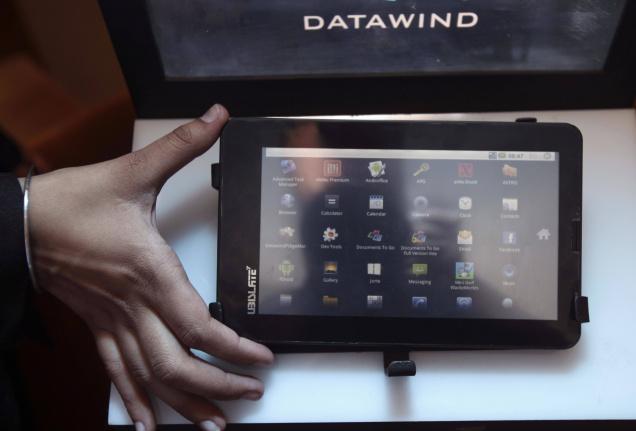
Earlier in October, 2011 the long awaited 'Aakash' came in front of us and after the countdown in December last year UbiSlate 7, the upgraded version of Aakash finally made available for online booking. After a huge success now  HRD Minister of India Mr. Kapil Sibal has unveiled a new version of the "world's cheapest tablet computer" - widely known as "Aakash 2".  The device, primarily for students, is to be sold for 2,263 rupees ($40; £26). It has a faster processor, longer battery life and more programming capability than an earlier version.
“Unlike other tablet devices, Aakash can also be used to create computer programs, in Python, C, C++ and Scilab,” - said Kapil Sibal, adding that the tablet can be further used for accessing e-governance services. The government has approved the specifications of the upgraded version of the tablets submitted by Datawind, to IIT-Bombay for testing. “The government has approved the specifications,” Datawind CEO Sunit Singh Tuli confirmed. The Aakash 2 sample devices are now being tested, with manufacturing projected to start by July or August. Like its predecessor, the Aakash 2 allows users to watch online tutorials and videos, browse the internet and play games. "It's a fully-fledged computer, not just an access device," said Prof DB Phatak from Bombay IIT. "The applications and the content on Aakash 2 are most important, not just the device." The new version of the Aakash tablet has an 800Mhz processing speed, a three-hour battery life and operates on the latest Android software. It also has an SD card slot, a USB port and works over wi-fi. It does not have 3G capability, however, so users need access to a good internet connection. Bombay IIT has developed new apps like interactive class quiz programme Clicker and Sci-lab, which allows students to conduct interactive classes. For detailed information about "Aakash" click here


-Source (BBC, Hindustan Times)


SHARE OUR NEWS DIRECTLY ON SOCIAL NETWORKS:-

Duqu is Still in Operation, Researcher Found New Duqu Variant

Duqu is Still in Operation, Researcher Found New Duqu Variant 

Last month researchers at Kaspersky Lab managed to solve the Duqu Mystery. They discovered that this dangerous stuxnet was written by custom object oriented C called “OO C”. But was the sufficient to stop this dangerous cyber weapon? The answer is big no, and today a new Duqu variant rise up, which clearly indicating that the attacks are still ongoing and still security experts failed to put a solid brick between Duqu & cyber space. The latest Duqu driver was compiled in February 2012, more than four months after Duqu was first flagged as a unique piece of malware “striking similarities” to Stuxnet, the mysterious computer worm that targeted nuclear facilities in Iran
Symantec identified the newly compiled Duqu driver as mcd9×86.sys and said it contains no new functionality beyond spying and collecting data from infected machines. Kaspersky Lab’s Costin Raiu says the latest variant has been engineered to escape detection by the open-source Duqu detector toolkit released by CrySyS Lab.


-Source (ZDnet) 


SHARE OUR NEWS DIRECTLY ON SOCIAL NETWORKS:-

Young Pop Star Justin Bieber's Twitter Account Compromised

Young Pop Star Justin Bieber's Twitter account Compromised 
World famous pop singer from Canada, Justin Drew Bieber also enlisted his name among those celebrities whose twitter account get hacked. The attacker has tweeted an unauthorized message in-front of the 19 Million of twitter follower. 
The hacker has tweeted the above message but fortunately that very tweet was immediately deleted. The hashtag "biebermyballs" sounds familiar, it should, same words were tweeted repeatedly from Carly Rae Jepsen's Twitter account after it was hacked several weeks ago. It is not clear if Bieber's account was hacked same person. The hacker responsible for Jepsen's hack was not identified yet. Few days ago another American pop singer "Kesha" twitter a/c get hacked. Same things happen to Teyana Taylor twitter which even caused exposure of few personal photo of this star among those there are few topless pictures.
Not only these two but also we have seen such attacks many times. Earlier  NBC News, Fox News Politics, USAToday, Lady Gaga’s Twitter Account, Anders Breivik’s twitter, Mahesh Bhatt Huffington Post Twitter Account became the victim of such twitter hacking.


SHARE OUR NEWS DIRECTLY ON SOCIAL NETWORKS:-

Notepad++ 6 (Open-Source Text Editor) Released With New Features

Notepad++ 6 (Open-Source Text Editor) Released With New Features 
One of the most famous and widely used source code editor for windows, Notepad++ now have version 6. The tool is written in C++ and supports plugins, macros, and text highlighting for many programming languages including C, C++, C#, Visual Basic, Java, Lua, Python, Perl, SQL, HTML and XML. 
Newest Features:-
  • PCRE (Perl Compatible Regular Expressions) is supported.
  • Add Document Map feature (via Menu View->Document Map)
  • Enhance the loading performance for the large file
Included plugins (Unicode):-
  • Spell Checker v1.3.3
  • NppFTP 0.24.1
  • NppExport v0.2.8
  • Plugin Manager 1.0.8
  • Converter 3.0
Note that Notepad++ Document Map is only available in Unicode release. The source code for ANSI release is not maintained anymore, therefore ANSI binary will be removed in the future releases. As usual, if you find any critical problem, please post in here
To Download Notepad++ (Installer, Zip, Binary Source Code) Click Here


SHARE OUR NEWS DIRECTLY ON SOCIAL NETWORKS:-

Duqu Mystery Finally Solved By Researcher at Kaspersky Lab

Duqu Mystery Finally Solved By Researcher at Kaspersky Lab

After so many drama finally the deep mystery of DUQU solved. Researcher at kaspersky lab has found out that this dangerous stuxnet was written by custom object oriented C called “OO C”. The mystery began earlier this month, when Kaspersky researchers struggled to determine what programming language had been used to develop the Duqu. So the researchers have taken the help of programming community to find out the truth. They got a wild feed back, 200 comments and 60+ e-mail messages with suggestions about possible languages and frameworks that could have been used for generating the Duqu Framework code. 
Let us review the most popular suggestions:-
  • Variants of LISP
  • Forth
  • Erlang
  • Google Go
  • Delphi
  • OO C
  • Old compilers for C++ and other languages
There are two main possibilities. The code was either written using a custom OO C framework, or it was entirely written in OO C manually, without any language extensions.No matter which of these two variants is true, the implications are impressive. The Payload DLL contains 95 Kbytes of event-driven code written with OO C, a language that has no automatic memory management or safe pointers was pointed out by Kaspersky’s Igor Soumenkov.“This kind of programming is more commonly found in complex ‘civil’ software projects, rather than contemporary malware. Additionally, the whole event-driven architecture must have been developed as a part of the Duqu code or its OOC extension.” said Mr Igor
This made an assumption that the developers are old school and don’t trust C++. That’s why they relied on C. Another reason for using OO C is because back in the good old days it was more portable than C++. Duqu was created by a professional team that wrote the framework based on old code. To know the full story click here.


SHARE OUR NEWS DIRECTLY ON SOCIAL NETWORKS:-

Related Posts Plugin for WordPress, Blogger...